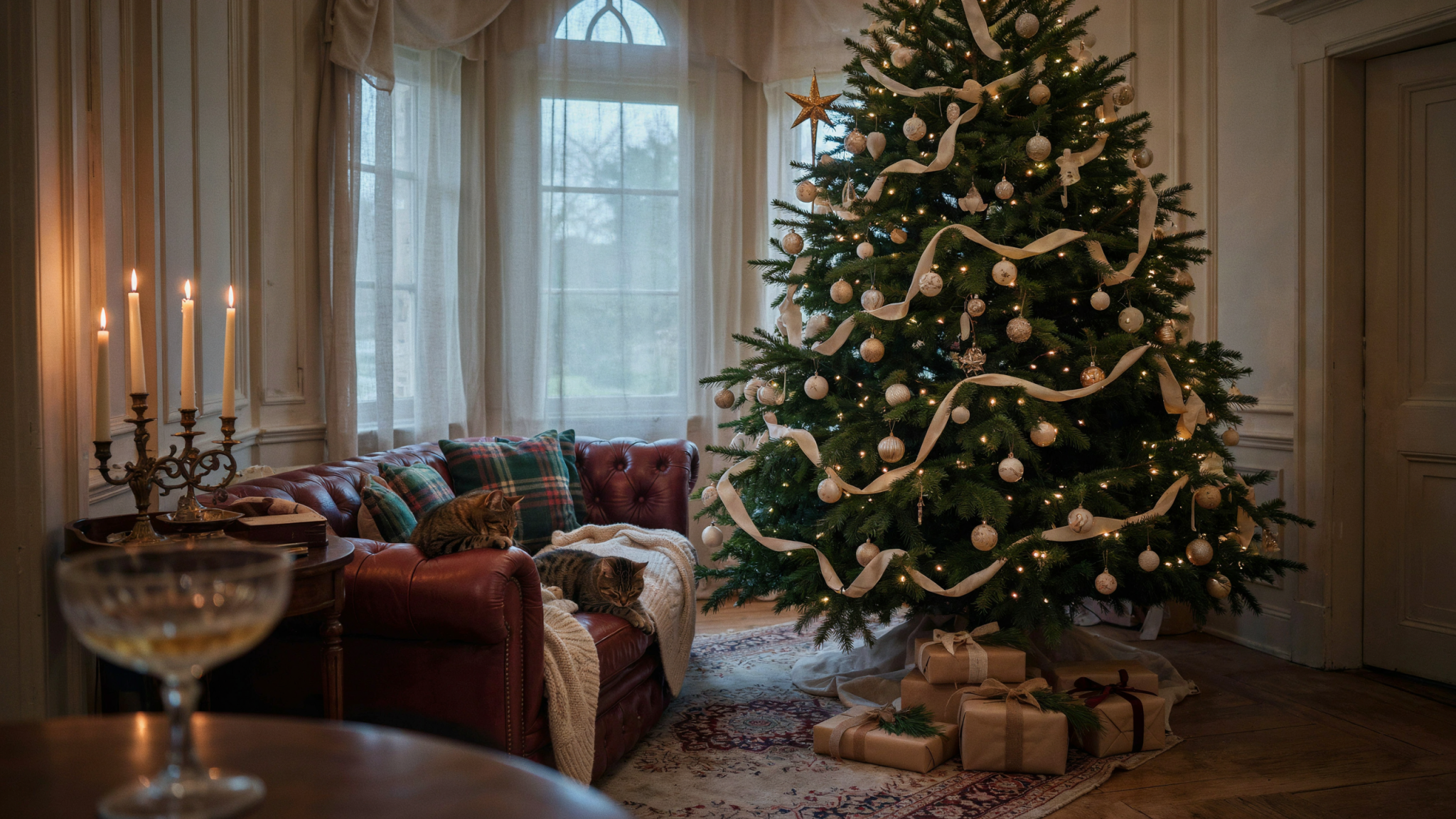
A Scandinavian-inspired Christmas room does not have to be completely white or almost empty. A restrained palette, useful furniture, natural texture, and small points of warm light can create a calm seasonal setting without stripping the room of personality.
These 28 ideas explore that approach through greenery, wood, paper, textiles, and simpler arrangements. The photos are inspiration rather than a definition of how every Nordic home decorates. Choose the materials and proportions that suit your own room, and leave space for the objects you use every day.
Choose a Few Materials and Repeat Them
Start with the room’s existing wood and fabric tones, then add evergreen, plain paper, or one muted accent. Keep shiny finishes secondary if you want a quieter effect. Before adding more ornaments, check whether a different height, texture, or light source would improve the composition instead.
1. Repeat Paper Stars in a Window
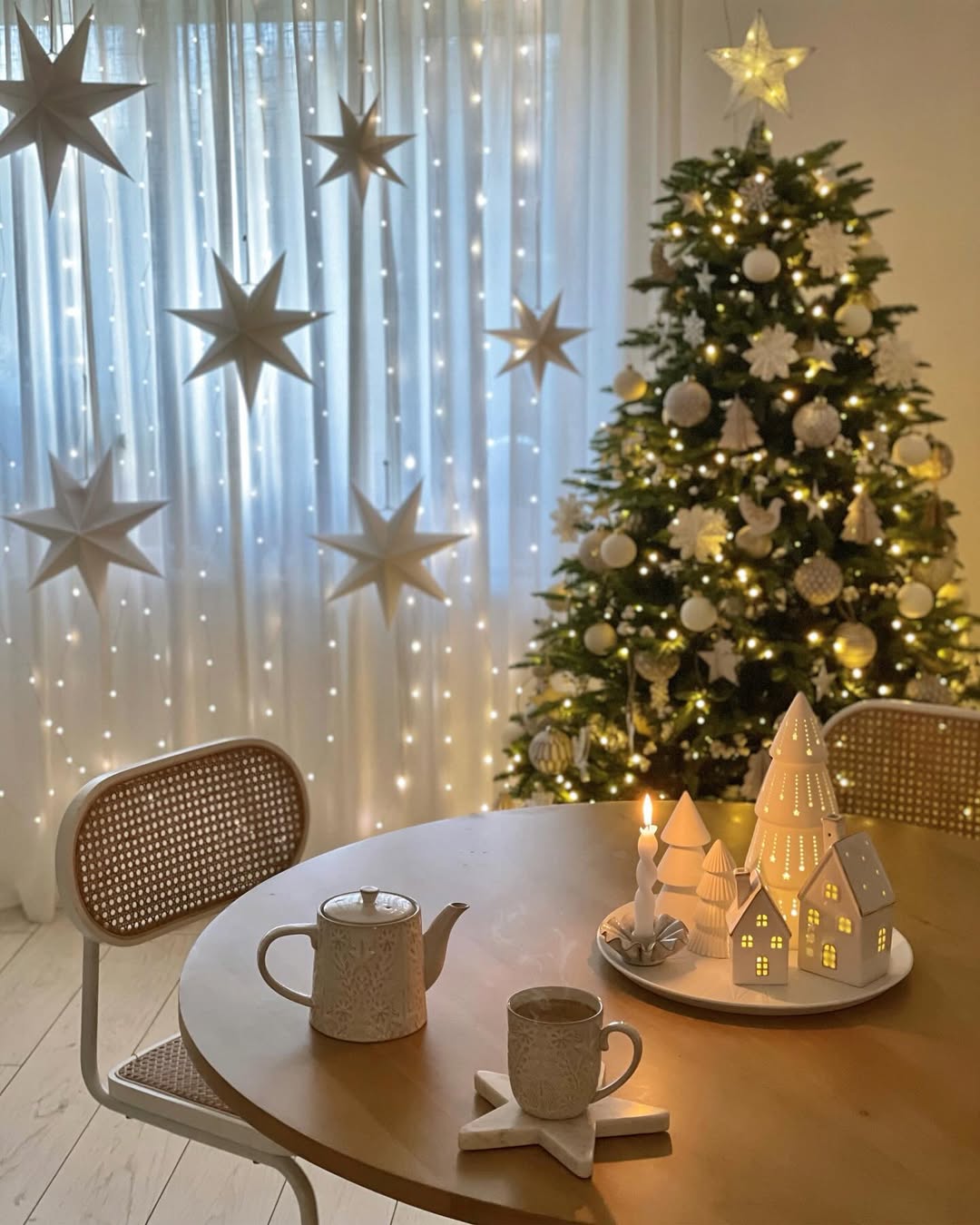
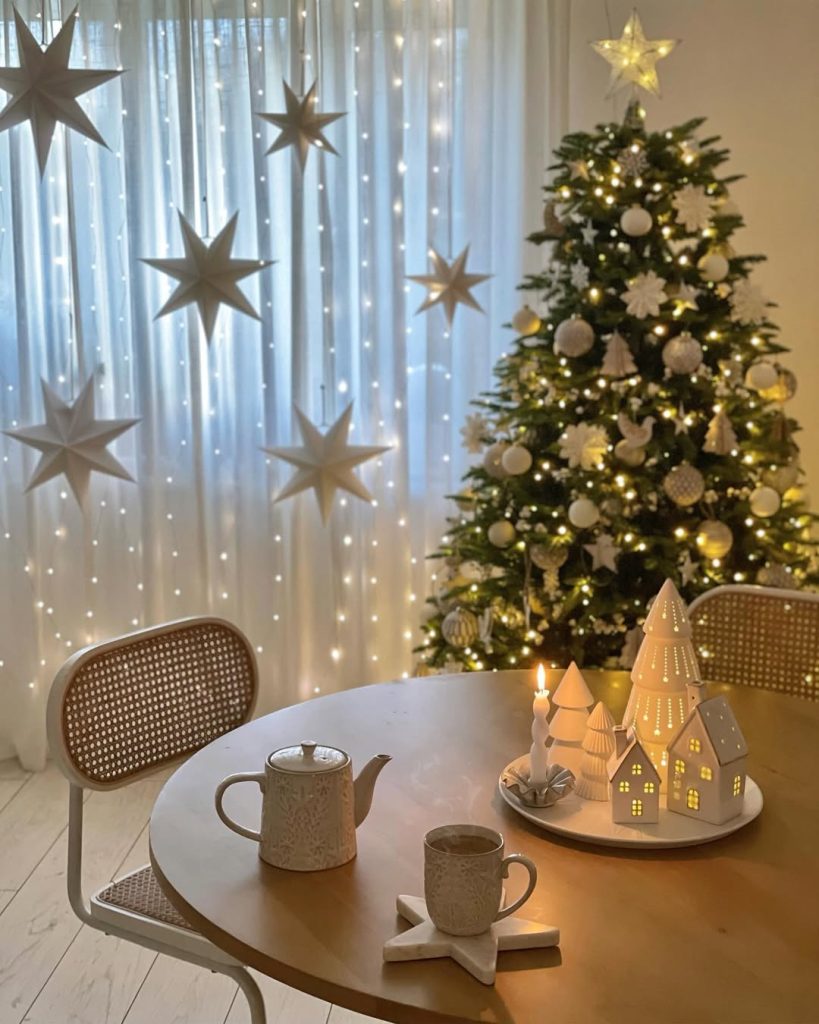
A few paper stars at different heights can give a window a seasonal outline. Leave space between them so each shape remains visible. Use plain paper or one restrained color family. If a star is illuminated, use only the lighting system designed for it and keep the installation clear of curtains.
2. Use a Pale Dining Palette With Warm Texture
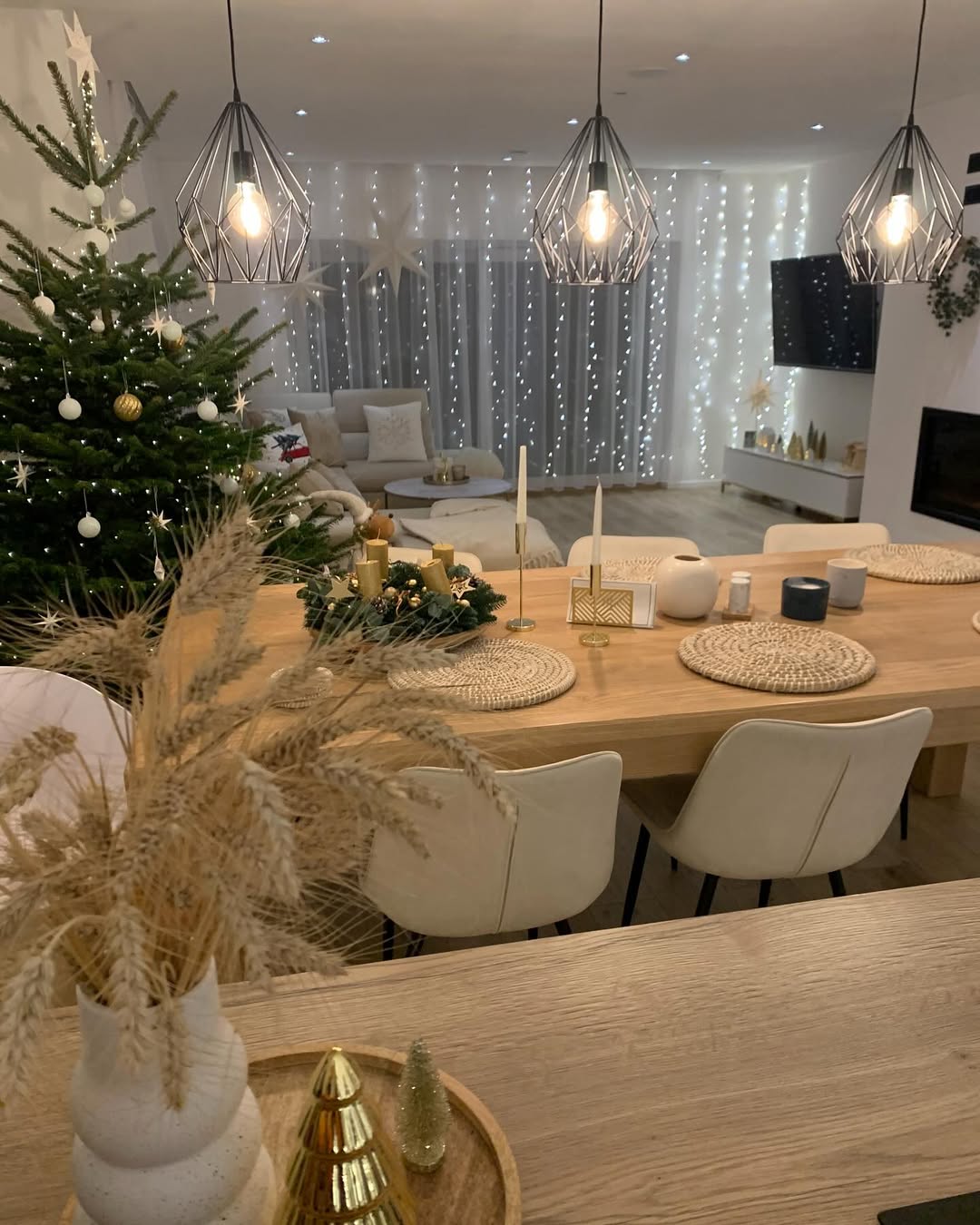
A white table setting feels more comfortable when it includes woven seats, a textured runner, or natural wood. Keep decorations low enough for conversation. Choose one greenery arrangement rather than several competing centerpieces. The furniture and tableware can provide most of the palette, leaving the seasonal additions relatively modest.
3. Make a Small Village the Accent
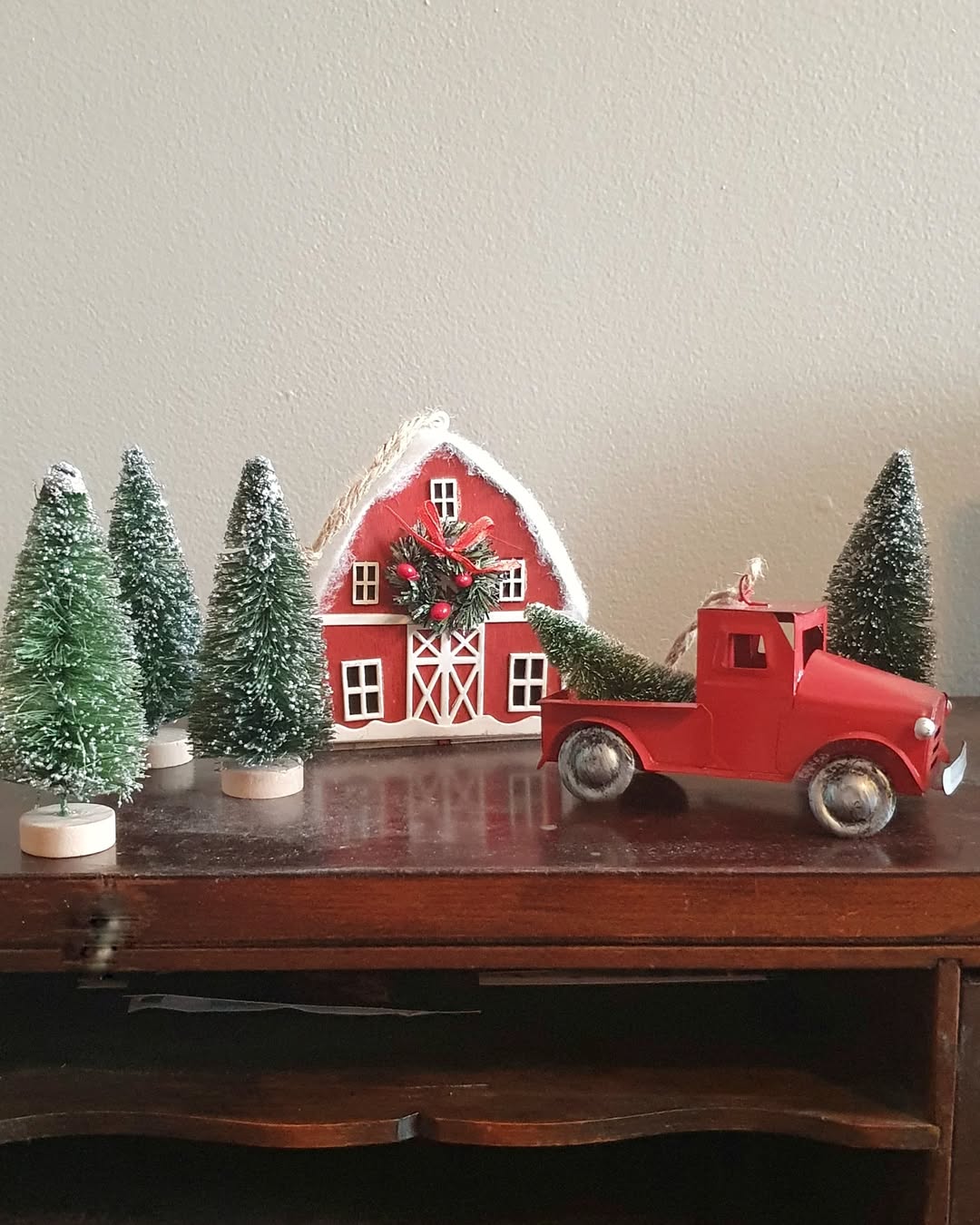
A miniature house or vehicle can add personality without turning every surface into a scene. Group the pieces on one shelf and leave space around them. Repeat a color from the miniatures elsewhere in the room. A simple backdrop lets a playful object fit within a quieter decorating scheme.
4. Keep Floor Seating and Tables Useful
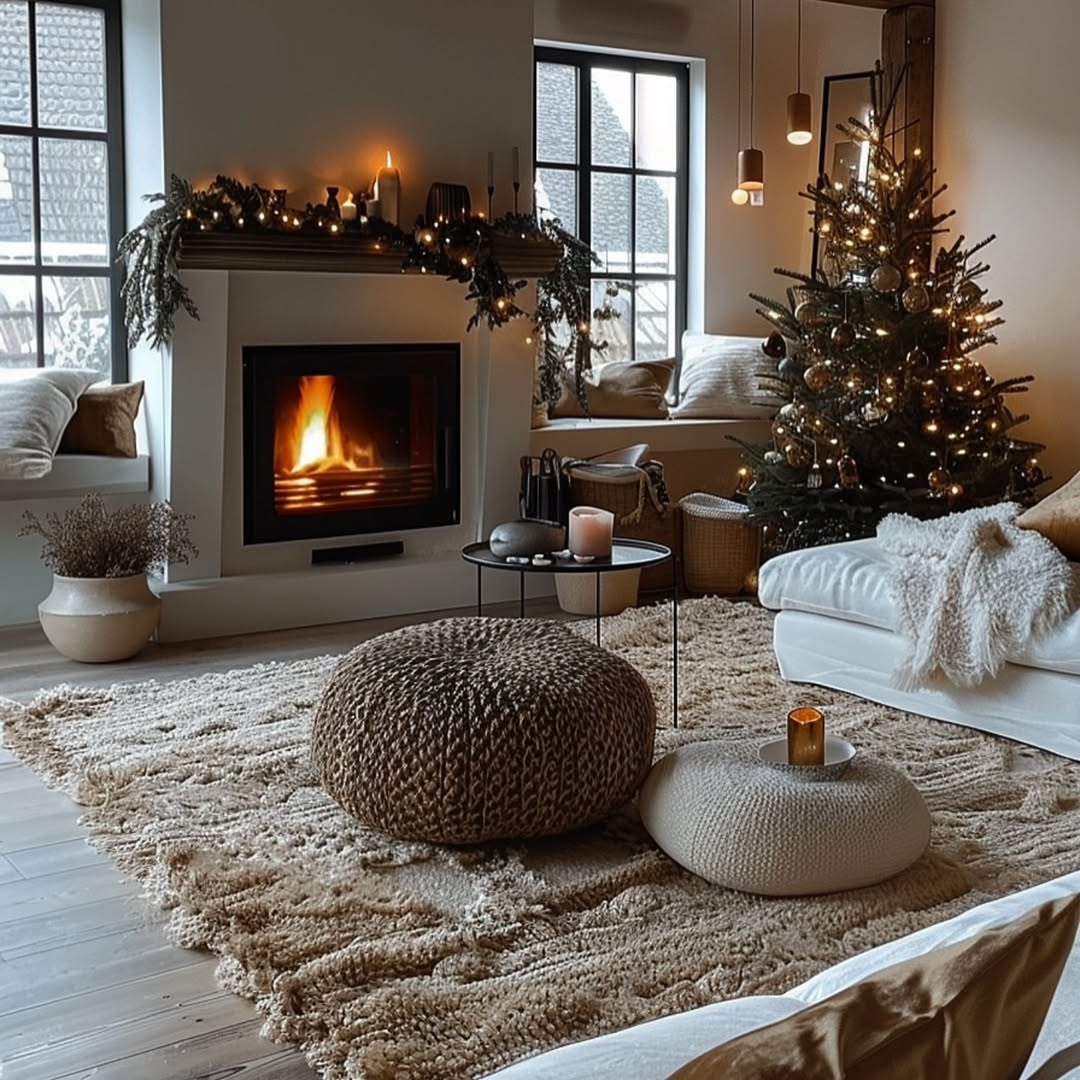
A soft rug and a textured pouf can supply winter comfort around a simple tree. Leave a clear place for a tray or drink rather than decorating every horizontal surface. Keep textiles appropriate for normal use. The best cozy layer is one you can comfortably sit on, move, and clean.
5. Use Wood and Paper Together
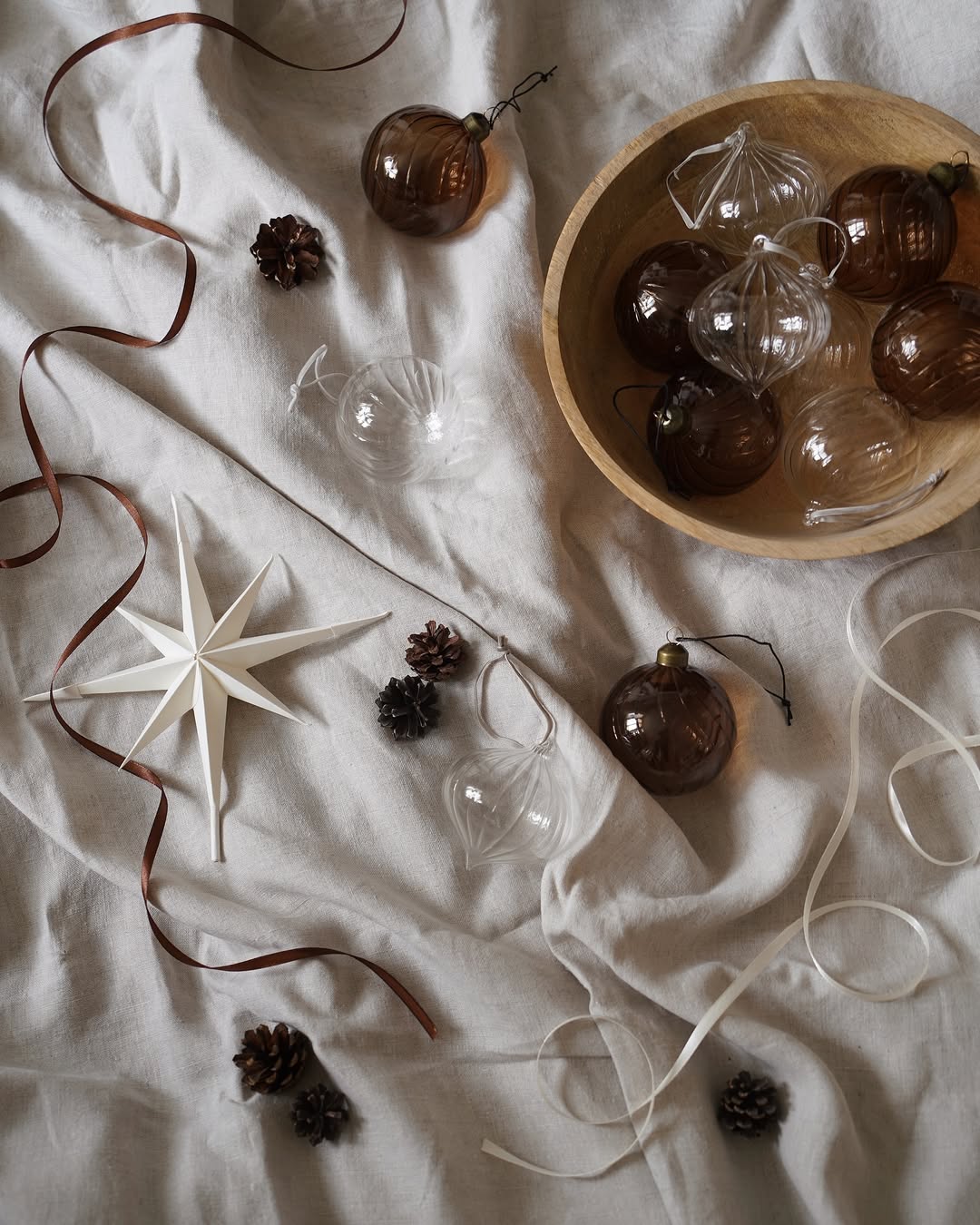
Folded paper shapes and plain wooden ornaments create contrast through texture rather than strong color. Choose lightweight pieces and spread the different materials across the tree. Leave some branches visible. A small set of carefully chosen ornaments can feel more complete than a dense tree where none of the individual shapes can be seen.
6. Give a Small Display One Clear Color
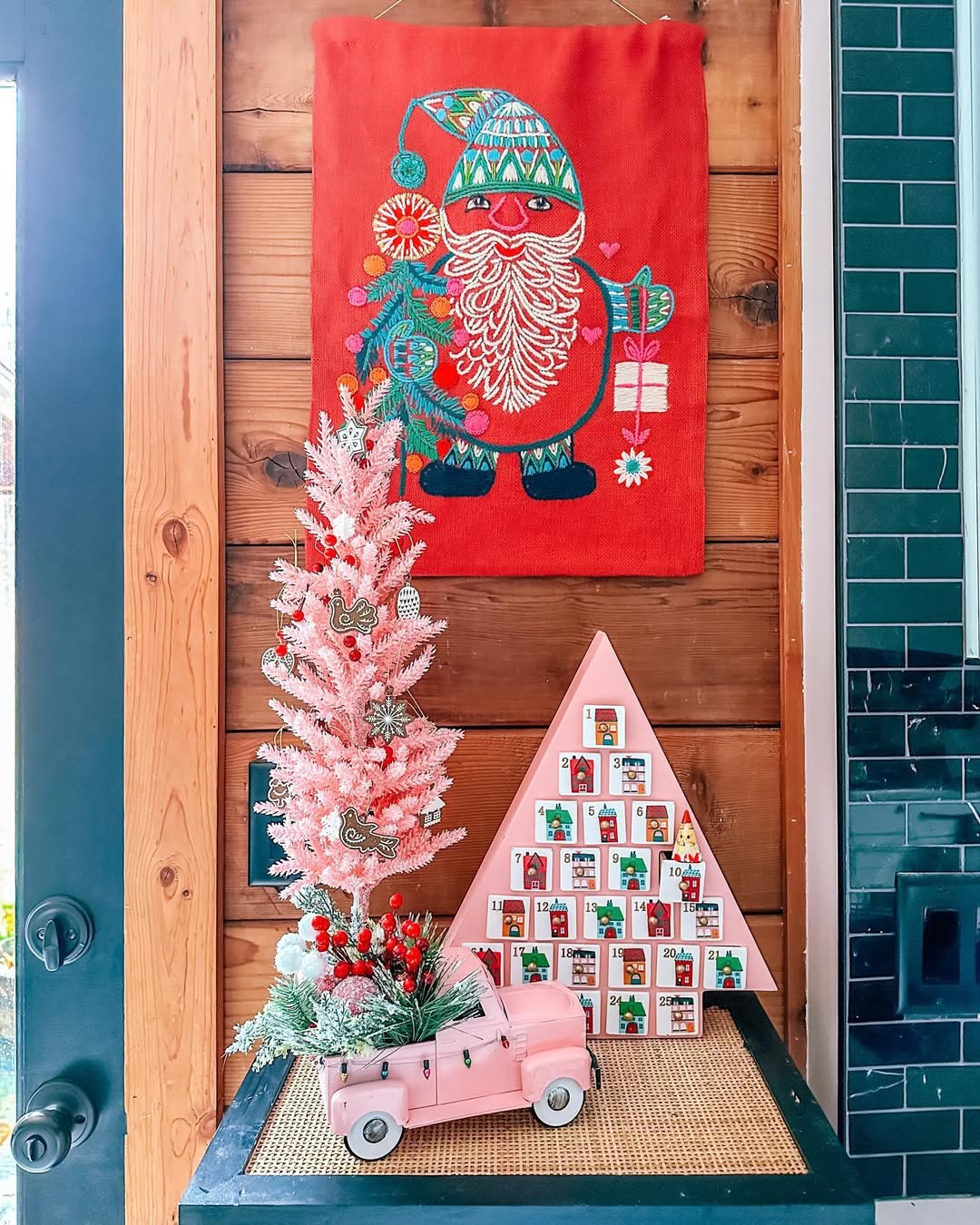
A tiny tree or paper decoration can carry a bright accent without changing the entire room’s palette. Repeat the color in only one or two nearby details. Keep the rest of the arrangement simple. Restraint is about the number of competing elements, not a rule that every object must be neutral.
7. Use a Red Textile as the Seasonal Layer
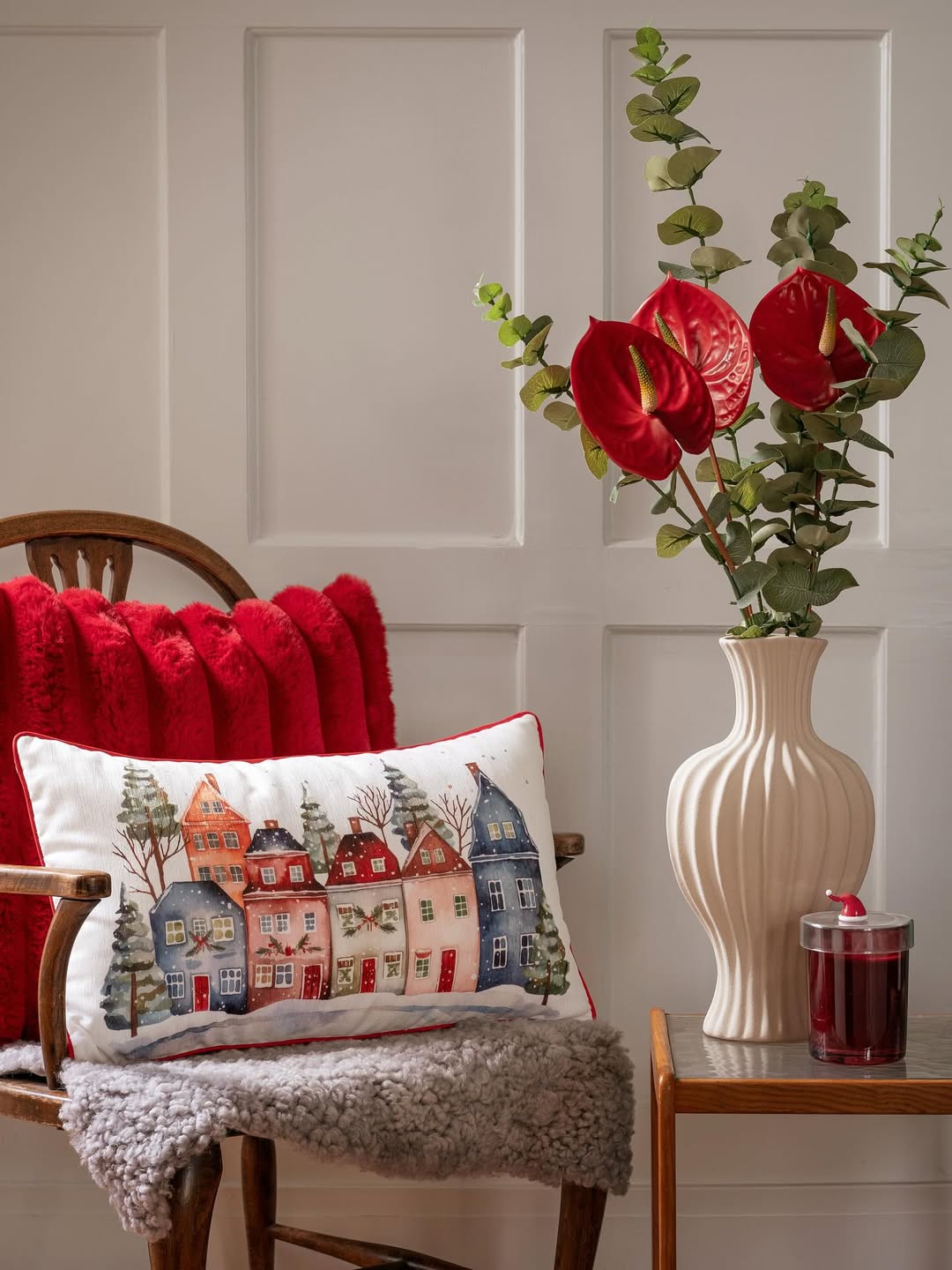
One red cushion or throw can connect an everyday chair to the holiday season. Keep the fabric comfortable and easy to use, and match its color strength to nearby artwork or flowers. A simple textile change may be enough when the furniture and lighting already create a warm setting.
8. Hang Stars in an Open Cluster
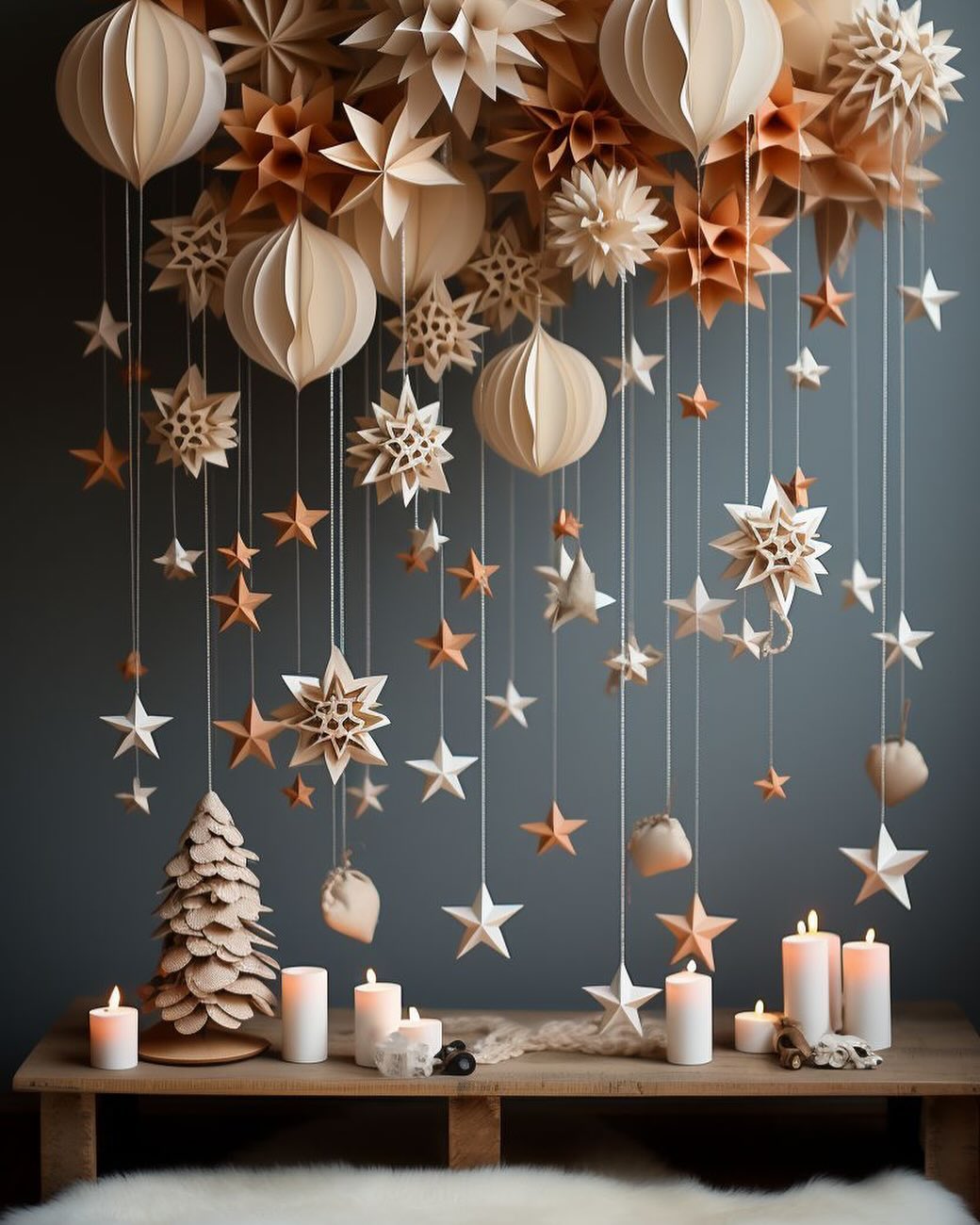
A group of stars above a console can create height without filling the surface below. Vary the hanging lengths and leave the center of each shape visible. Use supports suited to the wall or ceiling surface. Keep the console arrangement low so it supports the hanging display rather than competing with it.
9. Try an Open Wooden Tree

A wooden frame with visible branches or tiers makes individual ornaments easier to appreciate. Choose a limited number and distribute their weight evenly according to the product guidance. Leave gaps deliberately. The tree’s structure is part of the design, so it should not disappear beneath a full collection of ornaments.
10. Use a Few Small Trees in a Living Room
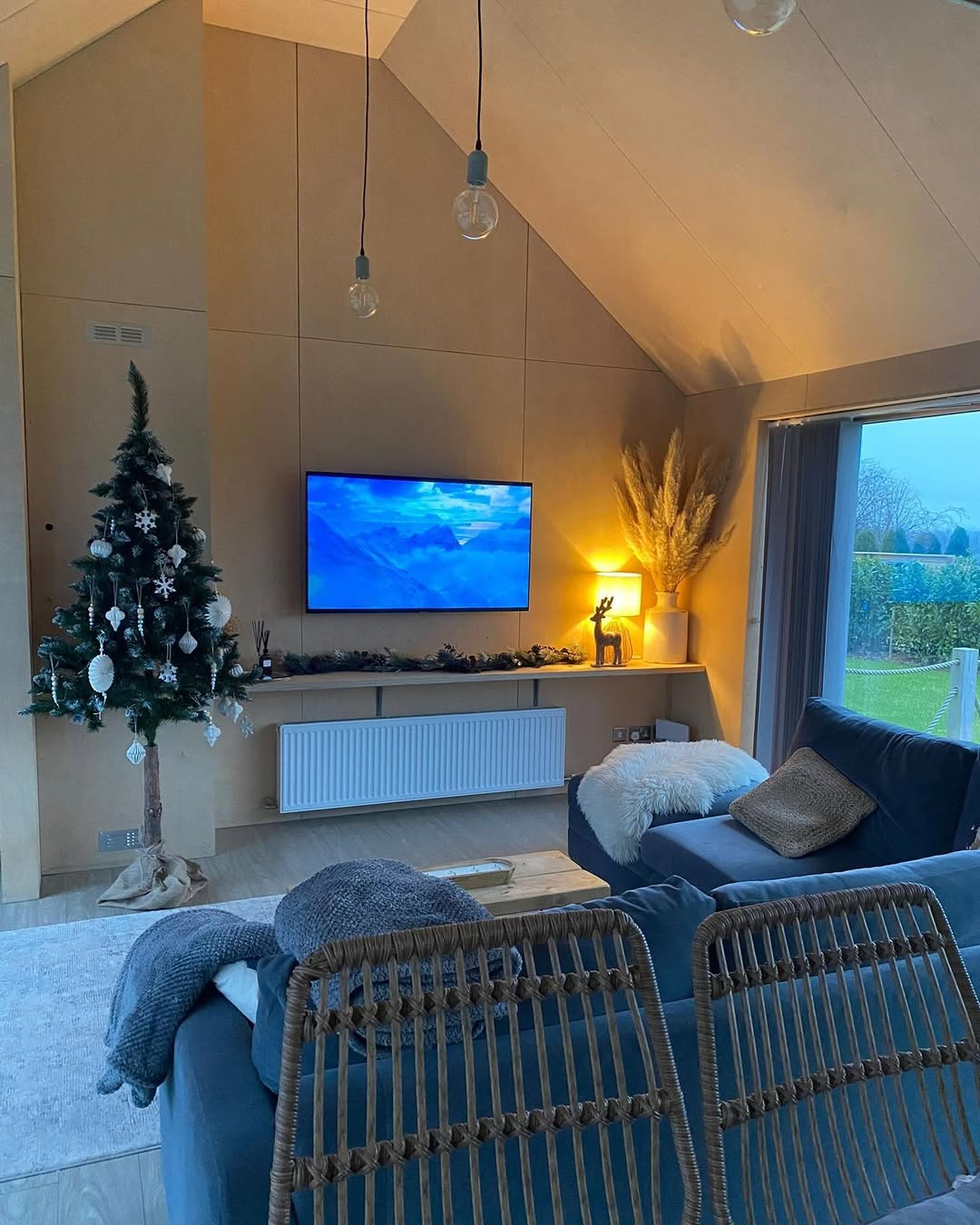
A compact tree can sit beside ordinary furniture without requiring a complete room makeover. Keep the television, lamps, and main walking routes available. Repeat the greenery once elsewhere if needed. A small arrangement feels more intentional when the surrounding room stays functional instead of being rearranged around it.
11. Let a Full Evergreen Keep Its Shape
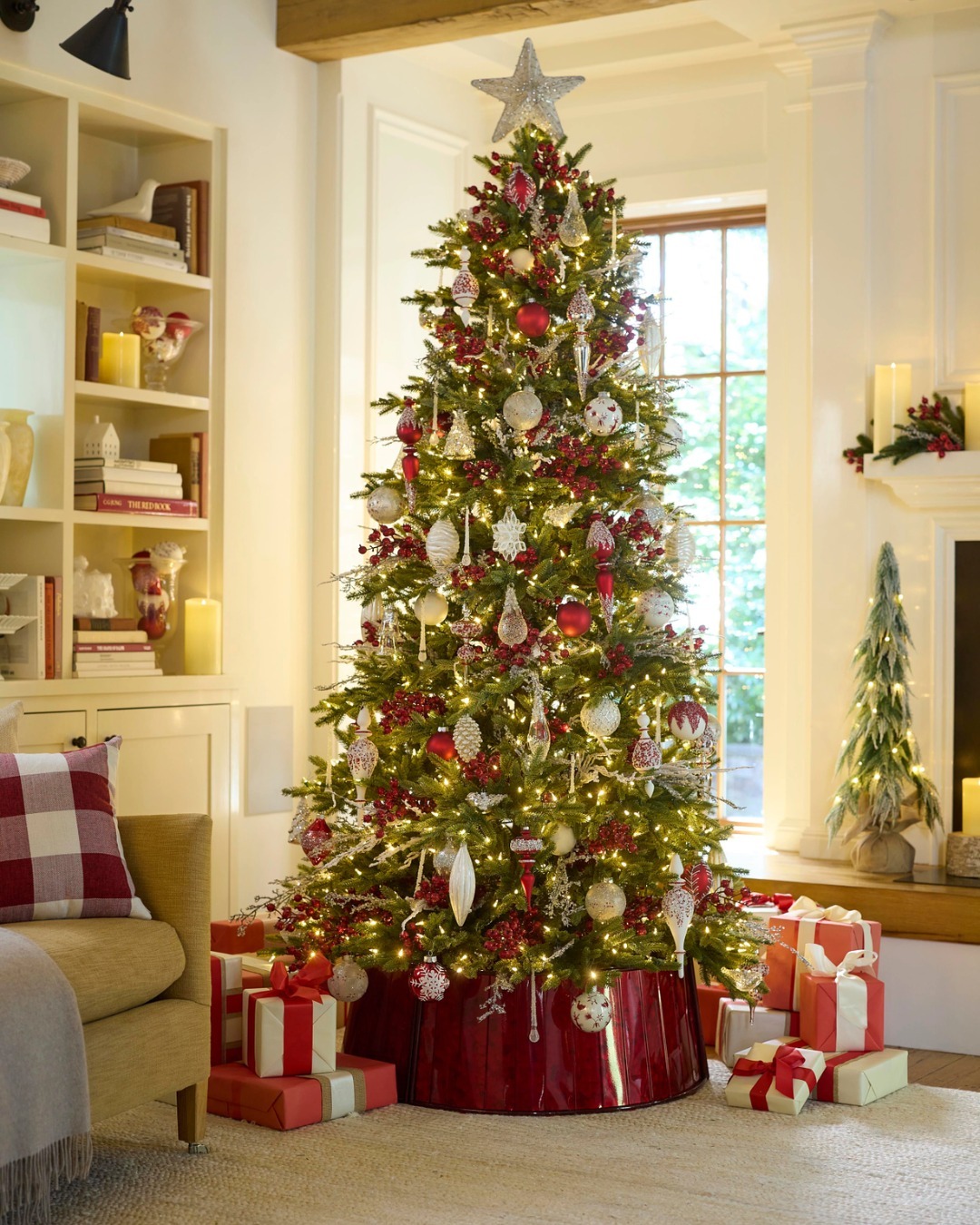
A full tree can still suit a restrained room when the decoration follows a narrow palette. Place the largest ornaments first, then fill selected gaps. Avoid covering every branch tip. A plain base and simple wrapping paper allow the evergreen’s outline to remain the main feature.
12. Group Warm Light on a Tray
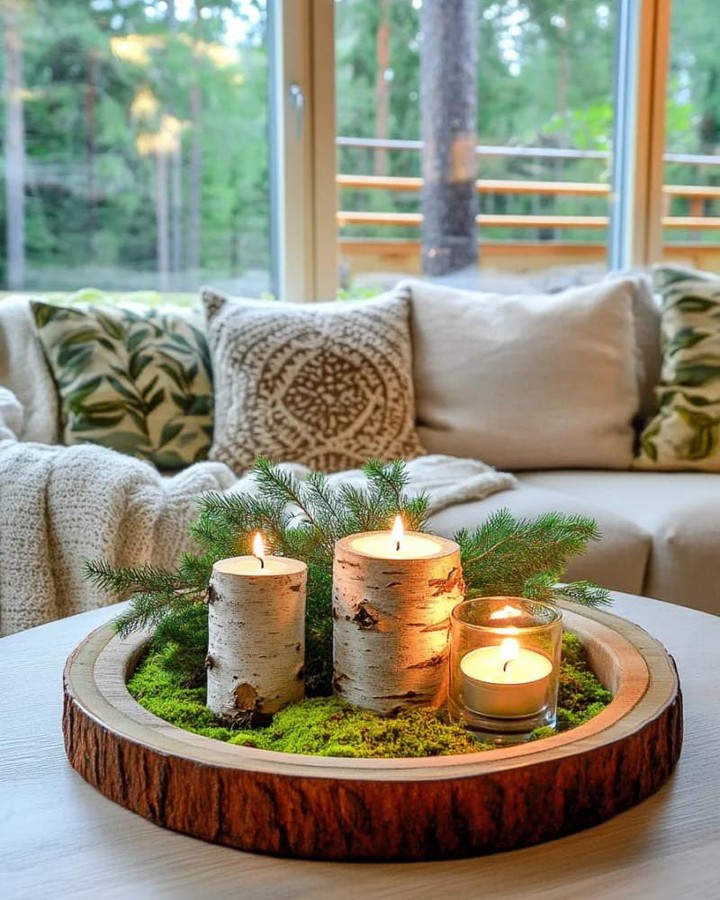
A shallow tray can contain a few flameless candles and a small amount of greenery. Choose different candle heights but a consistent light tone. Keep the arrangement compact enough to move when the table is needed. Natural wood at the base adds warmth without requiring another decorative color.
13. Use Plain Wooden Trees Near the Hearth
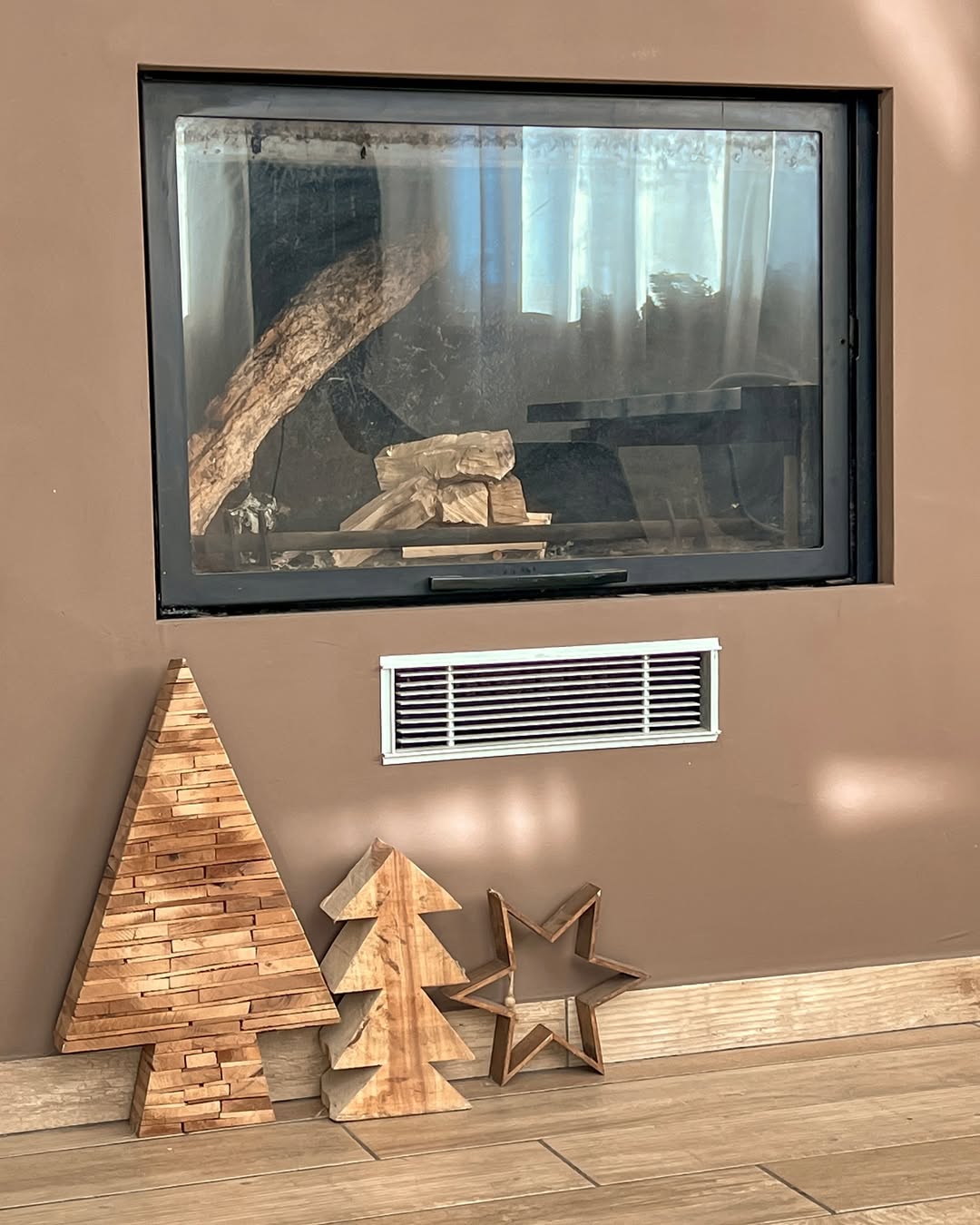
Simple wooden trees can echo the evergreen elsewhere in the room. Group two or three rather than lining an entire shelf. Keep all combustible objects outside the fireplace manufacturer’s required clearances. A few uncomplicated shapes are enough to establish a connection between the hearth and the larger seasonal display.
14. Add Greenery to Existing Wall Shelves
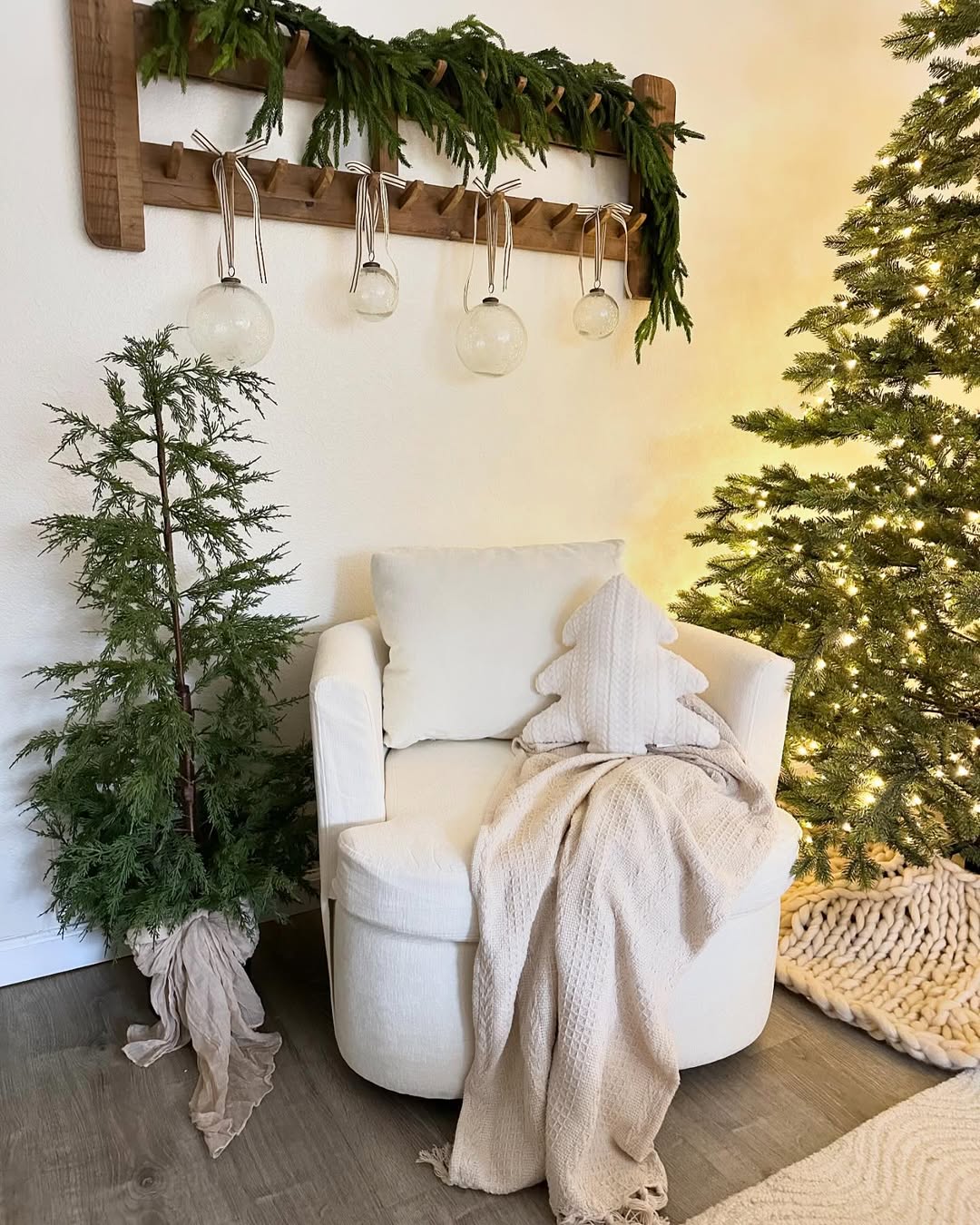
A short greenery accent can soften a shelf while leaving books and useful objects visible. Concentrate it at one end or along one section rather than covering the whole edge. Keep hanging ends clear of seats and walkways. Repeat one nearby material, such as wood or ceramic, to connect the display.
15. Decorate a Sparse Tree With Long, Simple Shapes
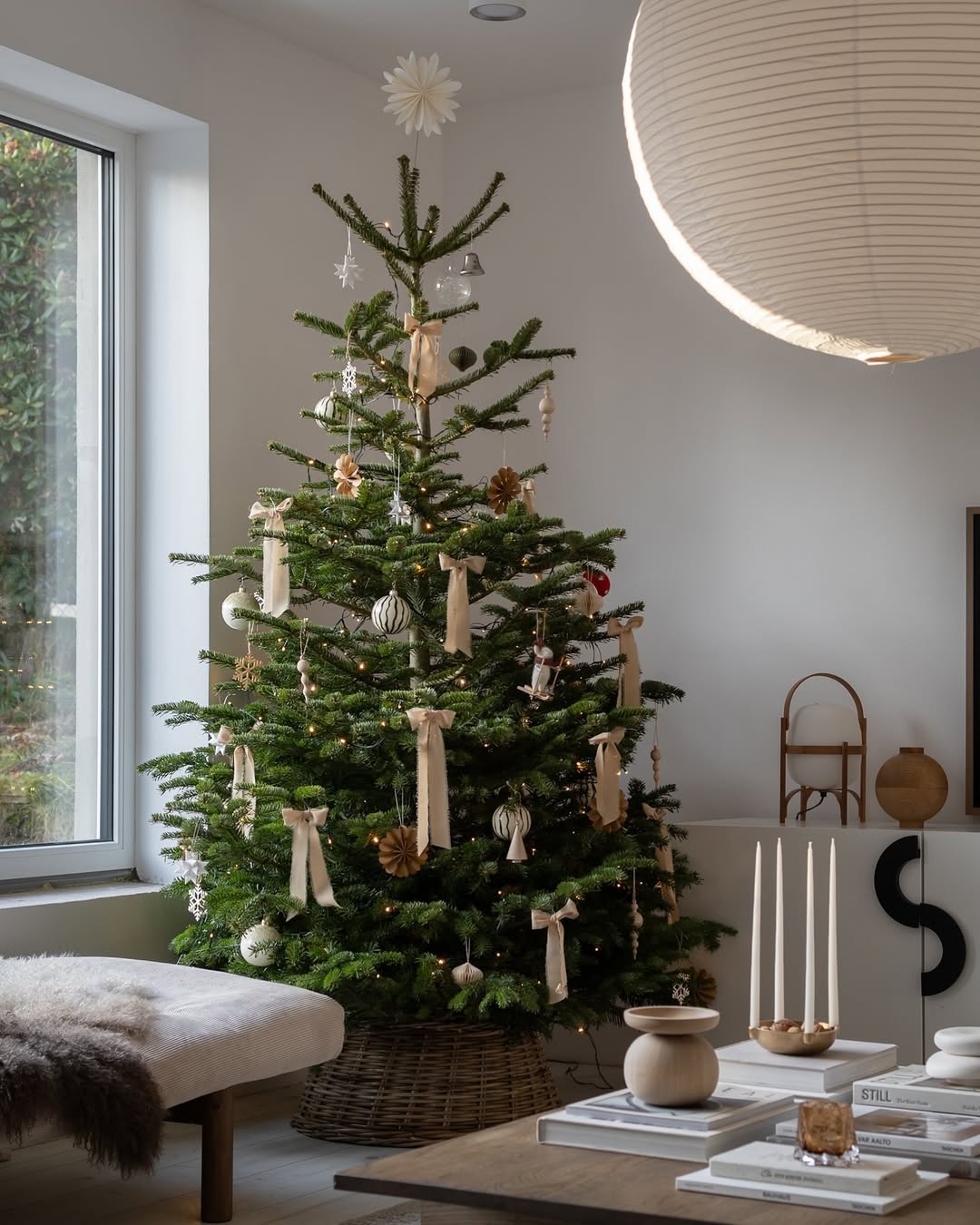
An airy tree gives hanging ornaments room to stand out. Choose simple shapes and vary the drop lengths rather than arranging them in exact rows. Use stronger branches for heavier pieces. Keep the base quiet so the open outline remains visible from across the room.
16. Let White Flowers Provide the Contrast
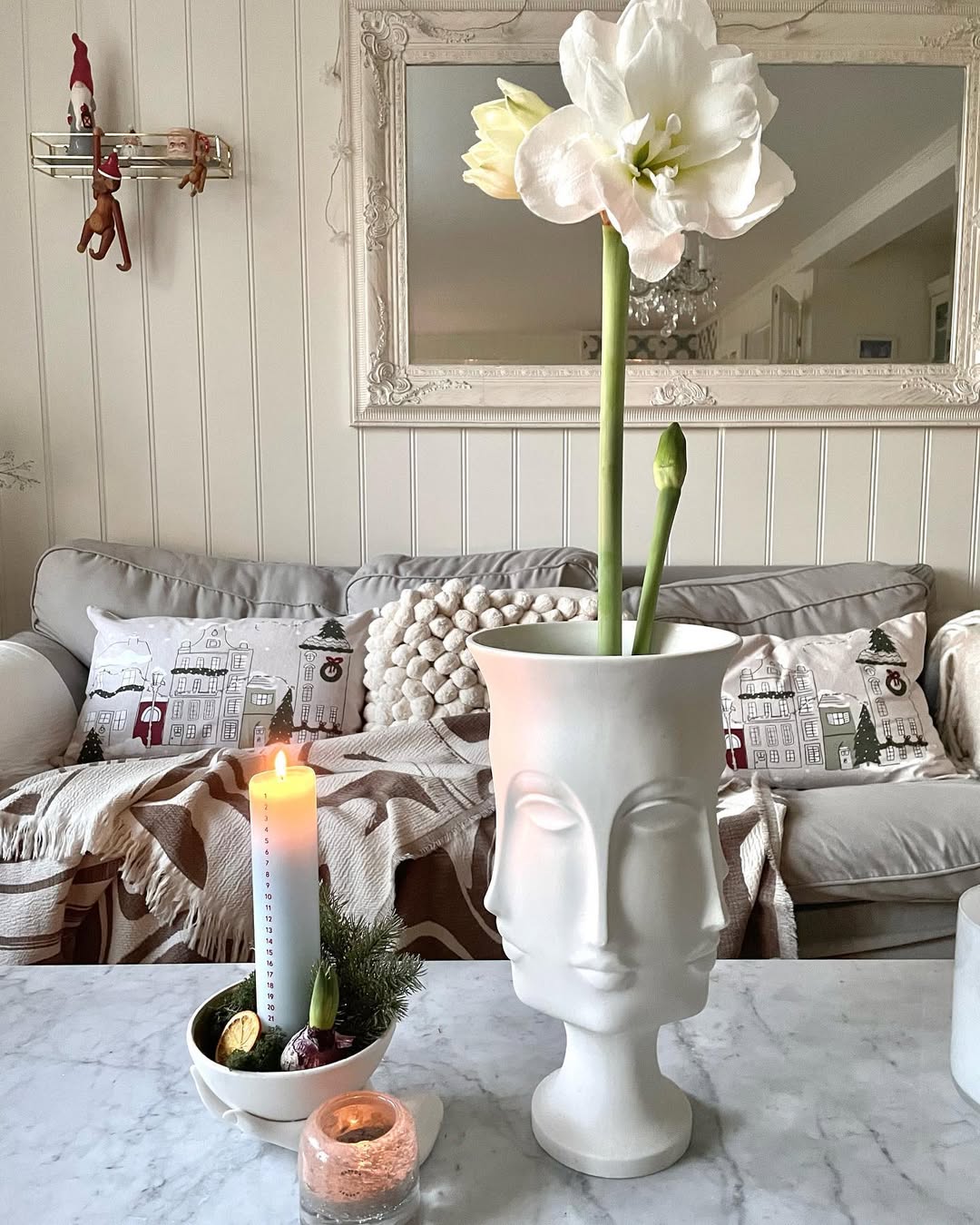
White flowers can add a fresh vertical element beside small green or wooden decorations. Use a watertight container and protect the surface below. Keep the supporting objects low so the flower stems retain their outline. A plain vase helps the composition feel connected to the room’s everyday pieces.
17. Use Existing Art to Set the Accent Color
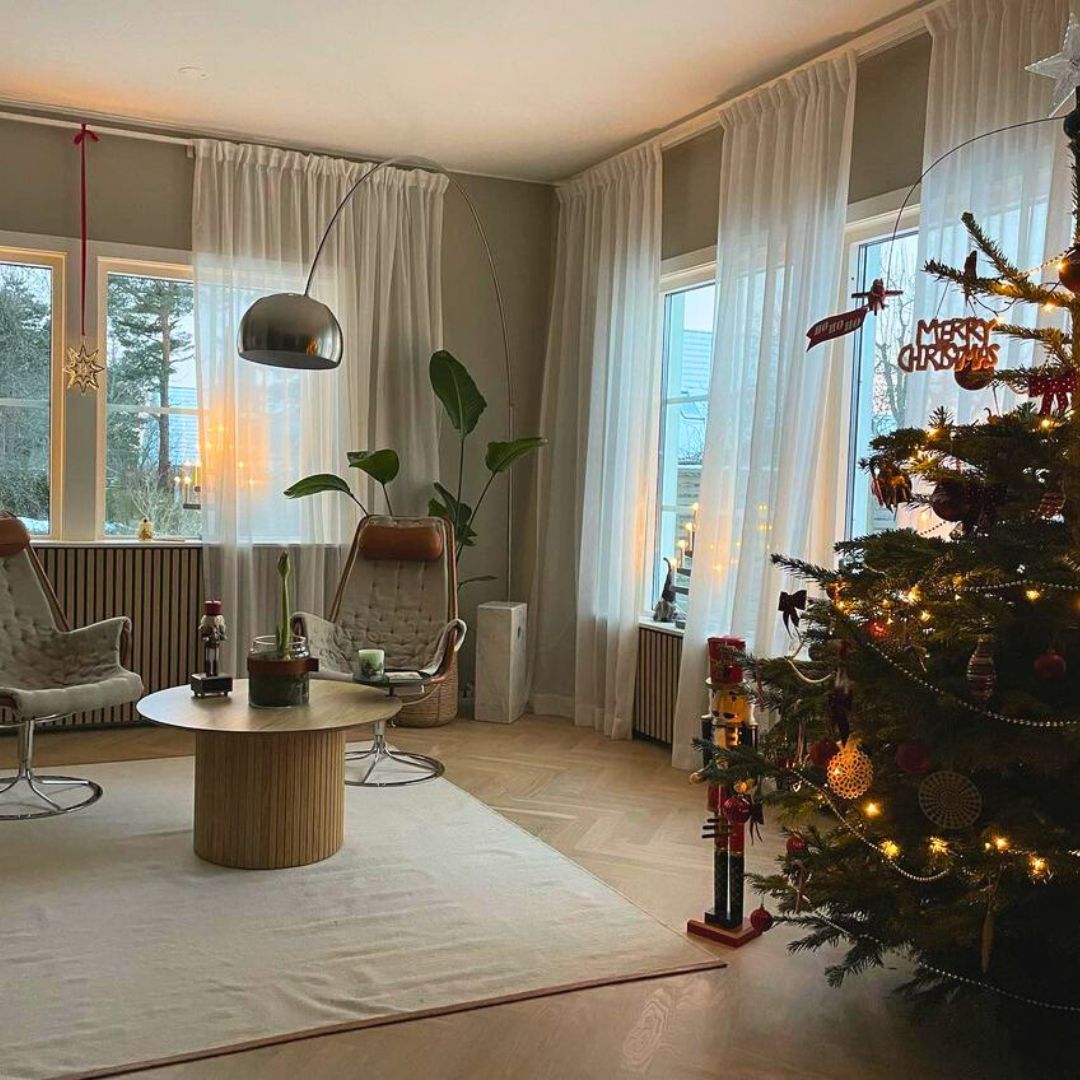
A large artwork already supplies a room with a palette. Choose a few ornaments that repeat one of its quieter colors instead of introducing a separate holiday scheme. Keep the surrounding surfaces relatively clear. This helps a decorated tree feel like part of the room rather than a temporary competing focal point.
18. Make the Stockings the Color Accent
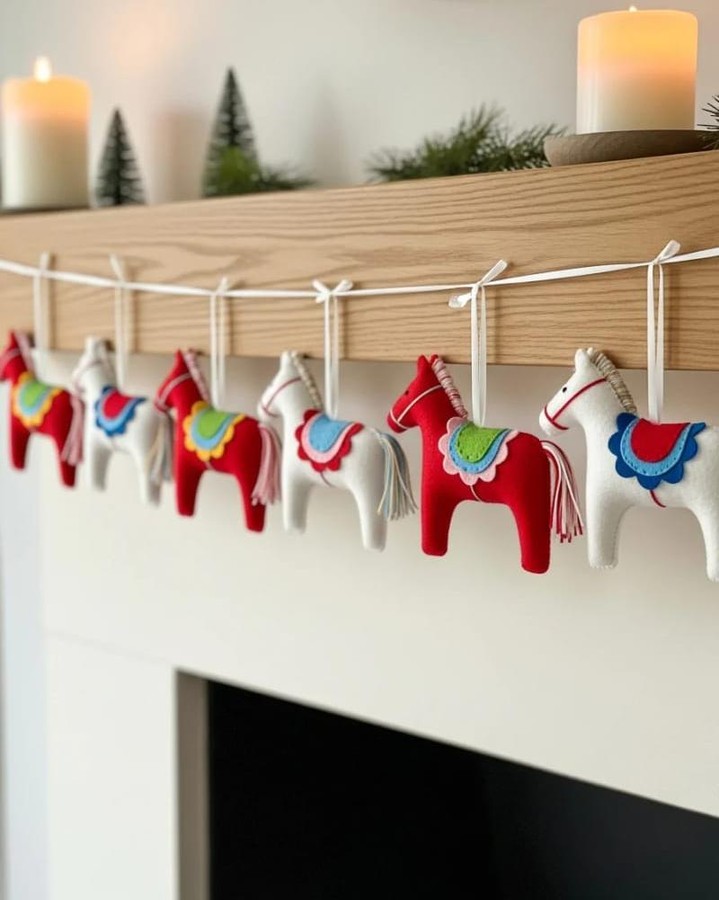
A row of small stockings can add a playful rhythm to a plain mantel. Choose a consistent size or hanging height so different patterns still relate. Leave the mantel top simple and observe fireplace clearances. If the stockings already have strong color, plain greenery or small neutral trees are enough above them.
19. Use Symmetry at the Dining Table
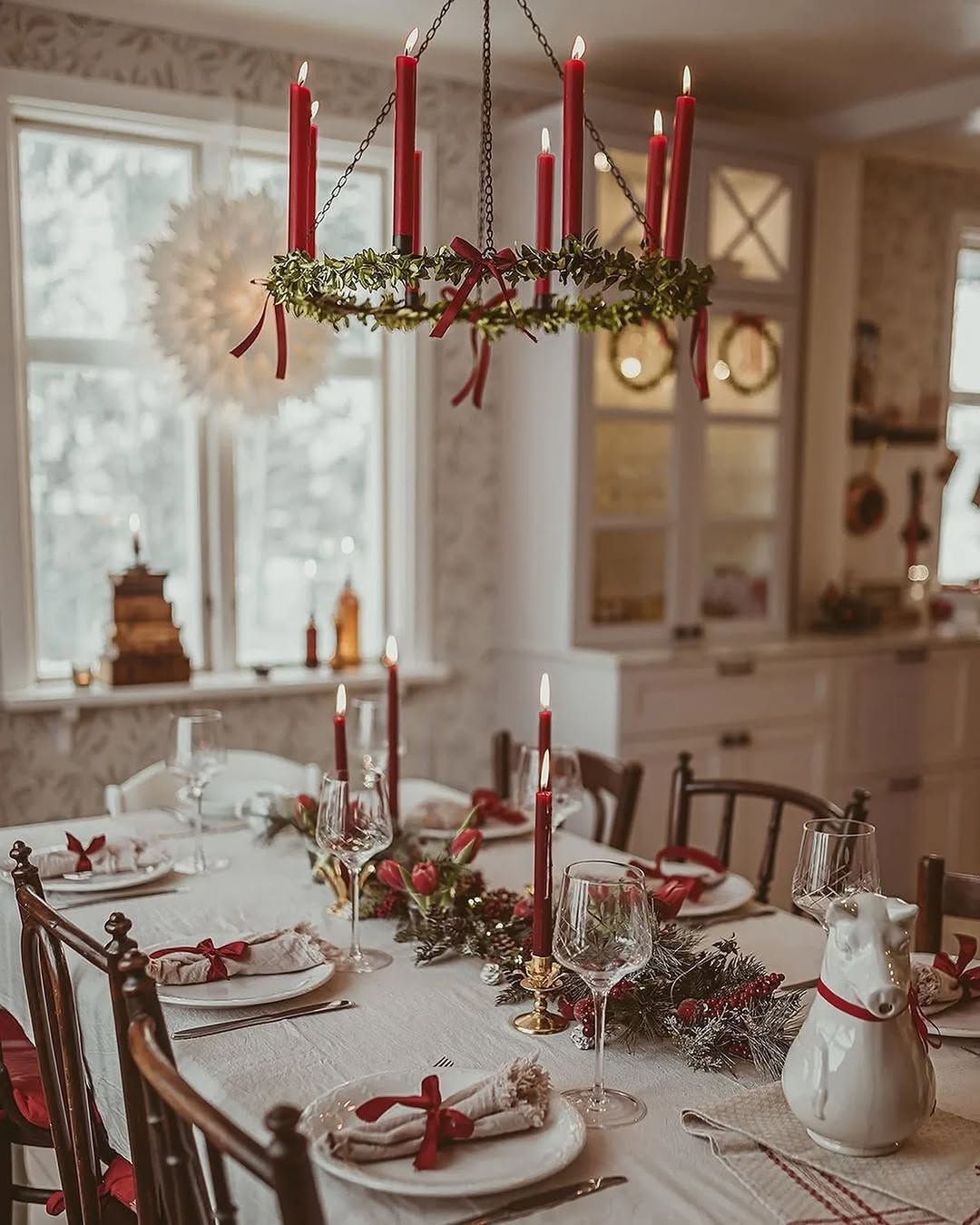
Matching candleholders or repeated small arrangements can create a calm table setting. Keep the display narrow enough for serving dishes and low enough for guests to see one another. Repeat a single accent color in the napkins. A clear rhythm provides structure without requiring every plate and accessory to be identical.
20. Keep Wood Furniture Visible
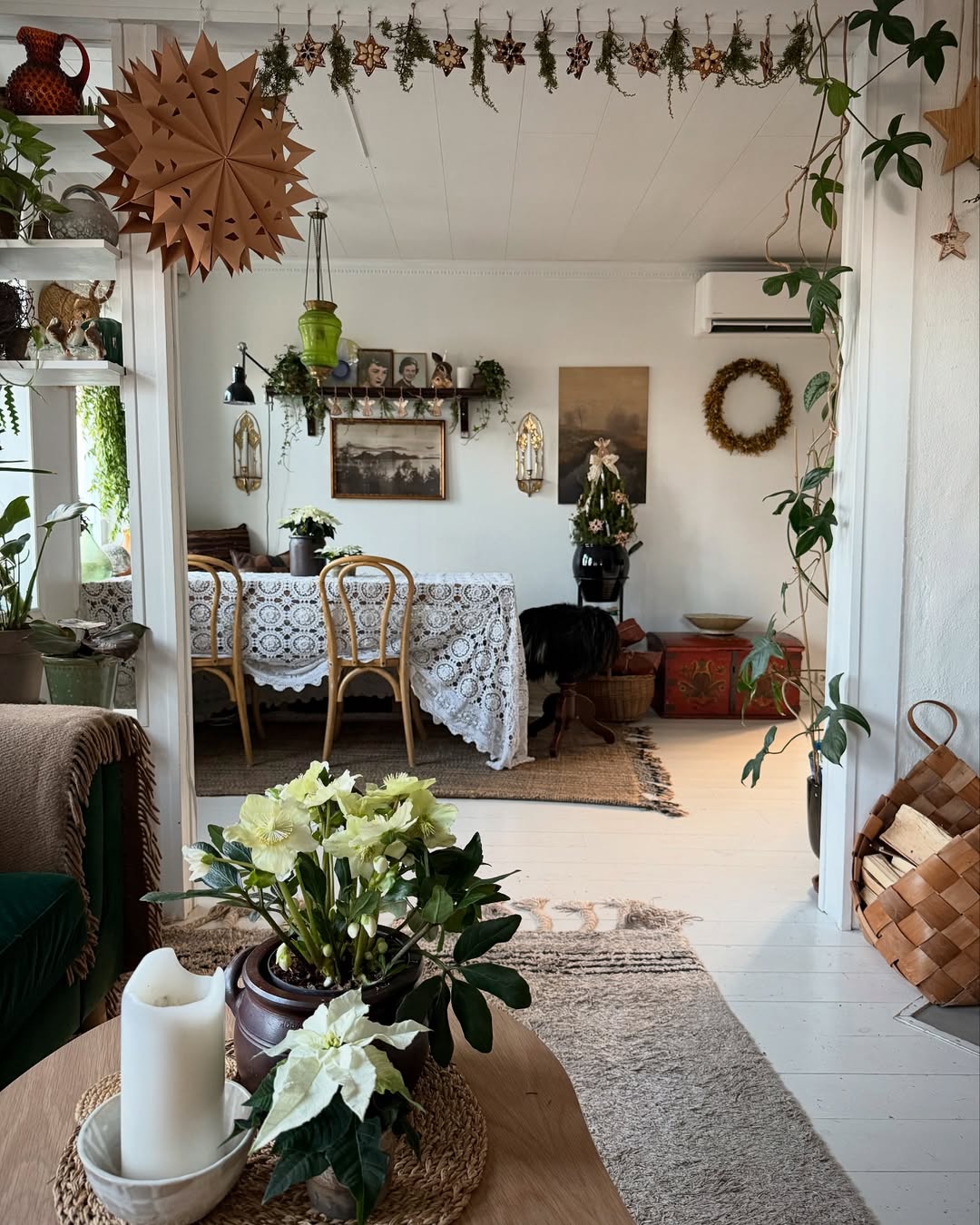
In a room with a substantial wooden table or sideboard, avoid covering the entire surface with fabric and greenery. Let the grain and edges remain part of the composition. A simple vessel or branch arrangement can supply the seasonal reference. Natural materials work better together when each has some space.
21. Place Small Trees Along a Window Sill
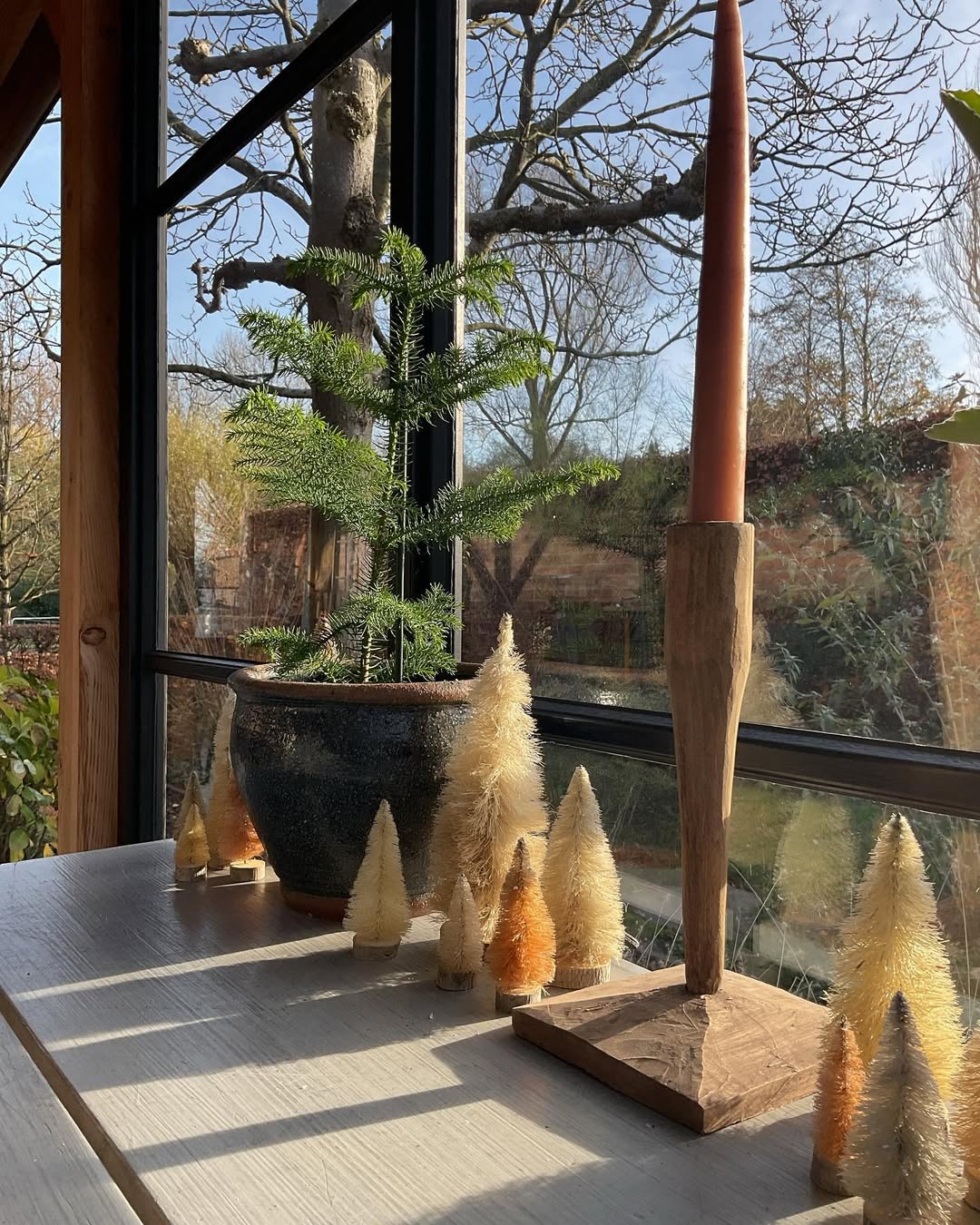
A few little trees in different heights can make a bright window feel seasonal. Keep the window hardware accessible and use stable bases. Leave gaps so the view remains visible between the trees. The sill’s narrow depth helps keep the arrangement restrained, provided nothing projects into a busy walkway.
22. Use a Tray of Pale Candles
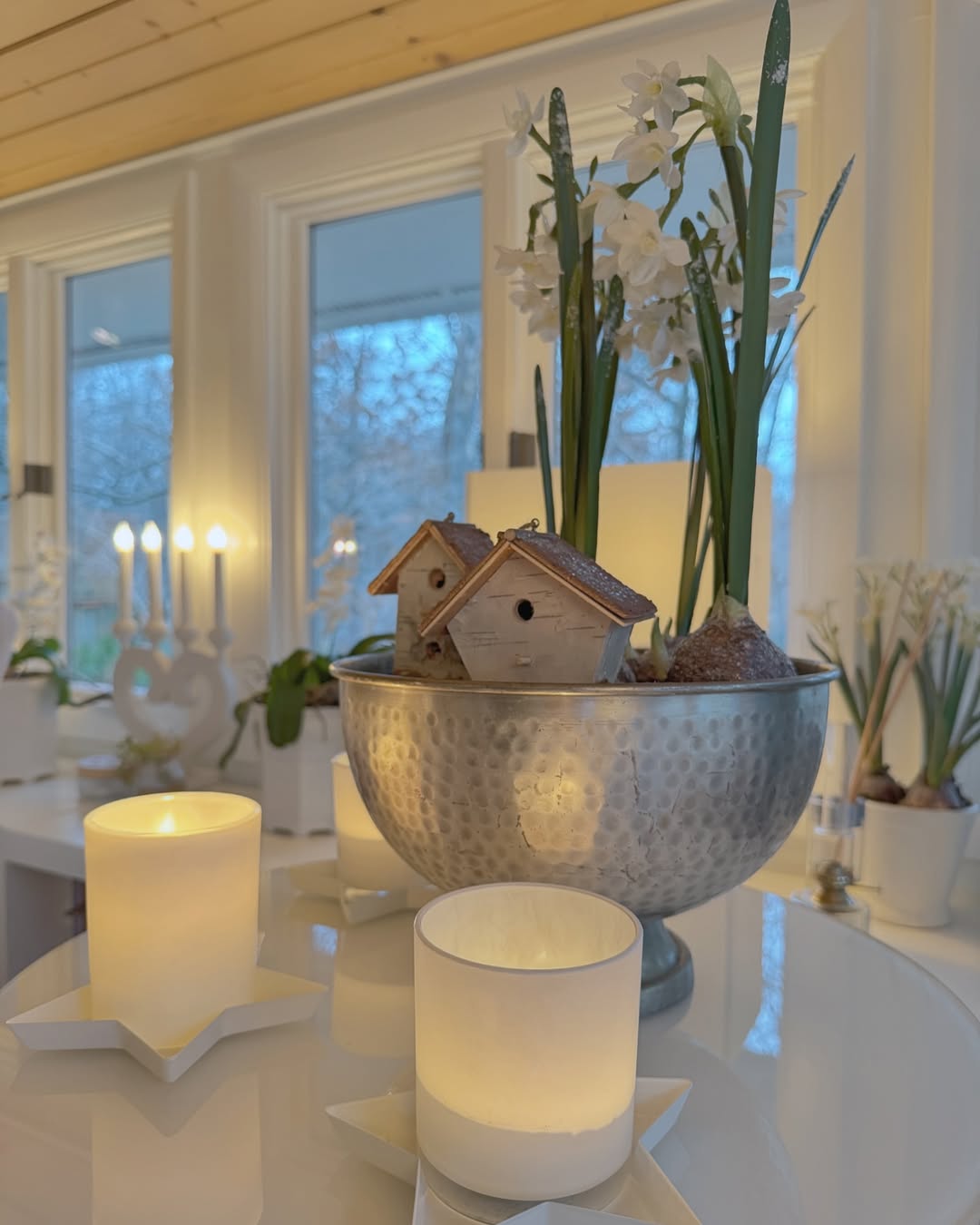
A group of pale flameless candles can create a quiet focal point on a table. Mix heights, keep the tones related, and leave room for ordinary use around the tray. A simple bowl of flowers or greenery nearby can add softness. You do not need to fill the tray with ornaments as well.
23. Choose a Modest Tree Topper
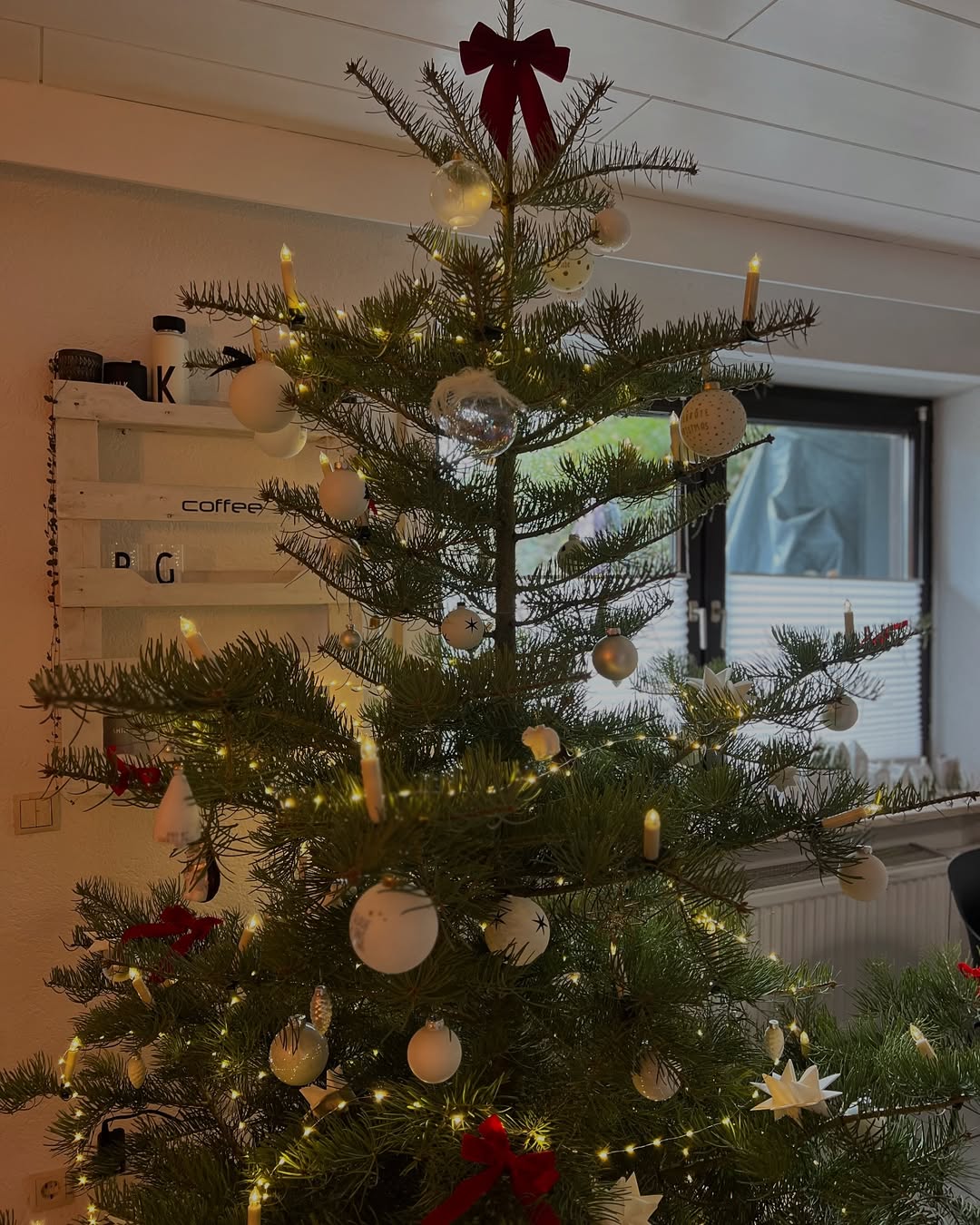
A simple branch, small star, or restrained ornament can finish a tree without dominating it. Check the support and weight before attaching it. Keep the upper branches visible around the topper. A lighter-looking top often suits an airy tree better than a large bow that hides its entire upper outline.
24. Balance a Decorated Tree With a Plain Base
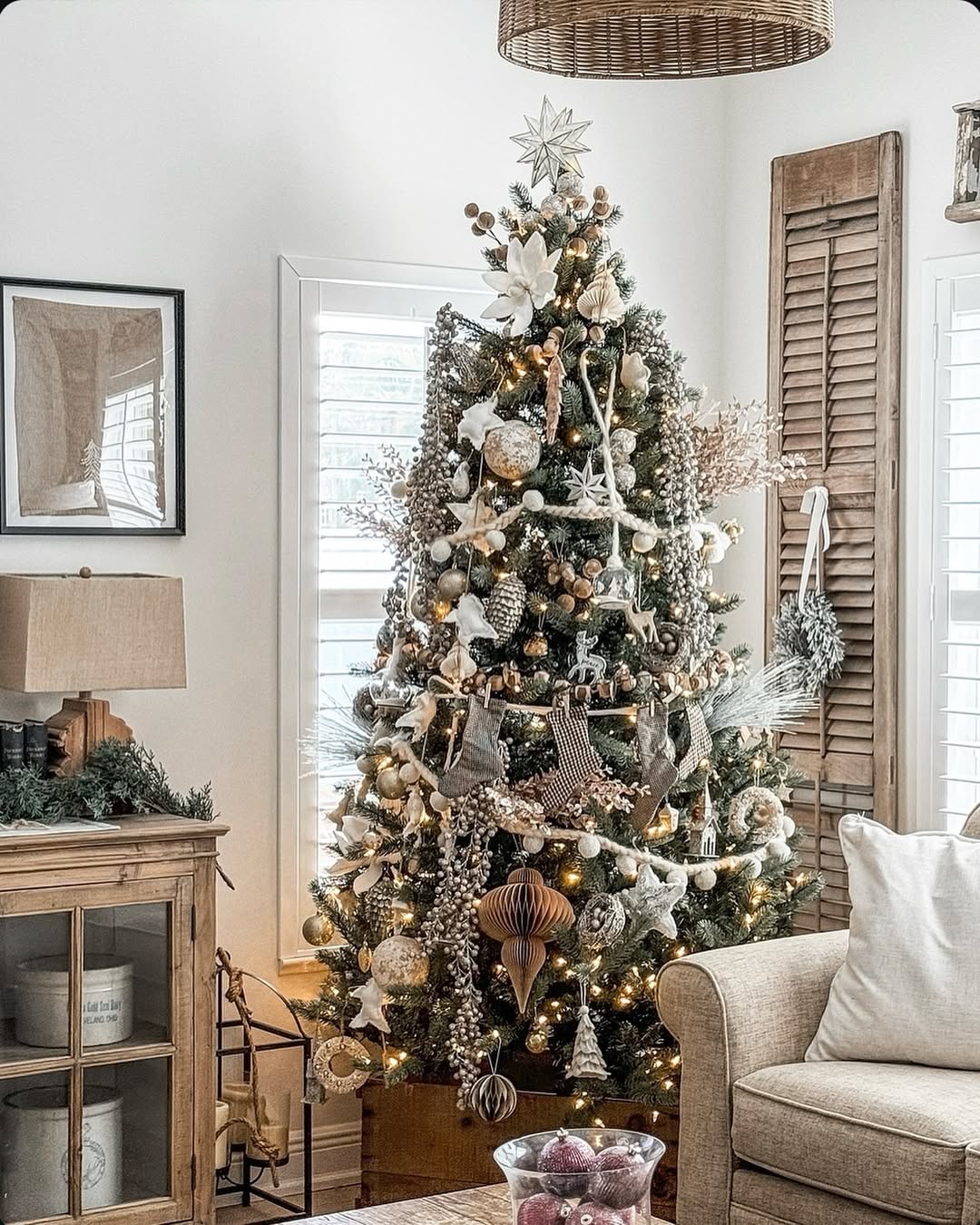
A tree with many pale ornaments can stay visually calm when the base is simple and the nearby furniture is uncluttered. Use one basket, skirt, or wrapping-paper family rather than several competing finishes. Leave access to the stand. The quiet base gives the ornament textures space to be seen.
25. Let the Window and Tree Share the Light
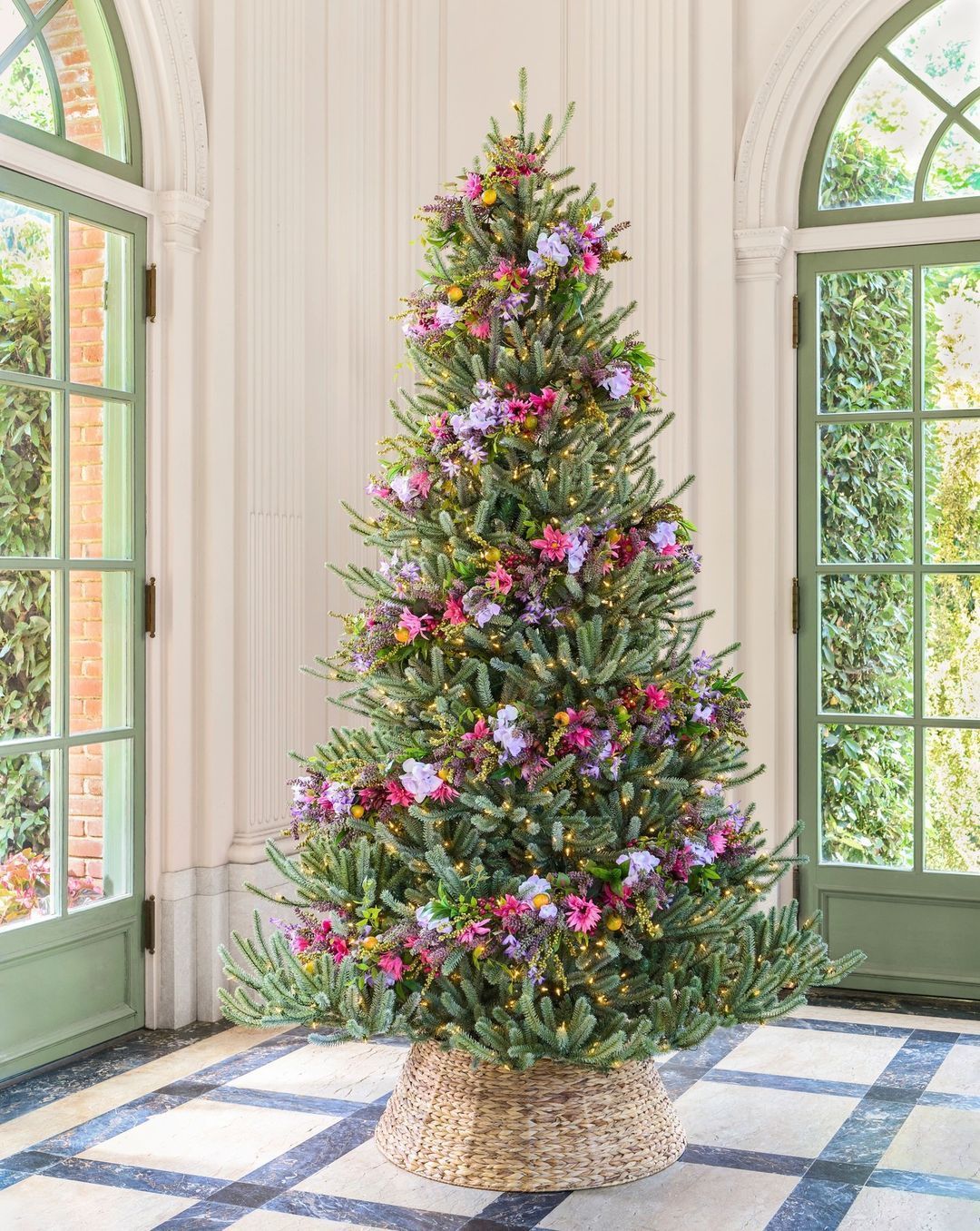
A tree near tall windows can look different throughout the day. Check the ornament colors in daylight before adding lights for the evening. Keep curtains and access routes clear. A small repeated color can connect the tree to the view and the room without another display on the window frame.
26. Connect the Tree to Existing Shelves
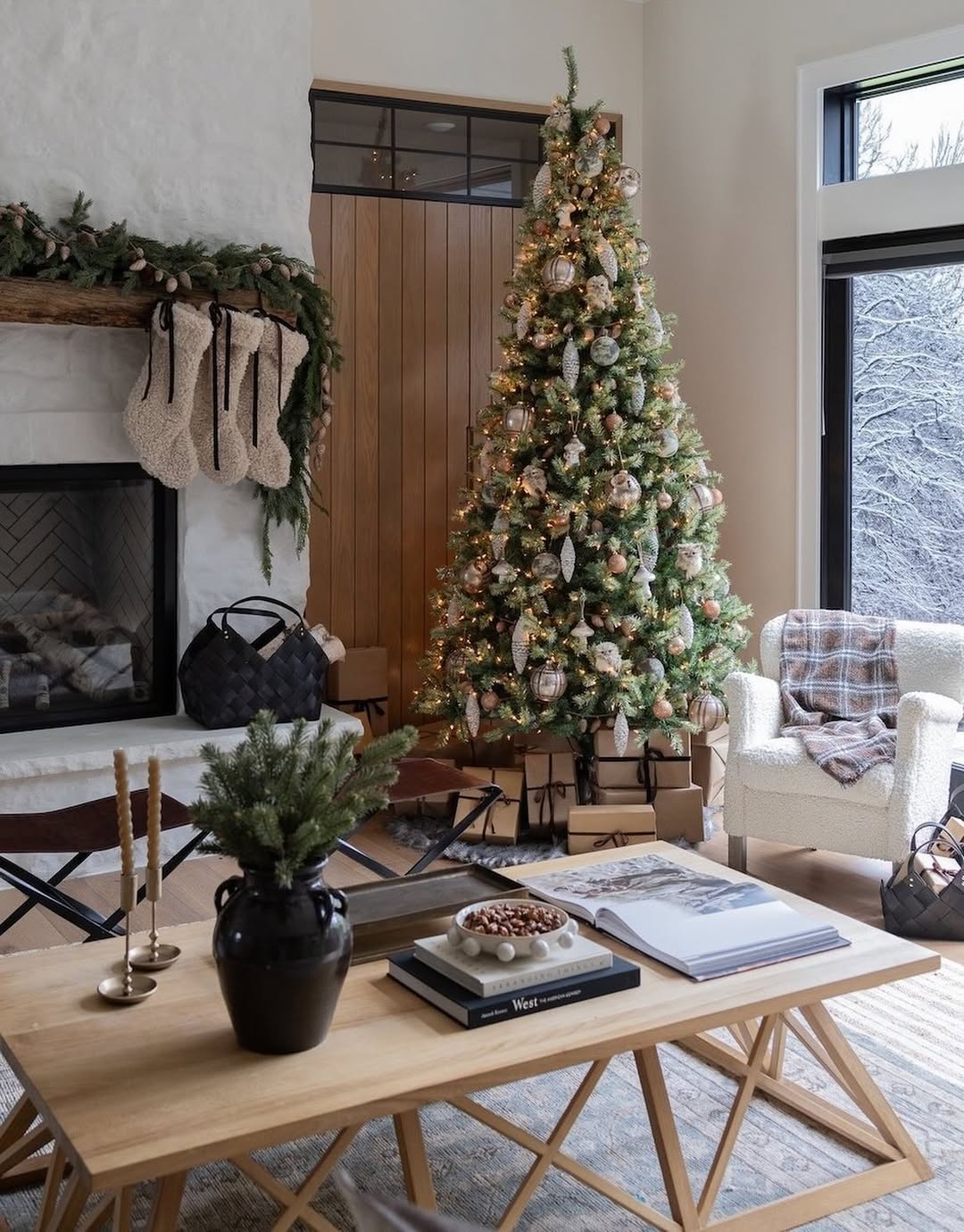
Use a few plain ornaments or small wooden objects on nearby shelves to repeat the tree’s materials. Keep books and storage usable. The shelves do not need miniature versions of the entire tree. One shared texture or color is enough to make the holiday addition feel integrated with everyday furnishings.
27. Make the Bedroom About Soft Light
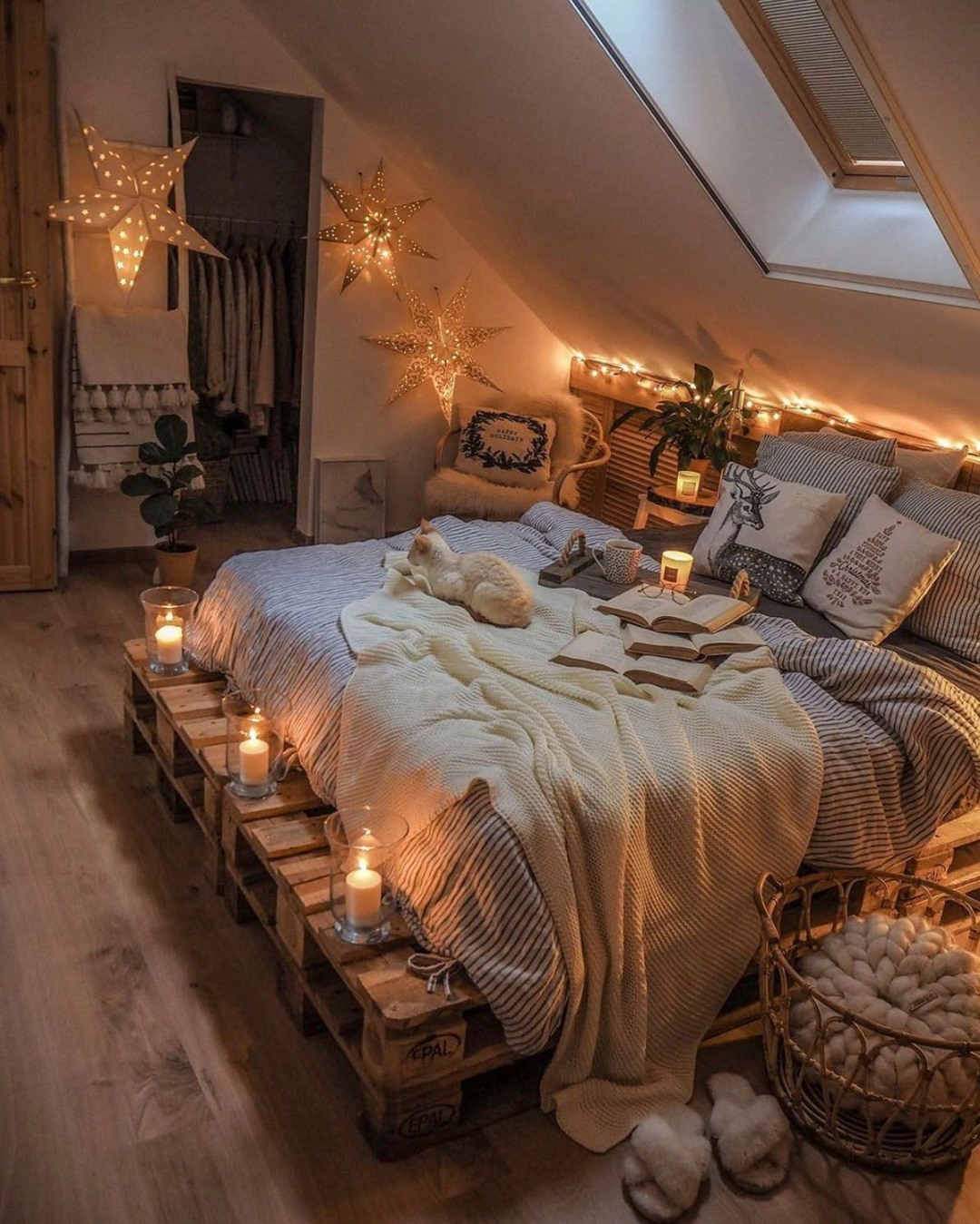
In a bedroom, a small light source and a comfortable throw may supply more seasonal warmth than a large tree. Keep cords, decorations, and powered accessories clear of bedding and follow product guidance. Choose a restrained palette that still feels restful. The room should remain easy to use at the end of the day.
28. Use One Playful Gnome or Figure
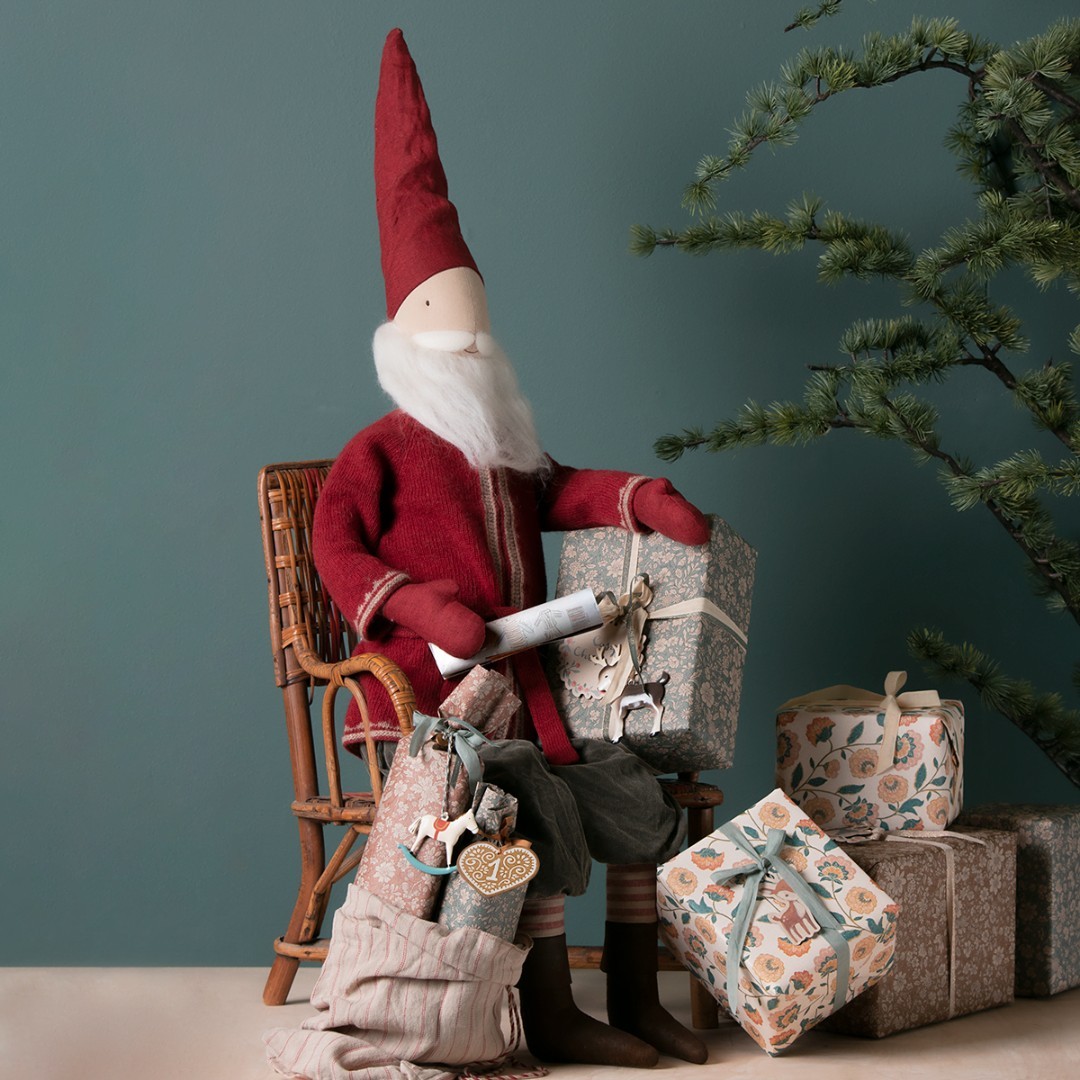
A small fabric figure can give a quiet arrangement a little humor. Place it beside one simple tree or vessel and keep its surrounding space clear. Choose the scale to suit the shelf rather than the largest figure available. The object becomes more noticeable when it is not competing with several other characters.
Keep the Room Comfortable to Use
Finish by looking at the room from the main seating area. Check that lamps remain useful, tables have room for drinks, and textiles are easy to reach. A few repeated materials will connect the holiday display more naturally than decorating every surface with an identical miniature arrangement.
Explore More Ideas for Your Home
Browse Seasonal & Entertaining for more seasonal decorating, or visit Design & Decor for help with the room’s everyday layout, color, and furnishings.