

A strong summer backyard does more than look good in a photograph. It gives people places to cool off, gather over food, spend quiet time, and move comfortably from one activity to the next. The most useful outdoor spaces are shaped around the routines that happen there, from weeknight dinners to slow weekend mornings.
This collection brings together ideas for shade, seating, planting, play, and entertaining. Treat them as flexible building blocks rather than a checklist. One thoughtful update can change how a whole corner of the yard is used, while several smaller improvements can make the entire space feel more generous and complete.
1. Turn a Covered Patio Into a True Outdoor Room
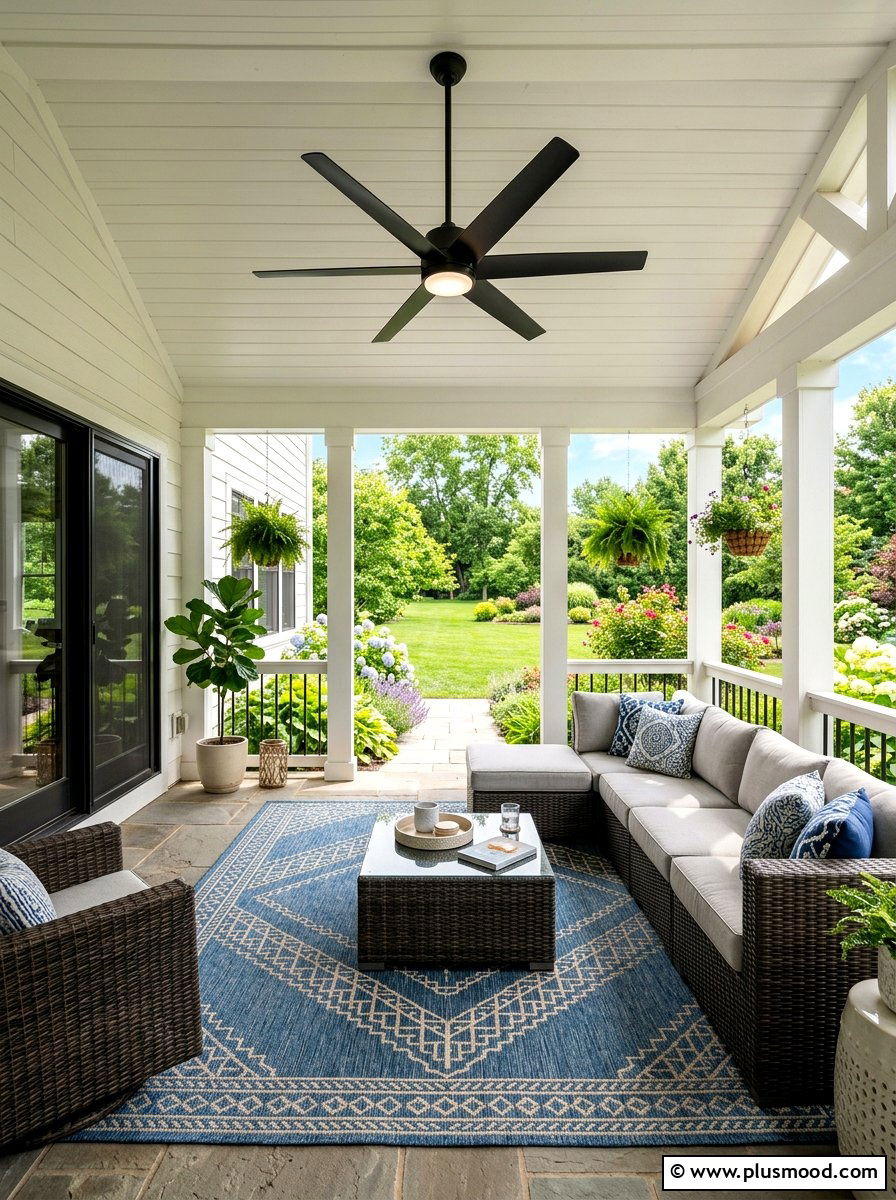
A roofed patio creates a dependable place to sit outside during strong sun or a passing shower. A ceiling fan, comfortable lighting, and weather-ready furniture can make it feel as inviting as an interior living room while still keeping the garden close.
Key Details
- Use a fan and fixtures rated for the location.
- Choose furniture that leaves clear circulation around doors.
Pro Tip: Add a dimmable overhead light and a lamp-like accent source so the space can shift from daytime use to dinner easily.
2. Set a Long Table Where Everyone Can Stay Awhile
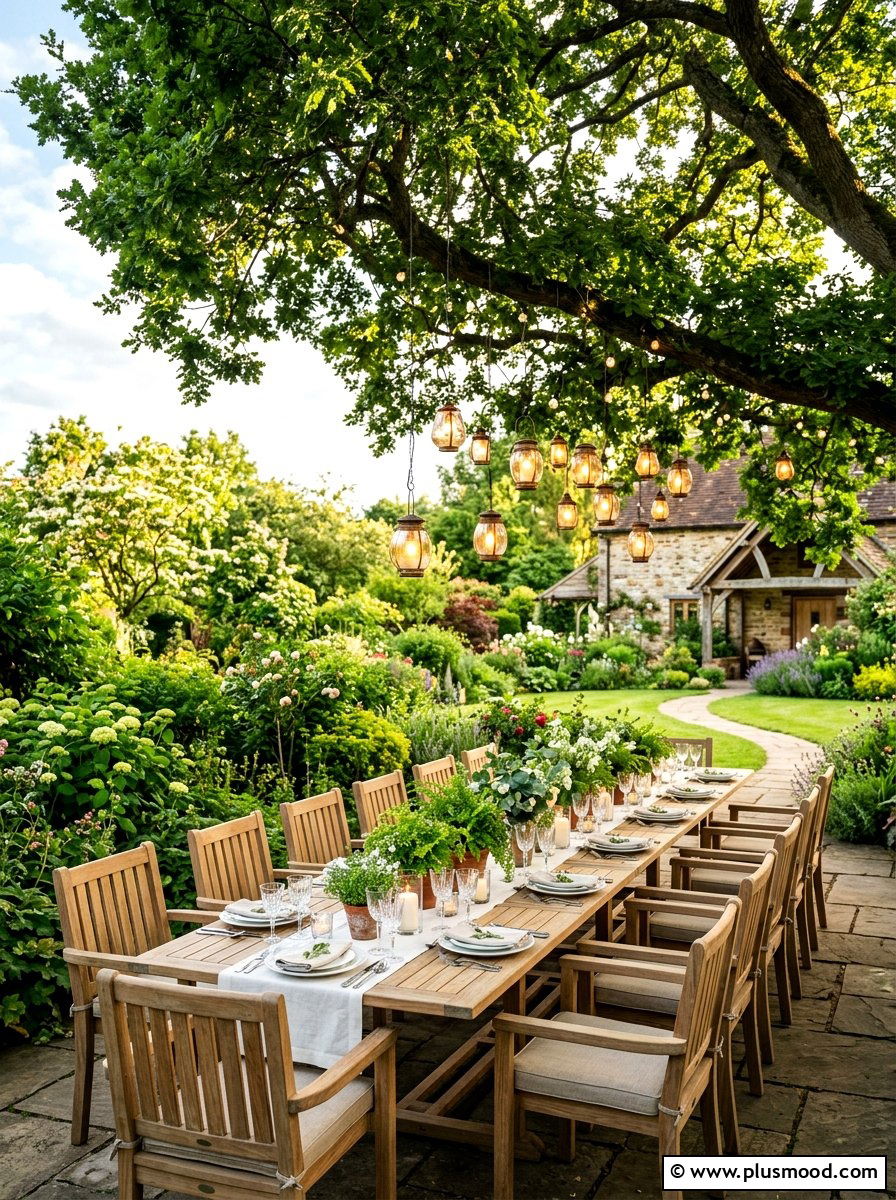
A generous outdoor table turns a meal into the center of an evening instead of a quick stop between activities. The arrangement works best when chairs are comfortable, shade is available, and serving dishes have a nearby landing spot.
Key Details
- Allow enough clearance to pull out chairs comfortably.
- Use durable pieces that can handle regular outdoor meals.
Pro Tip: Keep a drawer, basket, or nearby cabinet stocked with outdoor napkins and reusable serving pieces.
3. Make Cooking Part of the Gathering
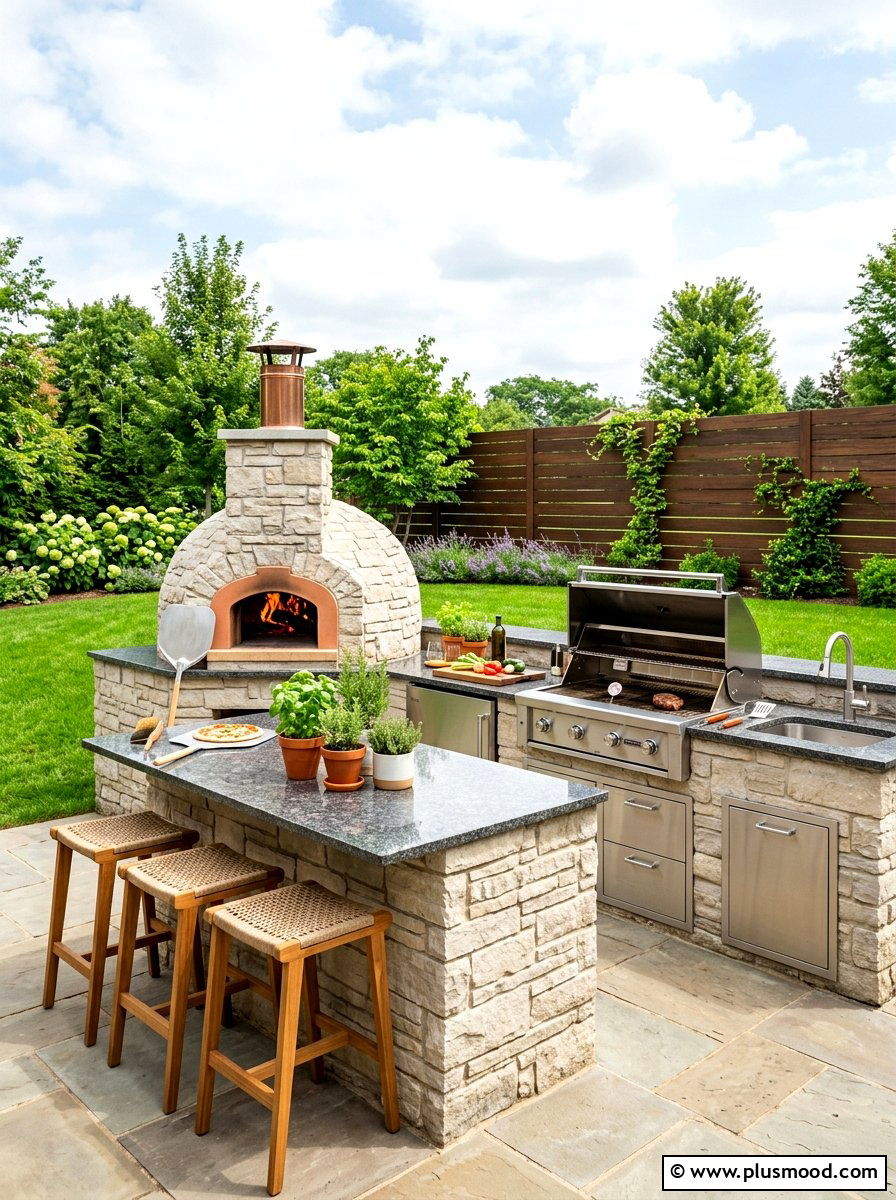
An outdoor cooking zone can keep the person preparing food connected to guests rather than isolated inside. Whether it includes a grill, pizza oven, or simple prep counter, the useful details are work space, storage, shade, and a safe layout around heat.
Key Details
- Use noncombustible surfaces near cooking equipment.
- Keep fuel, tools, and food-prep areas organized and separate.
Pro Tip: Plan at least one clear counter between the heat source and seating so serving food feels less rushed.
4. Add a Casual Place to Serve Drinks
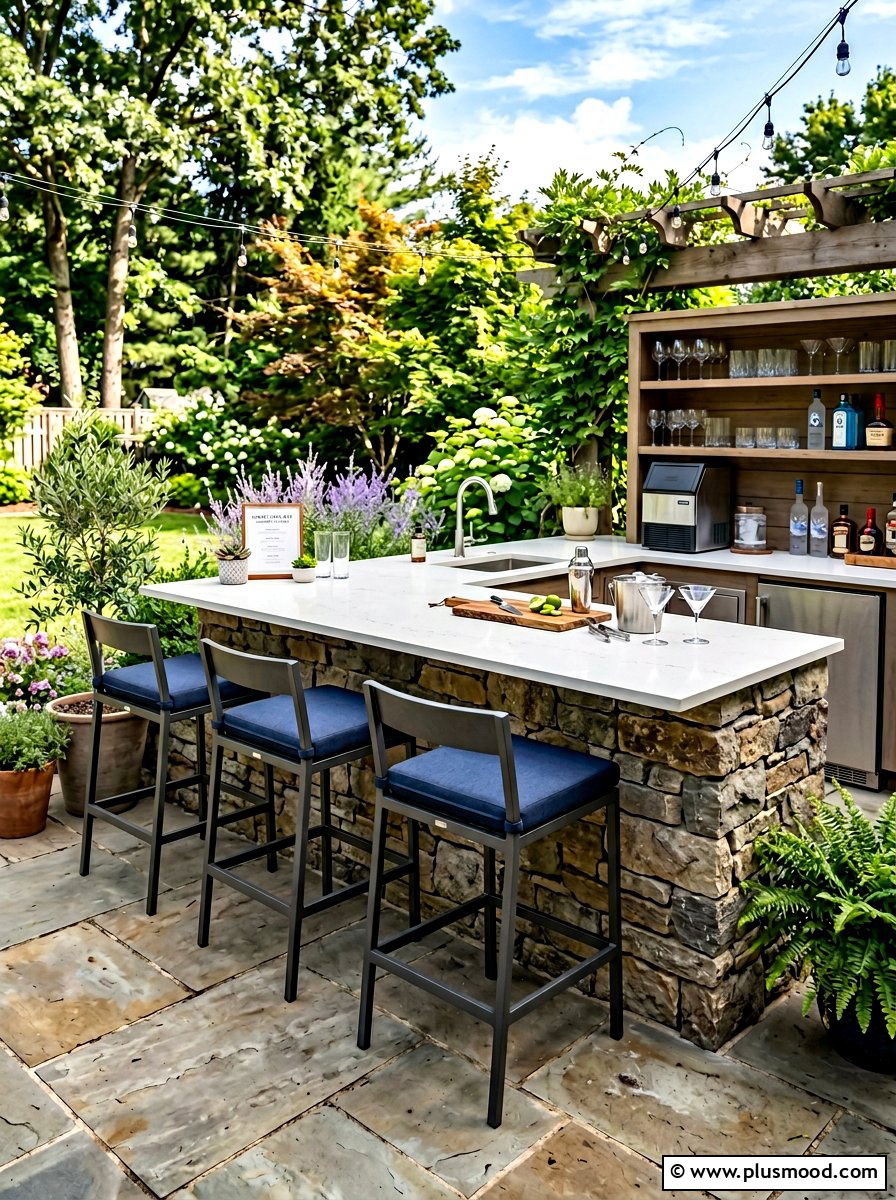
A compact bar-height counter offers a natural point for guests to gather before dinner or while food is cooking. It can be permanent or movable, but it should have enough depth for drinks, plates, and a small tray of essentials.
Key Details
- Choose stools designed for exterior exposure.
- Keep the counter out of direct traffic paths.
Pro Tip: Store a drink tub, opener, and cloth napkins underneath so the setup is ready without repeated trips indoors.
5. Control the Sun With an Adjustable Pergola
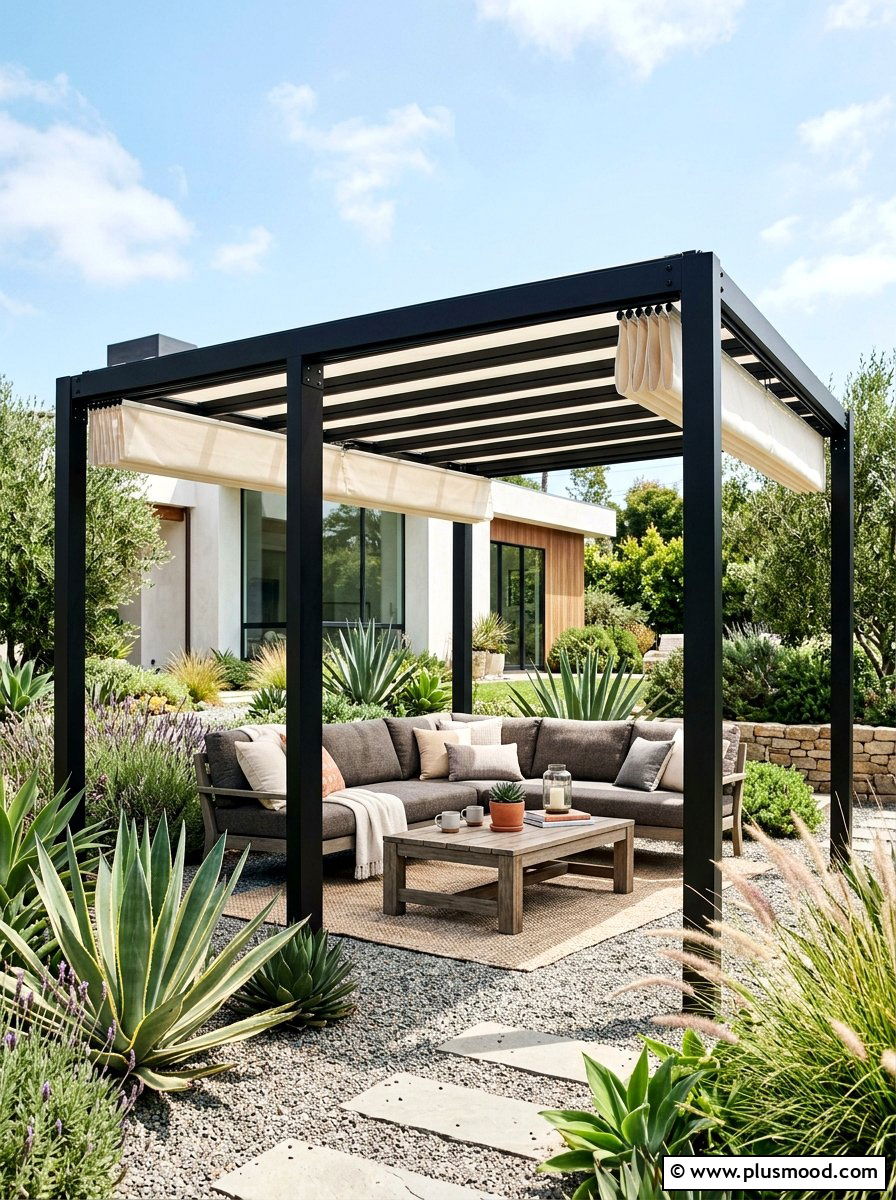
A pergola gives a patio a defined ceiling while still keeping the space connected to the sky. A retractable shade panel makes the structure more responsive, offering coverage during the hottest hours and opening the view when the light softens.
Key Details
- Anchor the structure appropriately for local weather conditions.
- Select fabric that is made for sunlight and moisture.
Pro Tip: Install shade controls where they are easy to reach from the seating area so the feature is used daily.
6. Use a Living Wall to Soften a Hard Boundary
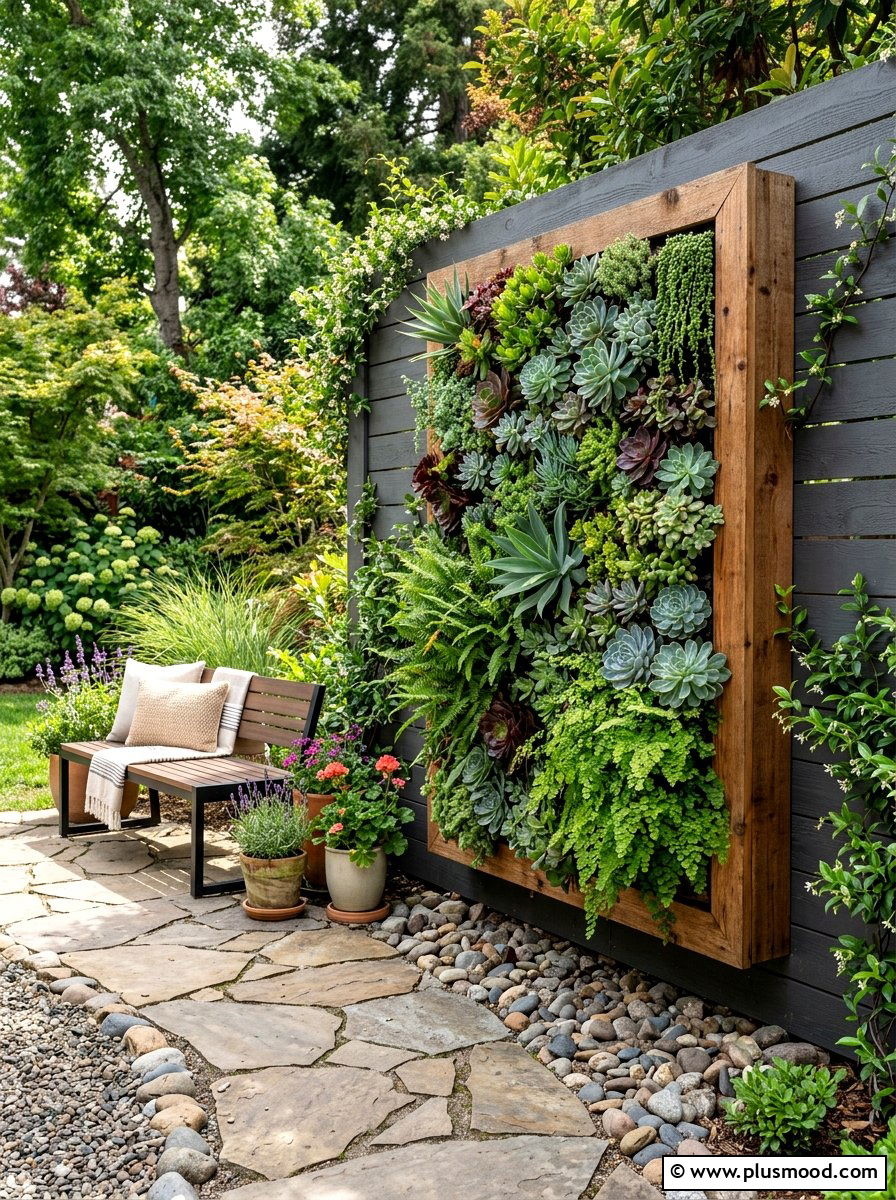
A vertical planting system can transform a bare fence or wall into the green backdrop of an outdoor lounge. Its visual impact comes from repeating foliage shapes and a consistent watering plan, not from packing in every plant variety available.
Key Details
- Confirm the wall can support the system when wet.
- Build irrigation and drainage into the design from the beginning.
Pro Tip: Limit the palette to a few foliage types so the wall reads as calm and intentional rather than busy.
7. Build Privacy Upward With a Trellis
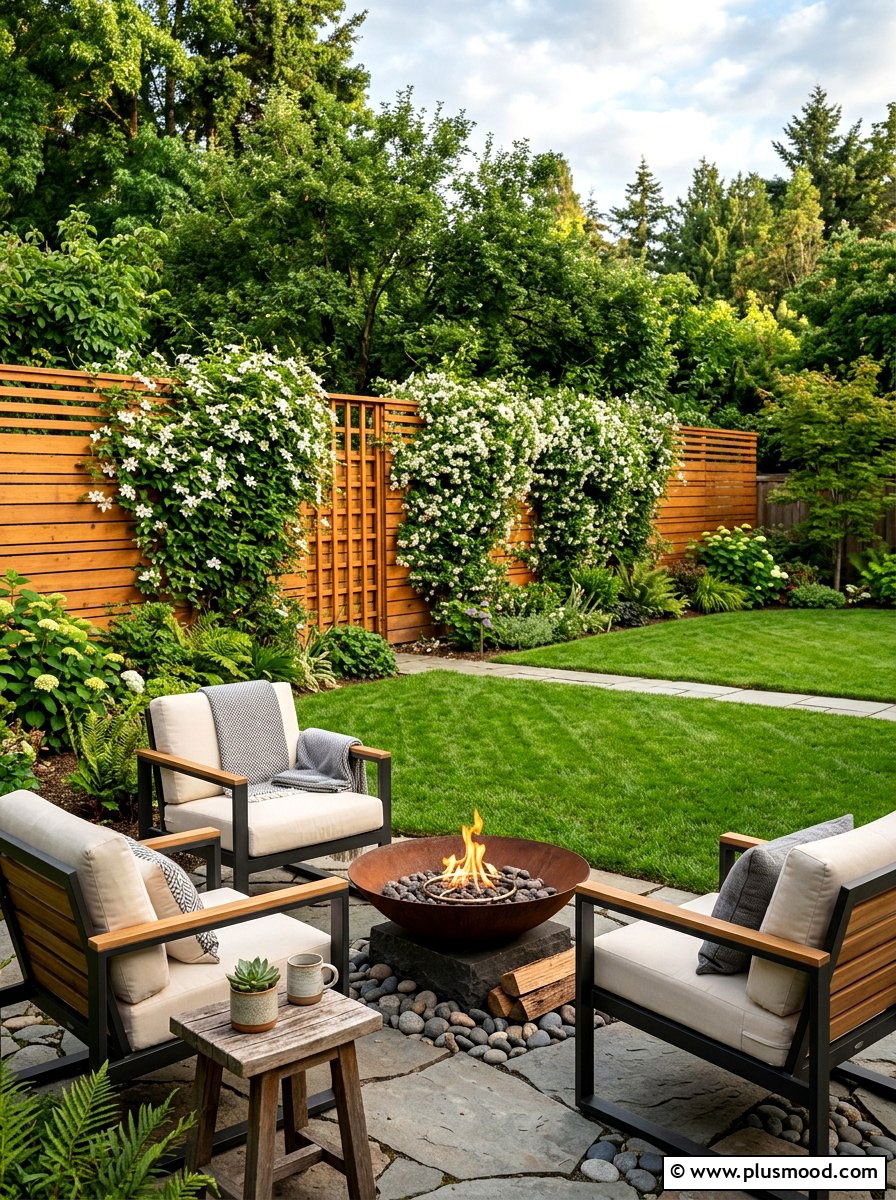
A fence extension or freestanding trellis can block an awkward view without making a small yard feel shut in. Pair the structure with climbing plants or containers so the privacy layer gradually becomes part of the garden rather than a blank barrier.
Key Details
- Use exterior-grade fasteners and materials.
- Check height and setback rules before building.
Pro Tip: Stagger plantings at the base so the screen looks full from the first season, not only after vines mature.
8. Rethink the Lawn With a Water-Wise Planting Plan
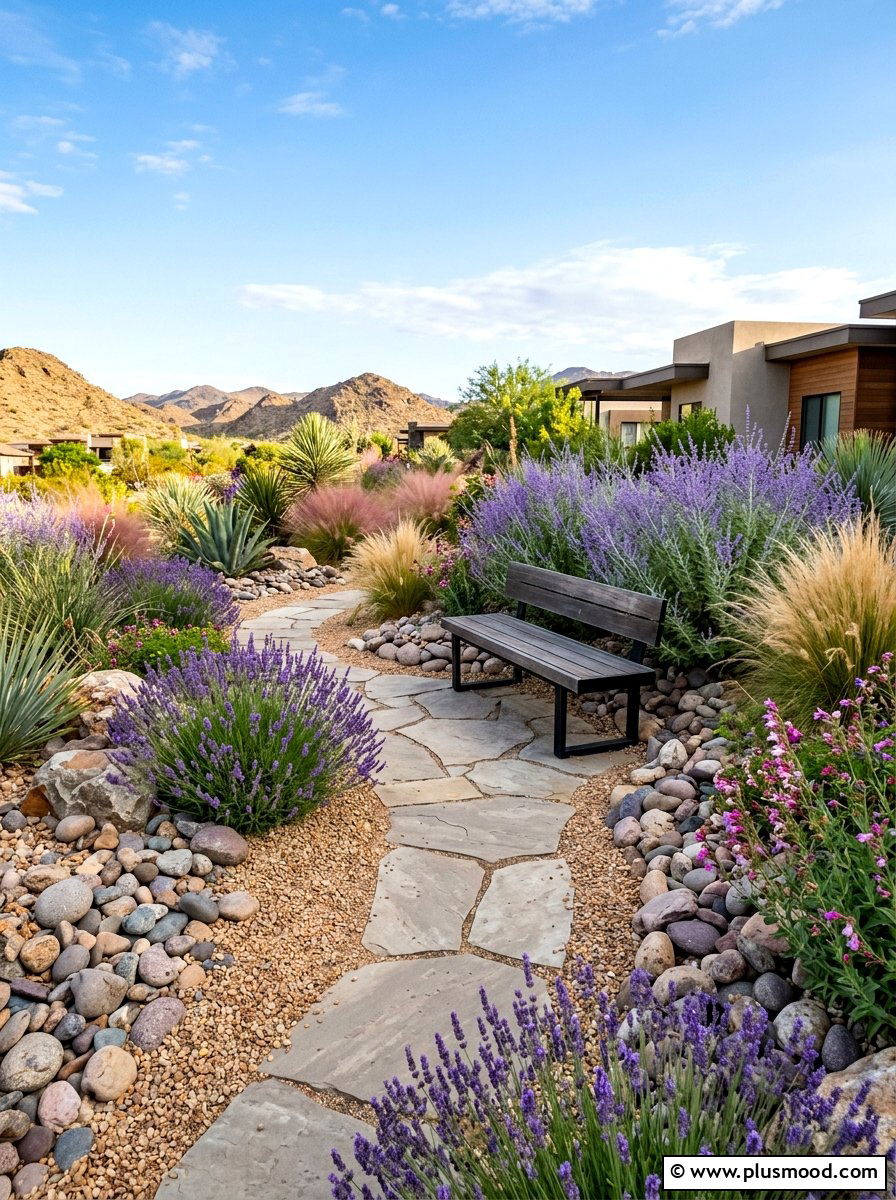
A more drought-conscious landscape can rely on gravel, stone, and plants chosen for the site instead of a large, thirsty lawn. The most successful version is tailored to local climate, soil, and water conditions rather than copying a style from elsewhere.
Key Details
- Select plants suited to your regional conditions.
- Group plants with similar water needs together.
Pro Tip: Repeat one gravel or mulch tone throughout the yard to connect separate planted areas.
9. Reserve a Sunny Patch for Pollinator-Friendly Color
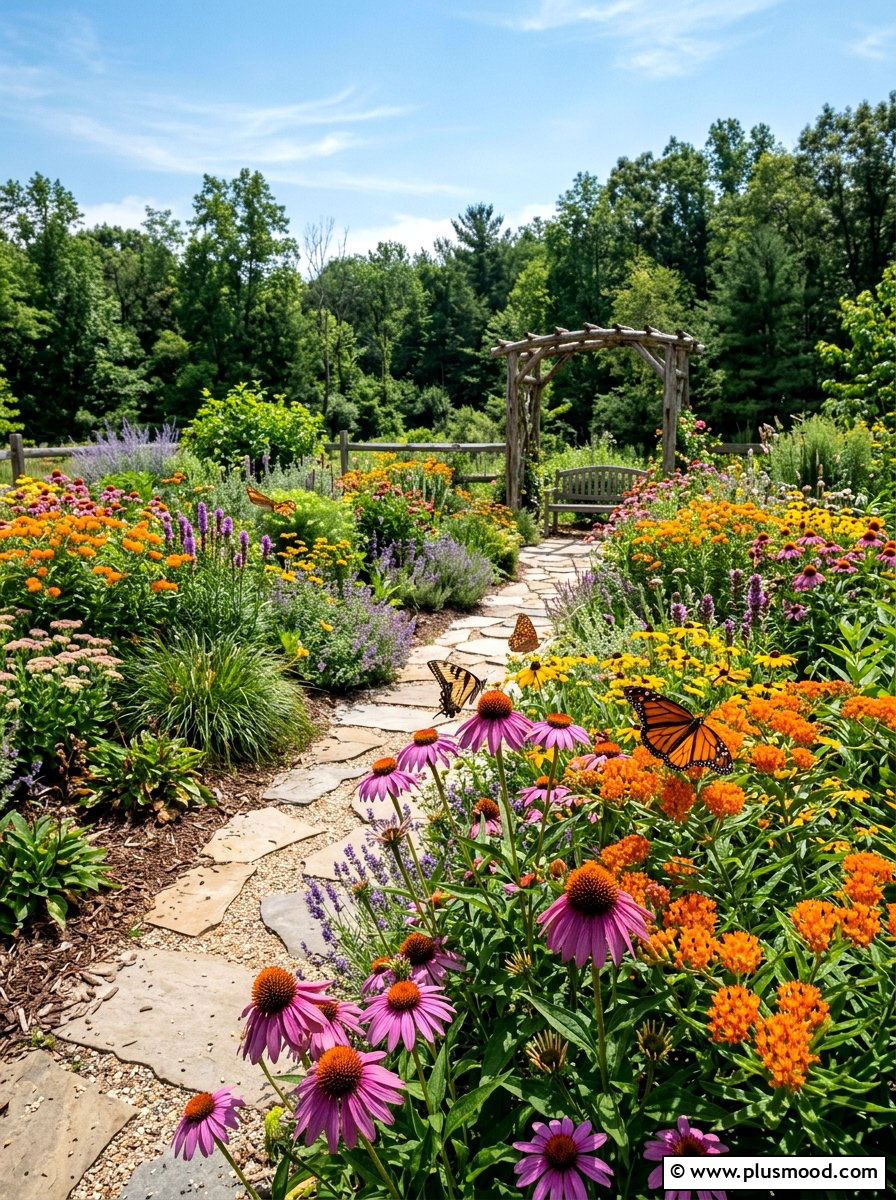
A planting bed designed around flowering plants can bring seasonal movement and color to the backyard while making the landscape feel less static. Choose region-appropriate plants and aim for a sequence of bloom times rather than one short burst of flowers.
Key Details
- Seek local guidance for plants appropriate to your area.
- Provide a mix of flower forms and heights.
Pro Tip: Place the bed where it can be seen from a kitchen window or the main patio to enjoy the activity daily.
10. Make Room for a Productive Garden
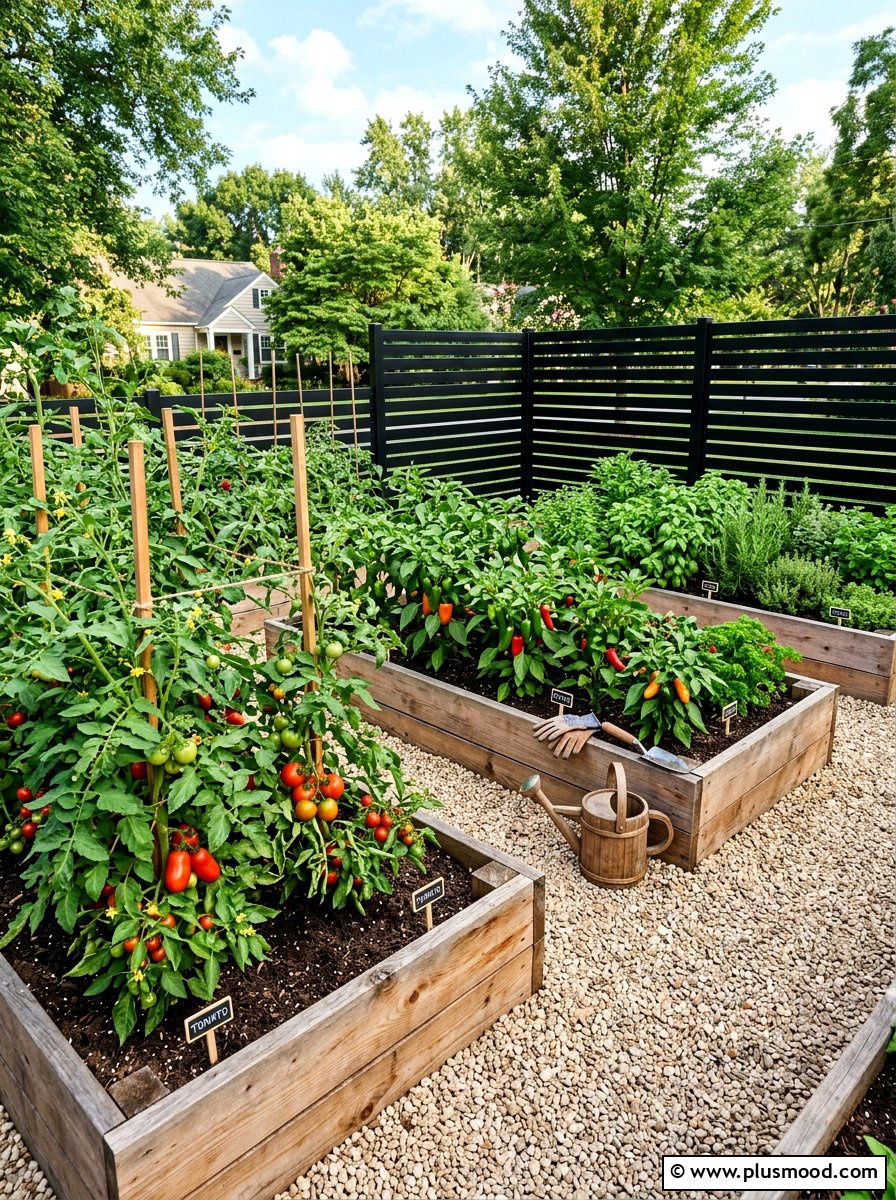
Raised beds can organize vegetables, herbs, and cut flowers into a tidy growing area that is easier to tend. Their simple geometry also adds structure to a loose landscape, creating a satisfying contrast between productive planting and recreational space.
Key Details
- Place beds where the intended crops receive adequate sun.
- Leave paths wide enough for watering and harvest access.
Pro Tip: Add a narrow ledge or small bench nearby for a place to set tools and baskets while working.
11. Layer Pots Along a Deck Edge
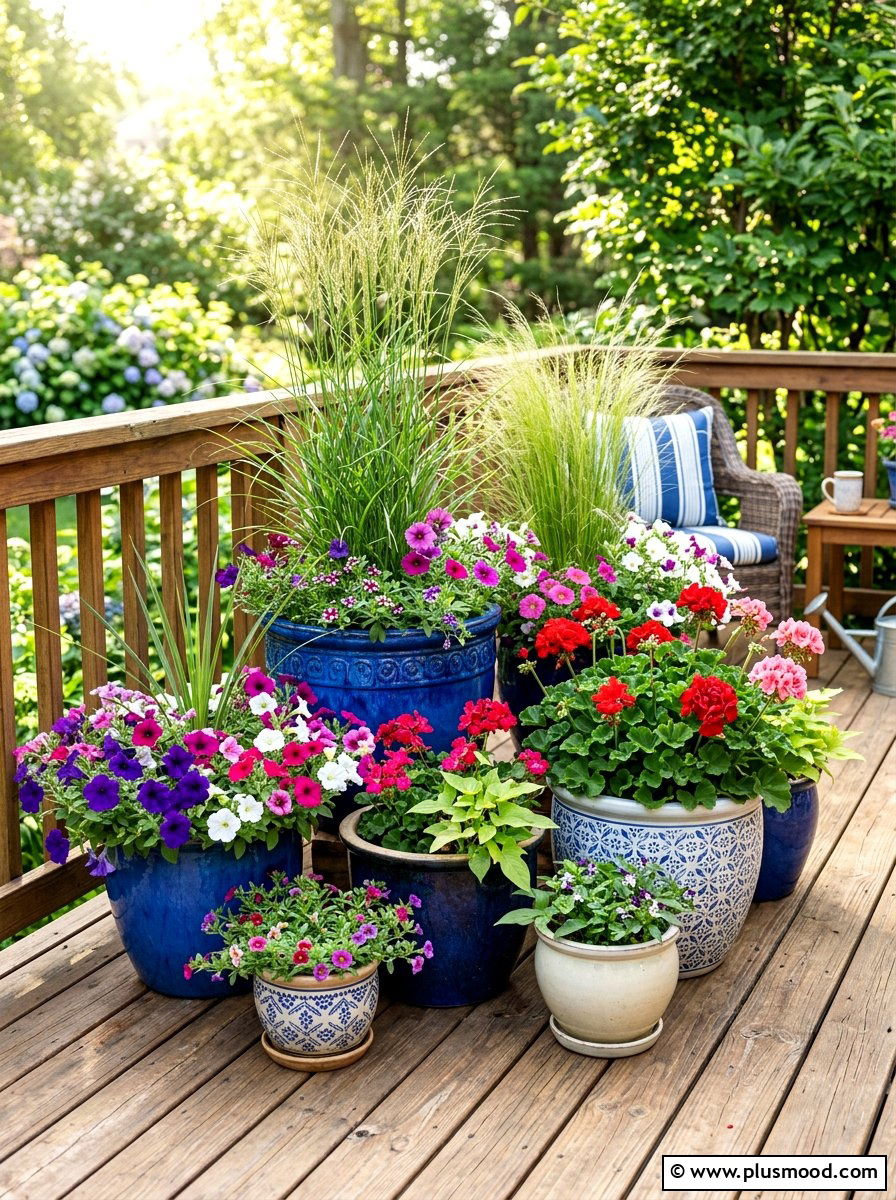
Containers give a deck or patio flexible seasonal color without requiring permanent planting beds. A small collection feels strongest when the pot finishes relate to one another and the plant heights step gradually from low to tall.
Key Details
- Use pots with reliable drainage.
- Consider the weight of filled containers before placing them on a deck.
Pro Tip: Include one fragrant plant near seating or a doorway so the container grouping engages more than the eye.
12. Create a Low-Maintenance Place to Pause
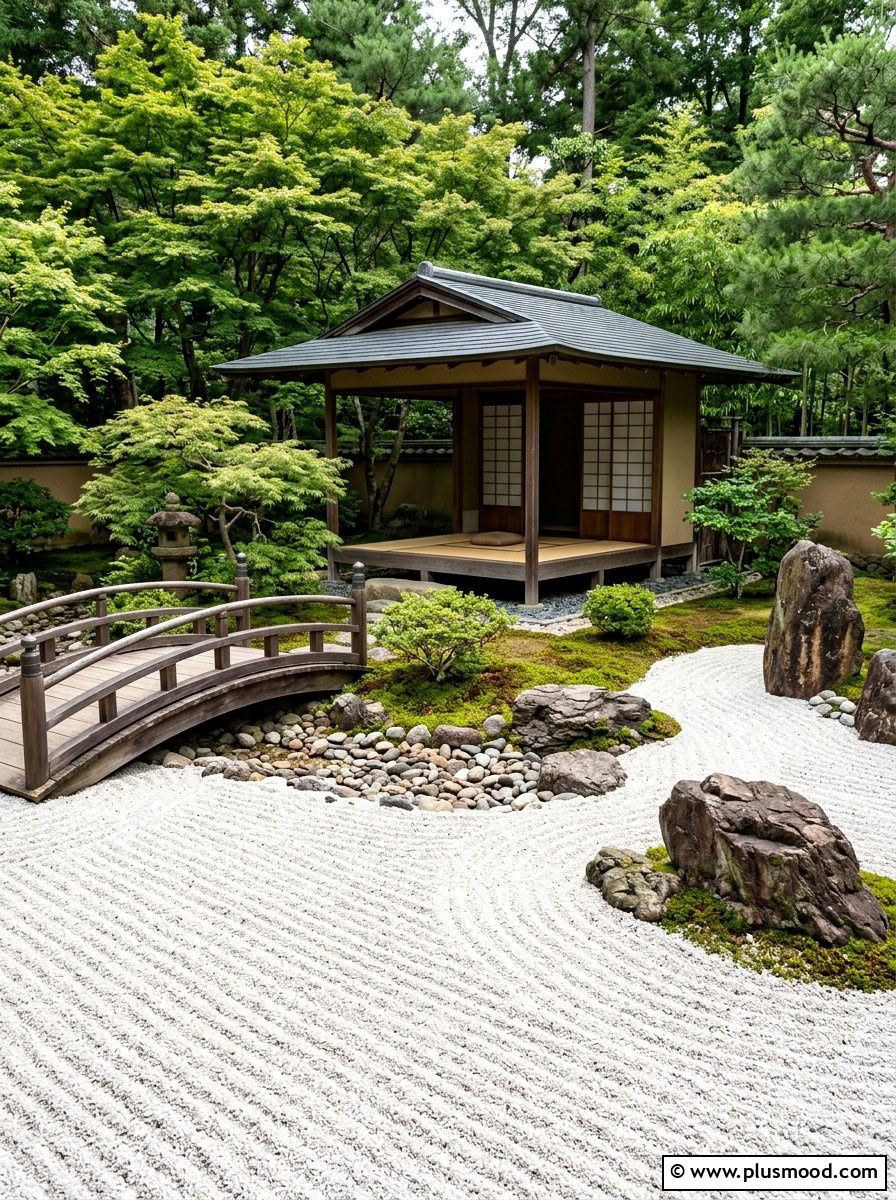
A pared-back garden corner with gravel, stone, and a few sculptural plants can offer visual rest within a busy backyard. The goal is not to recreate a formal tradition, but to give the eye a simple scene with texture, proportion, and space.
Key Details
- Use edging to keep gravel in place.
- Choose a limited set of materials and forms.
Pro Tip: Place a single bench or chair nearby so the area becomes a usable retreat rather than decoration alone.
13. Lead Yourself Toward a Quieter Garden Spot
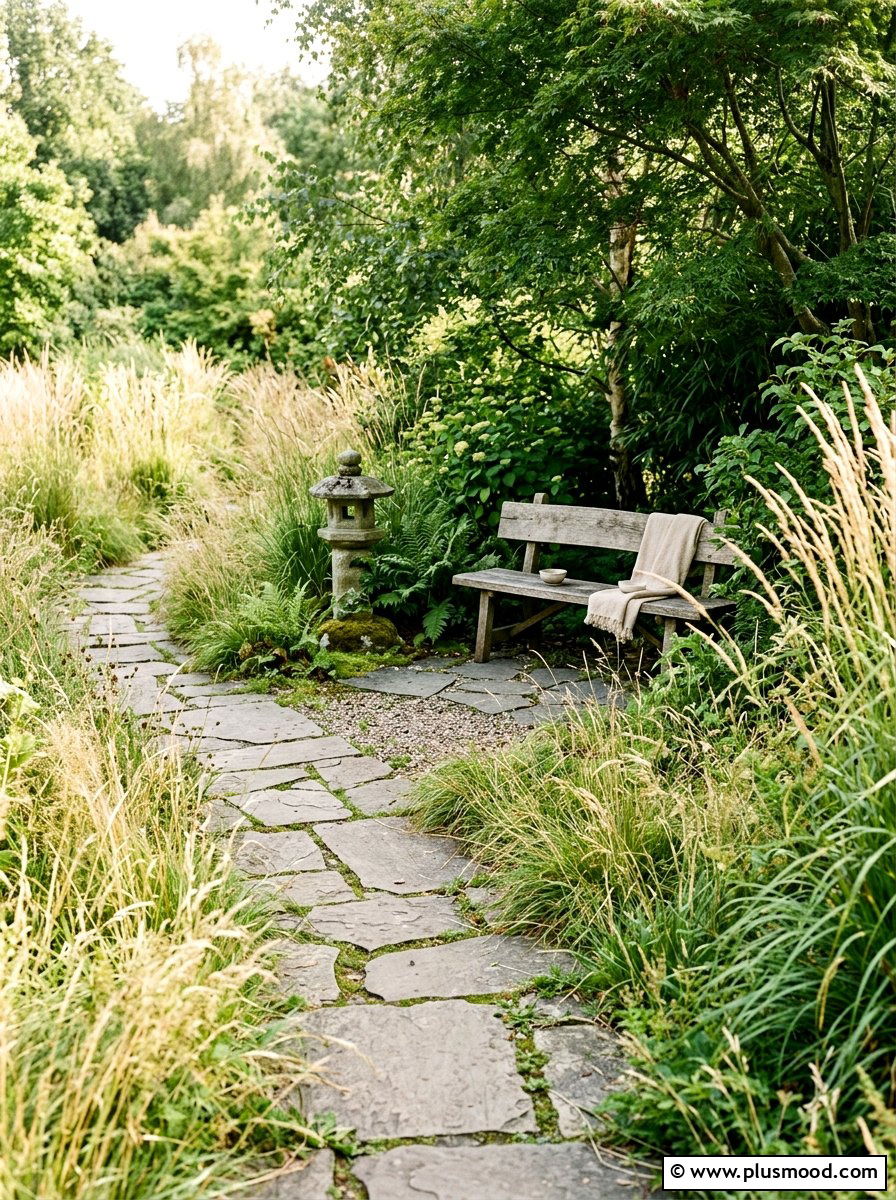
A small stone path can signal a change of pace as it moves away from the lively parts of the yard. End it at a chair, a view, or a planted alcove to give the route a clear purpose and make the garden feel more layered.
Key Details
- Set stones securely to avoid rocking.
- Plan the spacing around comfortable walking strides.
Pro Tip: Use a gently curved path when you want the destination to reveal itself gradually.
14. Add a Contemporary Water Accent
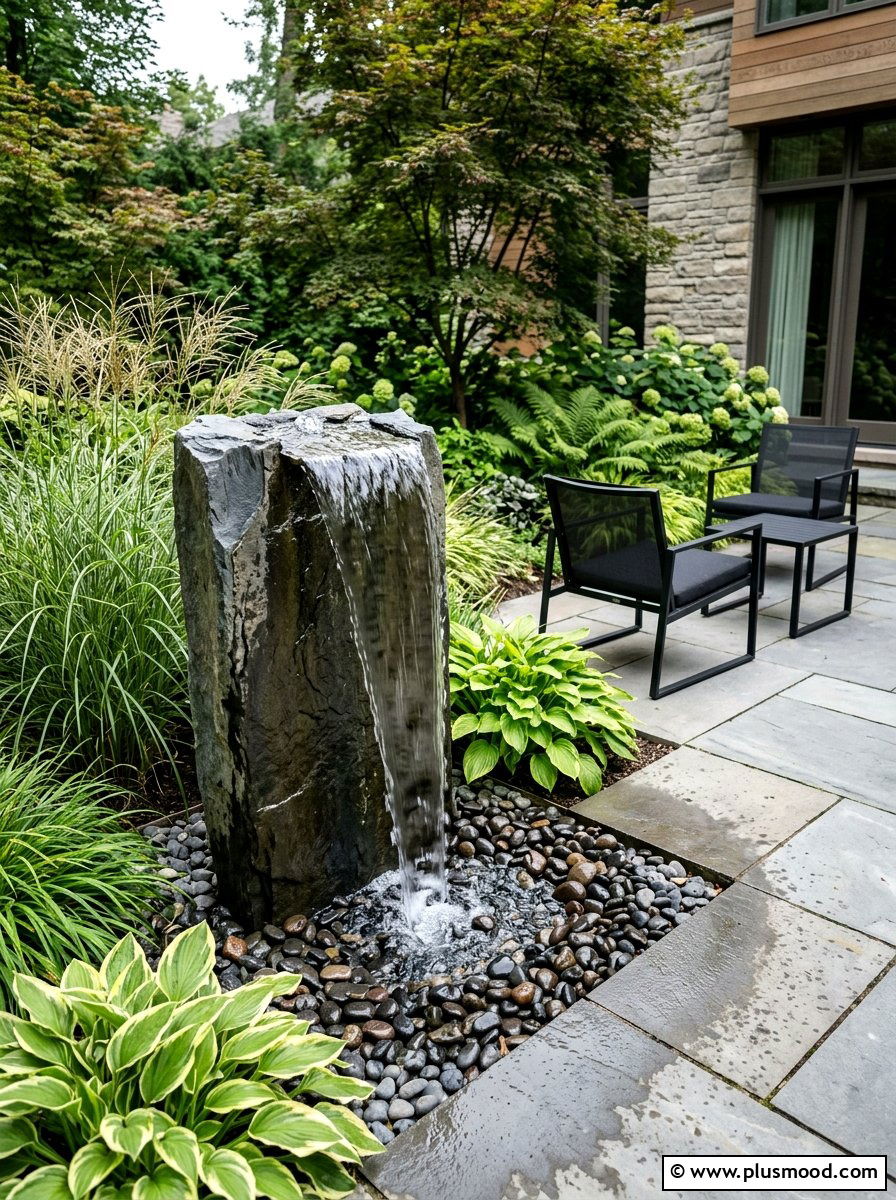
A clean-lined fountain or basin can cool the visual energy of a hardscape-heavy patio while introducing a subtle sound layer. Keep the geometry simple and choose a flow that suits conversation, not one that overwhelms the entire yard.
Key Details
- Use a pump and electrical connection rated for exterior wet conditions.
- Plan easy access for seasonal cleaning.
Pro Tip: Place the water feature where it can be seen from both the house and the primary seating area.
15. Anchor the Lounge With a Soft Surface
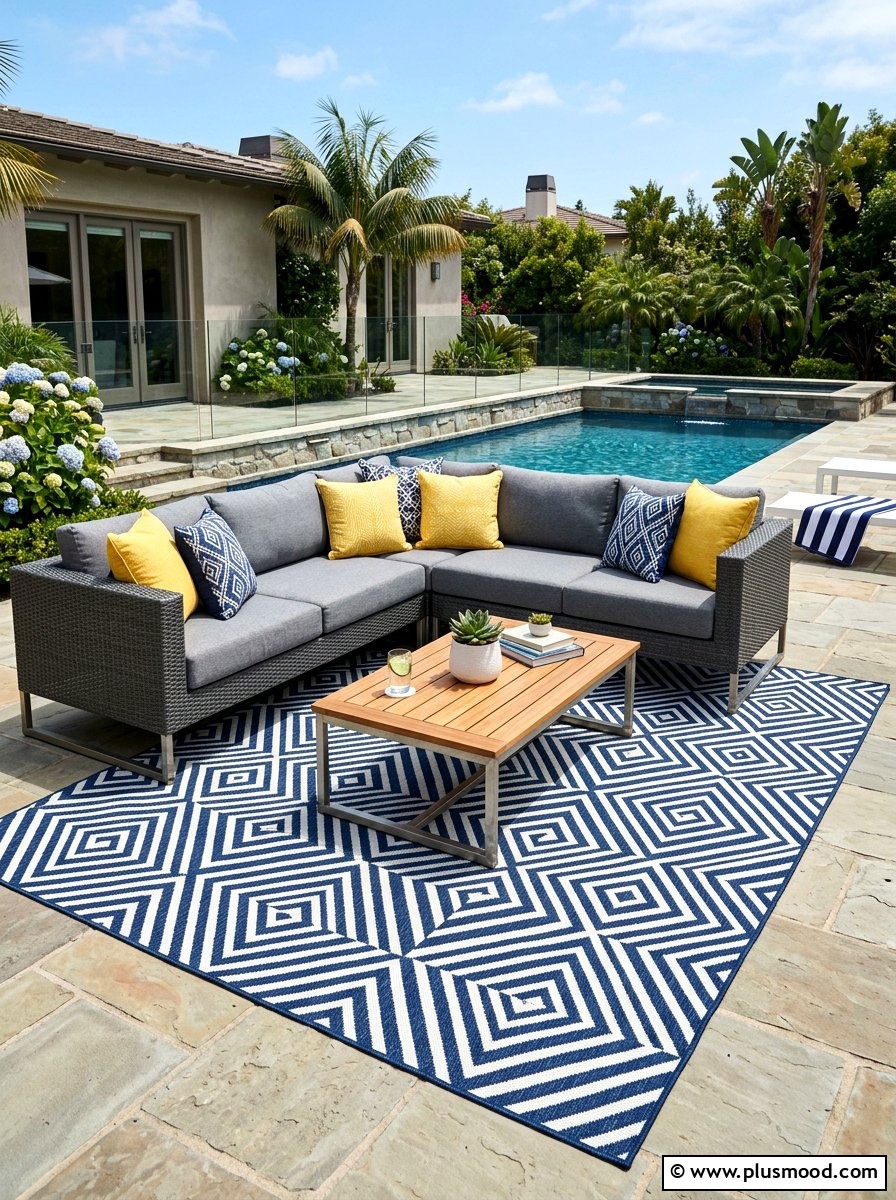
An outdoor rug helps a set of chairs and a sofa feel like one intentional arrangement, especially on a large deck or plain concrete slab. It also gives the space a color story that can be repeated in cushions and planters.
Key Details
- Choose a rug made for exterior drainage and UV exposure.
- Select a size that connects the front legs of the furniture.
Pro Tip: Use a pattern with mid-tone color variation to disguise ordinary outdoor dust and pollen.
16. Make One Spot Feel Like a Resort Cabana
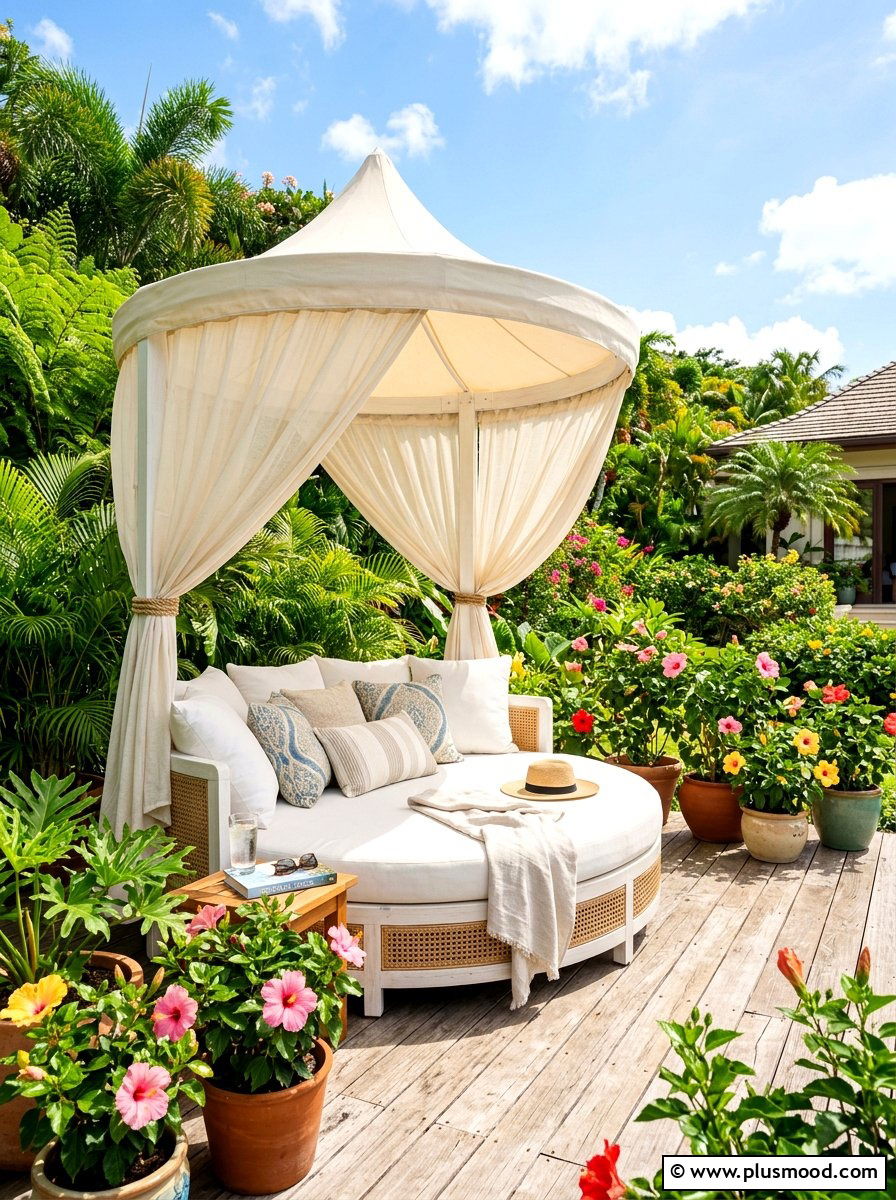
A canopy daybed gives a backyard a clear invitation to slow down. It works best in a protected corner where fabric, cushions, and a nearby side table can create a comfortable destination for reading, napping, or watching the garden.
Key Details
- Use fabrics suited to outdoor moisture and sun.
- Secure or store loose textiles before storms.
Pro Tip: Position the daybed to receive morning or late-day shade rather than the most intense afternoon sun.
17. Claim a Shaded Place for a Hammock
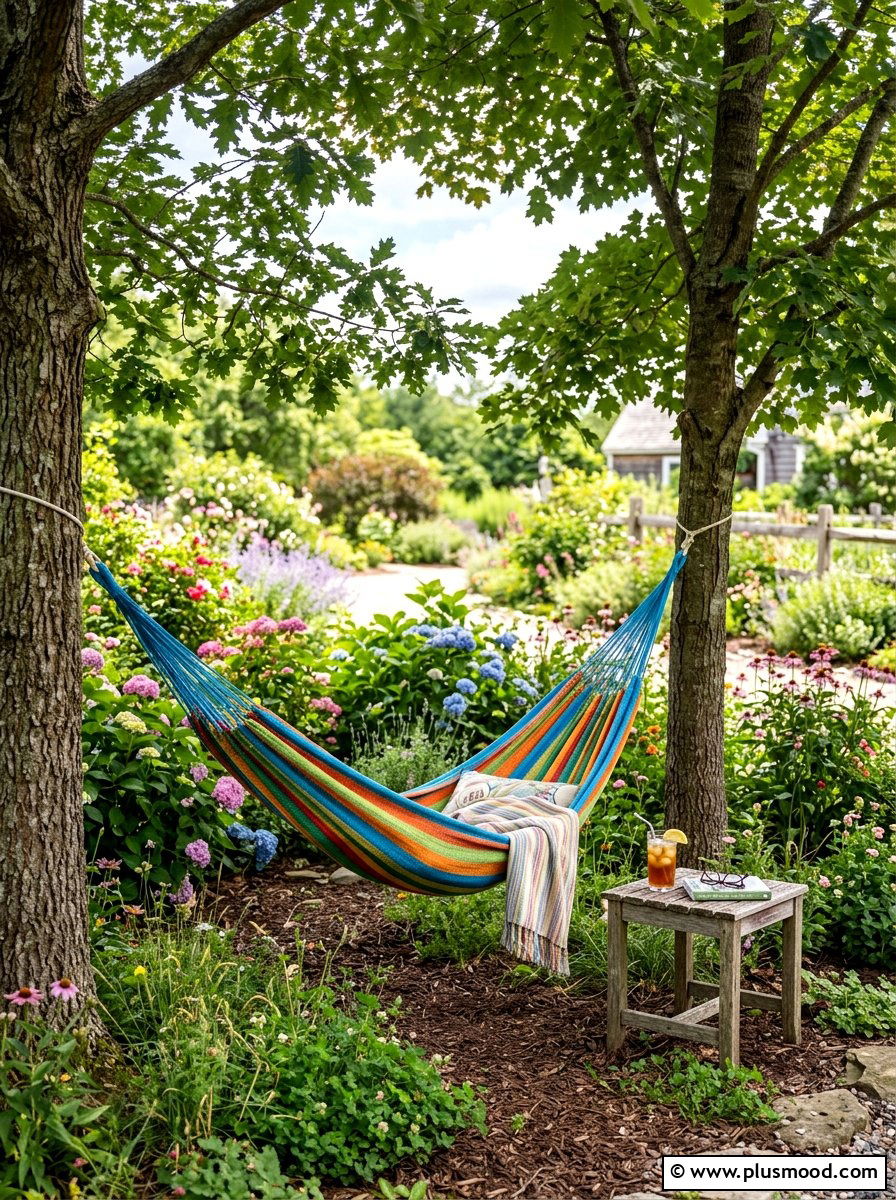
A hammock creates a relaxed use for a portion of the yard that might otherwise be overlooked. Whether it is freestanding or supported by suitable trees, it needs comfortable cl