

A modern backyard does not have to be enormous, expensive, or filled with unusual plants. What makes a landscape feel custom is usually the thought behind it: clean lines, repeated materials, intentional planting, and outdoor spaces designed around the way people actually live.
The best modern landscapes balance structure with softness. Hard surfaces such as concrete, stone, gravel, and wood create definition, while ornamental grasses, layered shrubs, trees, and perennials keep the space from feeling cold. Instead of adding more and more features, modern design focuses on choosing the right features and giving each one room to make an impression.
Whether you are working with a small city yard, a suburban backyard, or a large property, these 21 modern landscape design ideas can help you create an outdoor space that looks considered and personal.
1. Create a Strong Geometric Layout
One of the simplest ways to make a backyard feel custom is to begin with a clear layout. Rather than placing a patio, lawn, planting bed, and path wherever there is room, organize them into recognizable shapes. Rectangles, squares, long bands, and clean curves can give the yard a strong visual foundation.
A rectangular patio might connect directly to the house, while a long planting bed runs along the back fence. A narrow path can divide the lawn from a seating area, creating an easy route through the space. The geometry does not need to be rigid. The goal is to make the yard feel intentional from every angle.
Use the architecture of the house as your starting point. If the home has strong horizontal lines, echo them with a long terrace or linear planting bed. If the house has a more irregular shape, a simple rectangular patio can provide useful contrast.
2. Use One Repeated Material Throughout the Yard
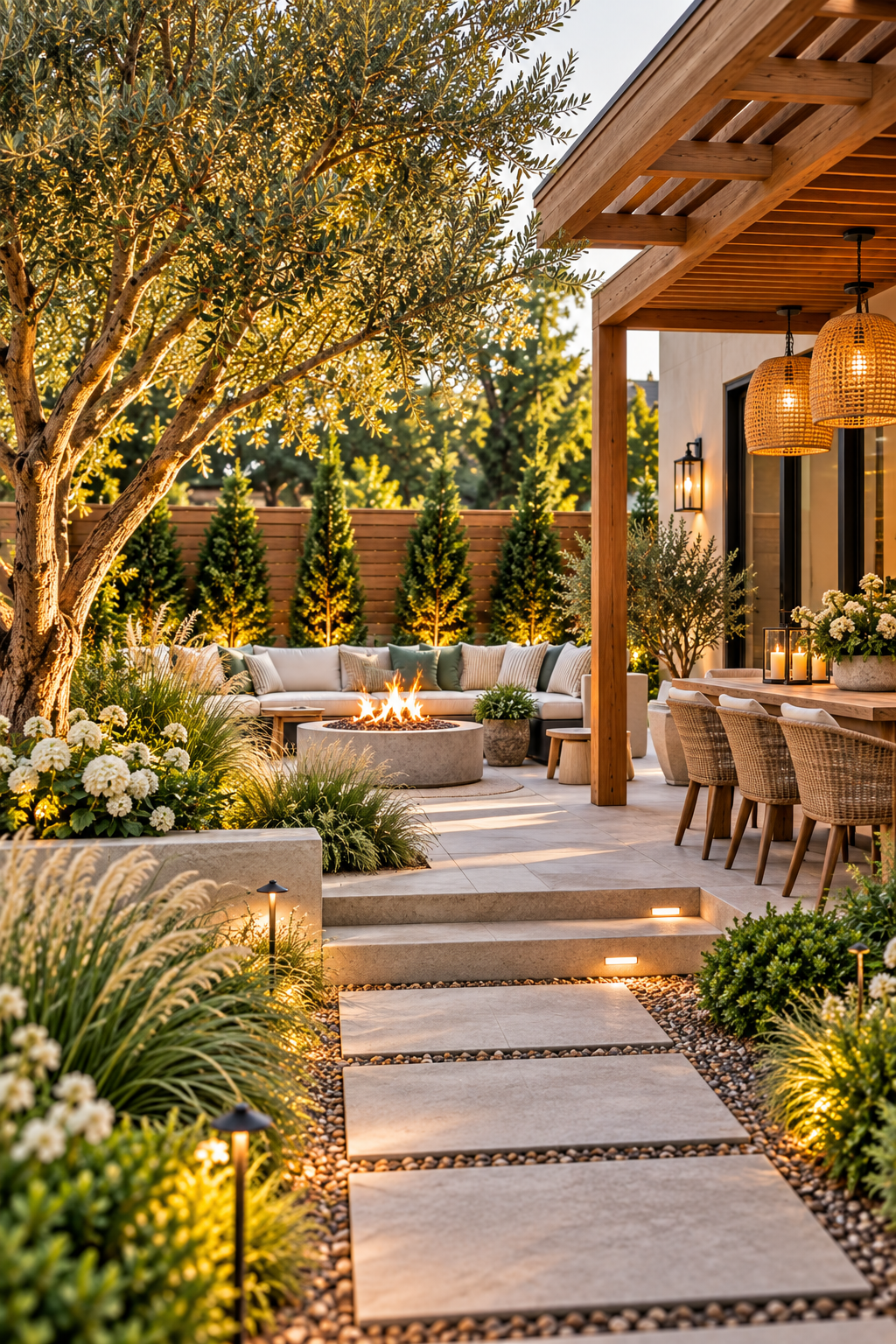
Custom landscapes often look cohesive because the same material appears in several locations. A stone used for the patio might reappear as a low retaining wall. A wood tone used on a privacy screen might be repeated on the gate, bench, or raised planter.
Choose one primary hardscape material and one or two supporting materials. For example, use large concrete pavers for the main patio, dark gravel for pathways, and warm wood for screens and seating. This is more effective than introducing a different surface for every feature.
Repetition also helps a smaller yard feel larger. When the eye sees familiar materials from one zone to the next, the entire landscape reads as one connected composition.
3. Replace Traditional Lawn With Ground Cover
A large lawn can be useful, but it is not the only way to create an open, green backyard. In areas where grass is difficult to maintain, replace part of the lawn with low-growing ground cover, ornamental grasses, creeping thyme, clover, or a planted meadow.
This approach gives the yard a softer, more natural appearance while reducing the amount of regular mowing. Use a simple edge between the ground cover and hardscape so the planting still feels deliberate. Steel edging, concrete borders, stone strips, or a clean gravel line can keep the transition crisp.
You do not have to remove the entire lawn. A small central patch can remain as an open area for children, pets, or outdoor games, while the edges become more varied and interesting.
4. Design a Multi-Level Patio
A patio with two or three connected levels can make a flat backyard feel much more architectural. One level might hold a dining table, another could serve as a lounge, and a lower platform might lead to the lawn or garden.
The levels do not need to be dramatically different. Even a small change in height can define separate uses. Use broad steps rather than narrow stairs so the transition feels comfortable and substantial. Repeat the patio material across the levels to keep the design unified.
If your yard slopes naturally, use the grade to your advantage. Terracing can turn an awkward incline into a sequence of useful outdoor rooms while also helping manage drainage and erosion.
5. Add a Simple Water Feature
Water can bring movement and sound to a modern landscape without making the yard feel ornate. Consider a narrow wall fountain, a rectangular reflecting pool, a bubbling stone, or a shallow basin set into a patio.
The most modern water features usually have simple shapes and limited materials. A dark stone basin, a concrete trough, or a sheet of water flowing down a textured wall can act as a focal point without overwhelming the garden.
Place the feature where it can be seen from inside the house or heard from the main seating area. A water feature that is hidden in a distant corner may be attractive, but it will not contribute much to the everyday experience of the backyard.
6. Use Ornamental Grasses for Movement
Ornamental grasses are especially effective in modern landscapes because their soft forms contrast with hard architectural lines. They add movement when the wind blows and provide texture even when flowers are not in bloom.
Plant grasses in groups rather than scattering single specimens across the yard. A mass of one variety usually looks more intentional than many unrelated plants. Tall grasses can screen a patio or soften a fence, while shorter varieties work well along paths and planting borders.
Choose varieties suited to your climate and available sunlight. Some grasses prefer full sun, while others tolerate partial shade. Cut back deciduous varieties at the appropriate time for your region so fresh growth can emerge cleanly.
7. Build a Layered Privacy Screen
Privacy does not have to come from a solid fence alone. A more custom-looking solution combines several layers: a structural screen, tall plants, medium-height shrubs, and lower perennials or grasses.
A slatted wood screen can block direct views while allowing air and light to pass through. Plant evergreen shrubs or narrow trees in front of it to soften the structure. Add ornamental grasses near the base for movement and seasonal texture.
Think about the views you actually need to block. You may not need a six-foot barrier along the entire property line. A shorter screen near the seating area, combined with strategically placed trees, can provide privacy while keeping the yard open.
8. Create an Outdoor Room With a Pergola
A pergola gives a backyard a sense of architecture and makes an outdoor seating area feel like a destination. It can define a dining space, shade a lounge, or frame a view toward the garden.
For a modern look, choose simple posts and beams with clean proportions. Paint or stain the structure to coordinate with the house, fence, or other wood features. Climbing plants can soften the design, but they are not required. A bare pergola can look elegant when paired with strong furniture and layered lighting.
Add curtains, a retractable shade, or a slatted roof if you need more sun protection. Make sure the structure is properly anchored and built for the conditions of your area.
9. Install Integrated Outdoor Lighting
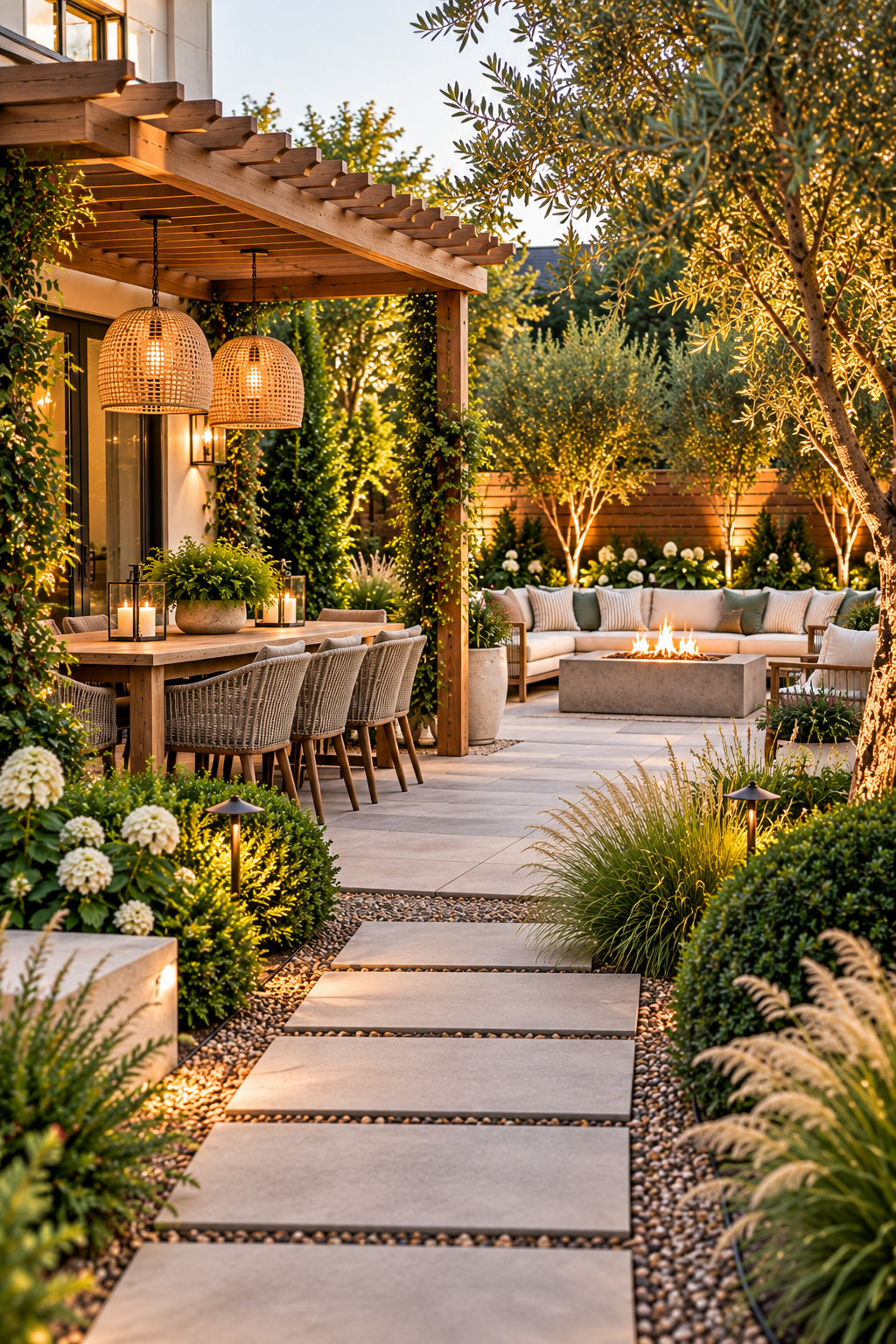
Lighting is one of the details that can make a basic landscape look professionally designed. Instead of relying on one bright floodlight, layer several low-intensity sources throughout the yard.
Use step lights along stairs, small path lights near walkways, uplights beneath trees, and subtle lighting under benches or raised walls. Warm light usually creates a more comfortable atmosphere than harsh, cool light.
Lighting should reveal the shape of the landscape rather than make every surface equally bright. Highlight the features you want to notice at night, then allow other areas to remain darker. Conceal fixtures where possible so the glow is visible but the equipment is not distracting.
10. Add a Sculptural Tree
A single well-placed tree can give a backyard the same sense of composition as a piece of art. Look for a tree with an interesting trunk, branching structure, bark, foliage, or seasonal color.
A multi-trunk birch, olive, Japanese maple, serviceberry, or sculptural evergreen can become the focal point of a patio or lawn. Plant it where the shape can be appreciated from the house, not just from the center of the yard.
Give the tree enough space to mature. A tree that is correctly scaled in ten years will make the landscape feel established and custom. Avoid planting too close to foundations, overhead utilities, or structures unless the mature size is appropriate.
11. Frame the Backyard With Raised Planters
Raised planters can give a backyard clear boundaries without the visual weight of a tall wall. Use them to outline a patio, separate a dining area from the lawn, or create a planting zone along a fence.
Concrete, steel, stone, and wood can all work in a modern setting. Keep the shape simple and repeat the material elsewhere if possible. Long, narrow planters often look more contemporary than several small individual pots.
Fill the planters with a restrained plant palette. One structural evergreen, a group of grasses, and a few seasonal perennials may be enough. Avoid turning every planter into a different collection of plants.
12. Design a Dedicated Dining Area
A backyard feels more custom when it supports a specific activity. A dedicated dining zone can be as simple as a paved area large enough for a table and chairs, but a few thoughtful additions will make it feel complete.
Position the dining area close to the kitchen or back door for convenience. Add overhead lighting, a nearby serving surface, and enough clearance for chairs to move comfortably. A pergola, tree canopy, or shade sail can make the area more usable during the hottest part of the day.
Use the floor pattern to define the zone. A border of contrasting pavers or a change from concrete to gravel can signal that the dining area has a distinct purpose.
13. Mix Paving Sizes Carefully
Large-format pavers can make a patio look calm and spacious, while smaller pavers or gravel can add scale and texture. The key is to use variation with a clear purpose.
For example, use large square or rectangular slabs in the main seating area and a narrower strip of small stones along the edge. A running-bond pattern can guide movement toward the garden, while a grid pattern can emphasize a dining table or fire pit.
Avoid combining too many patterns in one small space. Two paving sizes and one consistent joint material are usually enough to create interest without visual noise.
14. Create a Modern Fire Feature
A fire pit or outdoor fireplace can become the organizing point for evening gatherings. Choose a simple circular fire bowl, a square concrete fire pit, or a linear gas fireplace built into a wall.
Place seating around the feature with enough distance for comfort and safety. A fire pit should not feel squeezed into a leftover corner. It needs its own surface, clear circulation, and a relationship to the main patio.
Keep the surrounding design restrained. A strong fire feature paired with simple gravel, concrete, and low planting can look more sophisticated than a heavily decorated outdoor room.
15. Use Gravel as a Design Element
Gravel is useful for paths, seating areas, drainage zones, and garden transitions. In a modern landscape, it can create a clean contrast with larger pavers and lush planting.
Choose a stone color that relates to the house and hardscape. Pale gravel can brighten a shaded yard, while dark gravel can create a dramatic background for silver foliage and light-colored paving.
Install a stable base and edging so the gravel stays in place. A properly finished gravel area should feel deliberate and comfortable to walk across, not like an unfinished construction zone.
16. Add a Statement Gate
A gate can become an important design moment, especially in a side yard or at the entrance to a backyard garden. Use it to establish the style before anyone enters the main space.
A horizontal wood gate feels warm and contemporary. A black metal gate creates a sharper architectural look. A wood-and-metal combination can balance both qualities. Repeat the gate material in a fence, pergola, planter, or outdoor furniture so it does not feel disconnected.
Include practical details such as a sturdy latch, appropriate clearance, and a lighting fixture nearby. If the gate is part of a frequently used path, make sure it opens in a way that does not obstruct the walkway.
17. Plant in Bold Repeated Groups
A modern planting design often uses fewer plant varieties in larger groups. This creates rhythm and makes the garden easier to understand visually.
Instead of planting one of everything, choose a small palette of structural plants, grasses, shrubs, and seasonal accents. Repeat them in several beds so the eye moves naturally through the yard.
The plants can vary in height and texture while sharing a color relationship. Silver foliage, deep green evergreens, burgundy leaves, and pale flowers can form a sophisticated palette without looking monotonous.
18. Turn a Side Yard Into a Garden Path
Side yards are often treated as leftover space, but they can become one of the most memorable parts of a landscape. Create a clear path with stepping stones, gravel, concrete slabs, or brick.
Use tall plants, wall-mounted lights, and a few focal points to turn the route into an experience. A narrow bench, sculptural planter, or small tree at the end of the path can give visitors a reason to slow down.
Keep the circulation comfortable. Leave enough room for people to carry tools, move furniture, or access utility areas. A beautiful path still needs to function as part of the house.
19. Incorporate Edible Plants Into the Design
Vegetable beds and herbs do not have to look separate from the ornamental garden. Use raised steel planters, geometric beds, or a row of espaliered fruit trees to bring edible plants into the overall design.
Place herbs near the kitchen door, where they will be convenient to harvest. Use attractive trellises for climbing vegetables and combine them with flowers that attract pollinators. A small productive garden can add seasonal interest while making the yard feel more personal.
Keep the layout organized with clear paths and defined edges. The result should look like a designed garden, not a collection of temporary containers.
20. Add a Built-In Bench
A built-in bench can make use of an awkward corner and provide seating without adding visual clutter. Build one into a retaining wall, raised planter, pergola, or privacy screen.
Wood slats provide warmth, while concrete or masonry creates a more substantial appearance. Add cushions only if they will be protected from weather, or use removable outdoor cushions that can be stored easily.
Position the bench where it faces a garden view, fire feature, water element, or sunset direction. Seating becomes more valuable when it encourages people to experience the yard from a different perspective.
21. Design for a Beautiful View From Inside
A backyard is not only experienced outdoors. It is also seen through windows, glass doors, and kitchen views throughout the year. A custom landscape considers what the garden looks like from inside the house.
Place a tree, sculpture, water feature, or carefully framed planting bed where it can be appreciated from a primary room. Keep the closest view layered, with lower plants in front and taller elements farther away. This gives the scene depth instead of placing one large object directly against the window.
Think about every season. Evergreen structure, attractive bark, ornamental seed heads, and strong branch shapes can keep the landscape interesting when flowers are not blooming. A garden that looks good in winter will feel more complete and intentional.
How to Make Modern Landscape Ideas Feel Warm
Modern design works best when clean structure is balanced by natural texture. If the yard contains concrete, steel, and dark finishes, add plants with soft movement, warm wood, woven furniture, or natural stone. If the planting is loose and abundant, use a crisp path or well-defined patio to give the composition direction.
Color also affects the feeling of the space. Neutral materials create a quiet backdrop for foliage, while one stronger accent color can add personality. Consider using a repeated rust, blue, black, or terracotta tone in cushions, pots, gates, and small garde