

A well-loved old kitchen tells its story through the details: a little drawer reserved for a rolling pin, a cheery phone by the breakfast table, or a piece of cookware that travels directly from the oven to the table. These were not always grand design gestures. More often, they were practical answers to the rhythms of daily life.
Today’s kitchens are sleek, efficient, and frequently designed around a very limited palette. Yet many vintage ideas paired function with personality in a way that still feels remarkably inviting. From built-ins that save steps to finishes that make a room feel instantly happy, here are 20 nostalgic kitchen features that could make modern homes more useful and more memorable.
1. A Breakfast Corner Built for Lingering
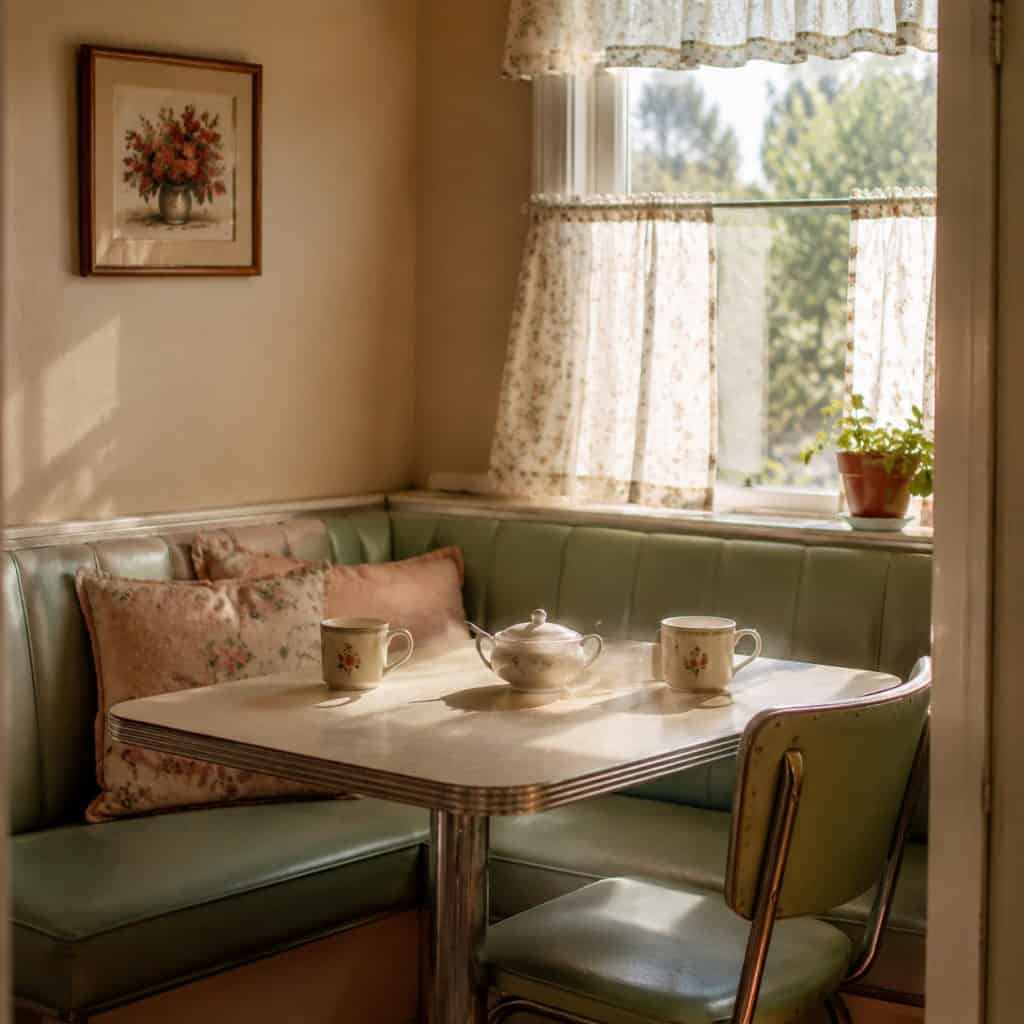
A dedicated breakfast nook turns an overlooked corner into the coziest seat in the house. Banquette seating keeps the footprint compact, while a small table creates a natural place for coffee, homework, board games, and unhurried weekend pancakes. The best versions feel like a tiny room within the room, with cushions, a pendant light, and a view toward the kitchen activity.
Key Details
- Choose wipeable upholstery or loose cushions for everyday practicality.
- Use drawers or lift-up storage beneath the bench to make the nook work harder.
Pro Tip: Keep the table pedestal-based when possible so guests can slide into the bench without navigating corner legs.
2. The Disappearing Prep Board
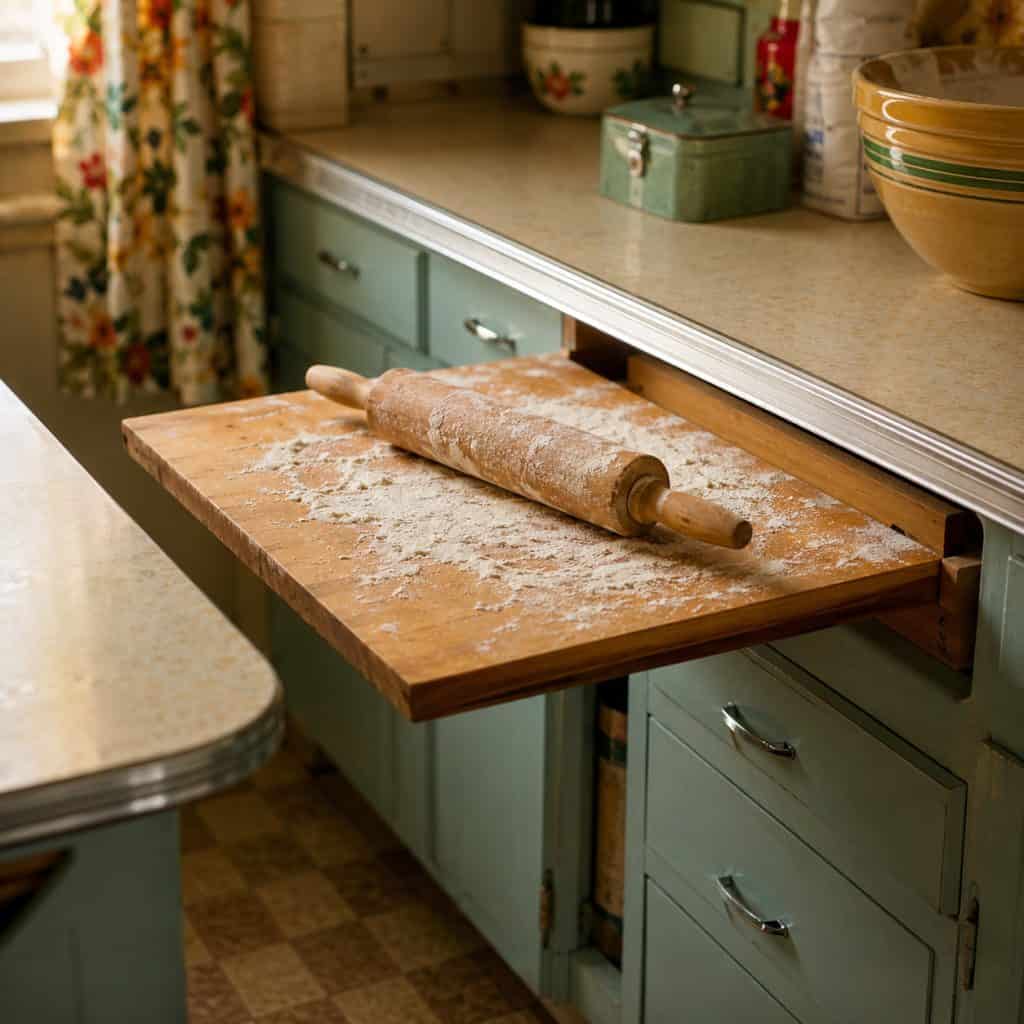
A pull-out board gives a compact kitchen an extra work surface exactly when it is needed, then tucks away before it becomes visual clutter. Installed below the counter, it is especially useful beside a baking zone or near the sink for quick chopping. It also brings a tactile, furniture-like quality to cabinetry that solid slab counters cannot replicate.
Key Details
- Specify a hardwood insert that can be removed for cleaning or refinishing.
- Place it where the extended board will not block a major walkway.
Pro Tip: Pair the board with a shallow crumb-catching drawer beneath it for an especially thoughtful baking station.
3. Appliances That Refused to Be Neutral
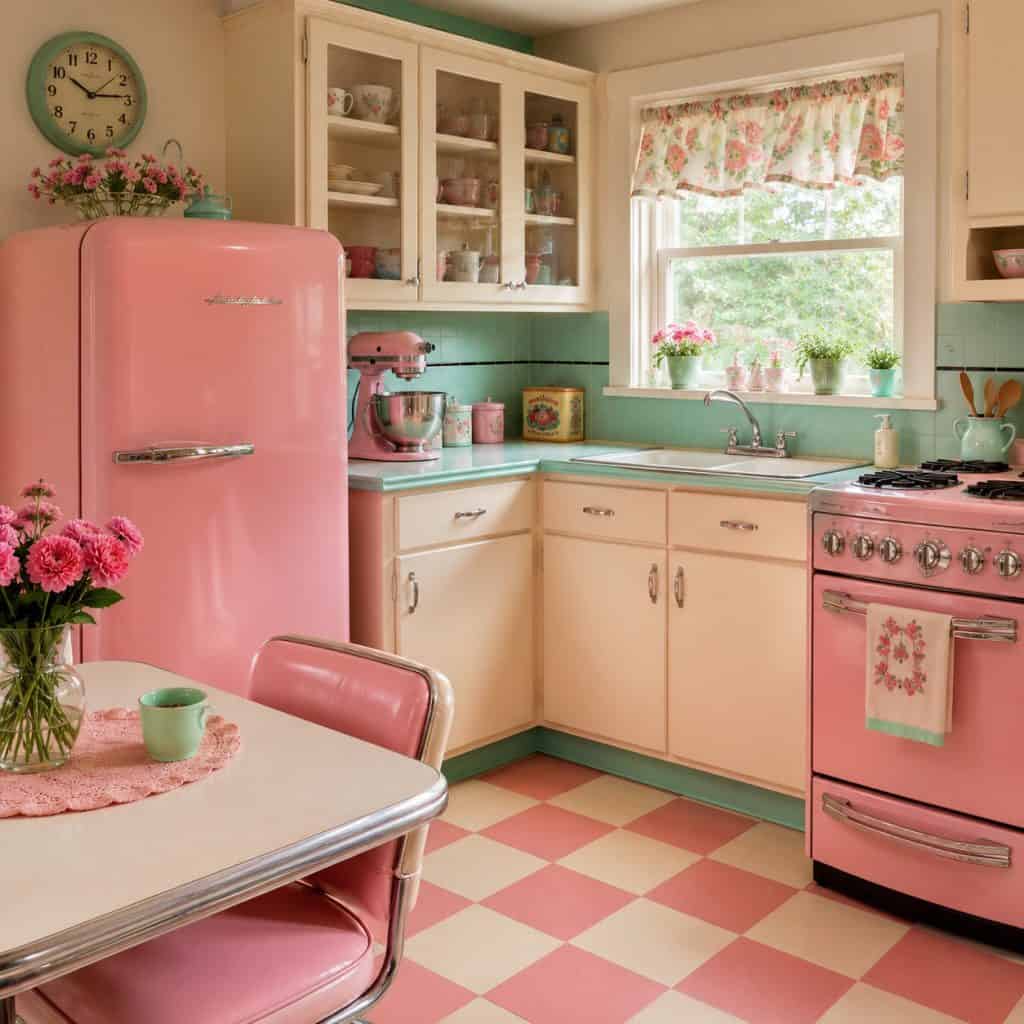
Vintage kitchens understood that appliances could be part of the decoration. A rosy refrigerator, buttery yellow range, or mint-green small appliance can give a kitchen a point of view before a single accessory is added. A full suite is not required; one colorful anchor can bring warmth and playfulness to a room dominated by cabinetry and hard surfaces.
Key Details
- Balance a statement appliance with quieter neighboring finishes.
- Repeat the color once or twice in textiles, art, or tableware rather than matching every surface.
Pro Tip: If a large colorful appliance feels like too much commitment, start with a countertop mixer, kettle, or toaster in a vintage-inspired hue.
4. The One-Piece Pantry Workstation
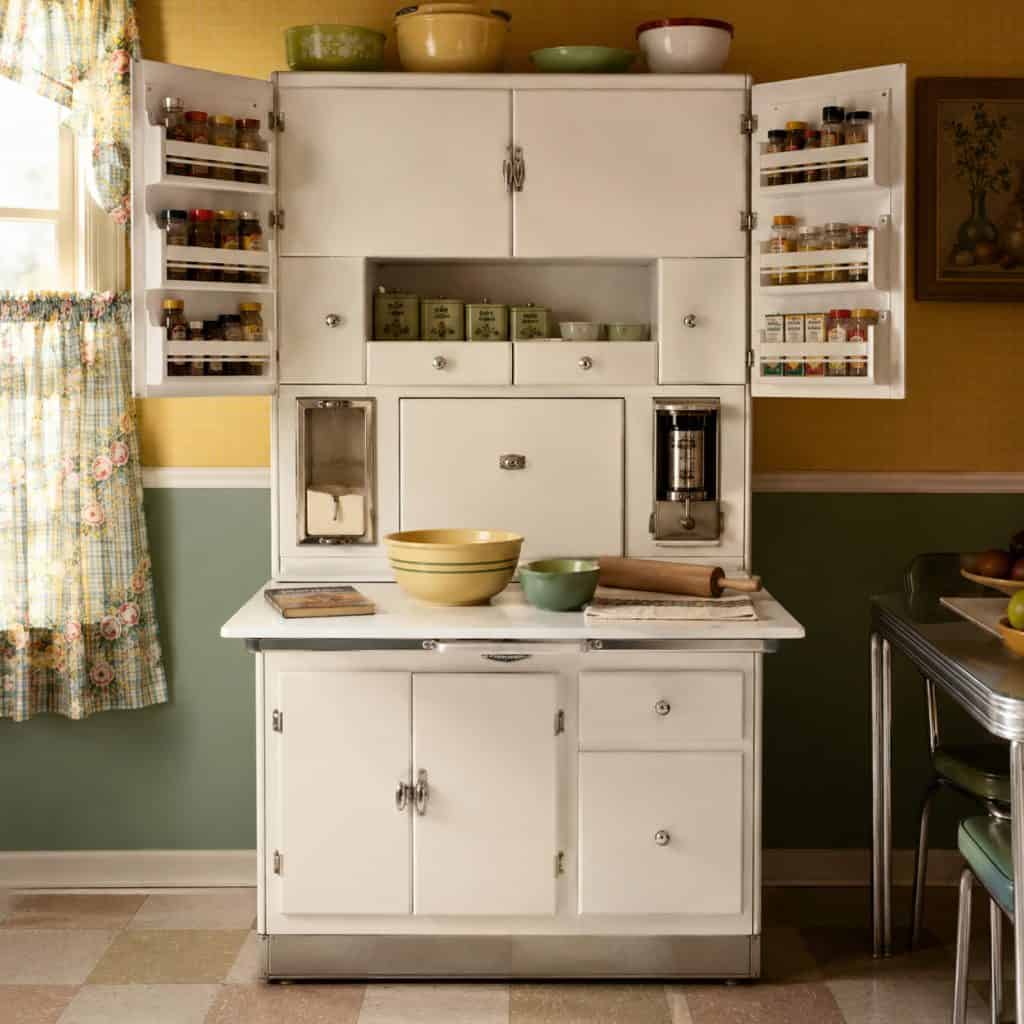
Before fitted kitchens became standard, freestanding kitchen cabinets combined storage, a worktop, drawers, and specialized compartments in one substantial piece of furniture. That all-in-one spirit is still useful in a kitchen that needs more personality or adaptable storage. A vintage-style hutch or cabinet can soften a wall of built-ins and supply a practical landing spot for baking or serving.
Key Details
- Look for a sturdy surface that can handle daily prep, not just display.
- Use labeled bins and drawer dividers so the cabinet supports a real workflow.
Pro Tip: A tall freestanding piece is most successful when it has enough breathing room around it to read as furniture rather than an awkward extra cabinet.
5. Flooring With a Graphic Pulse
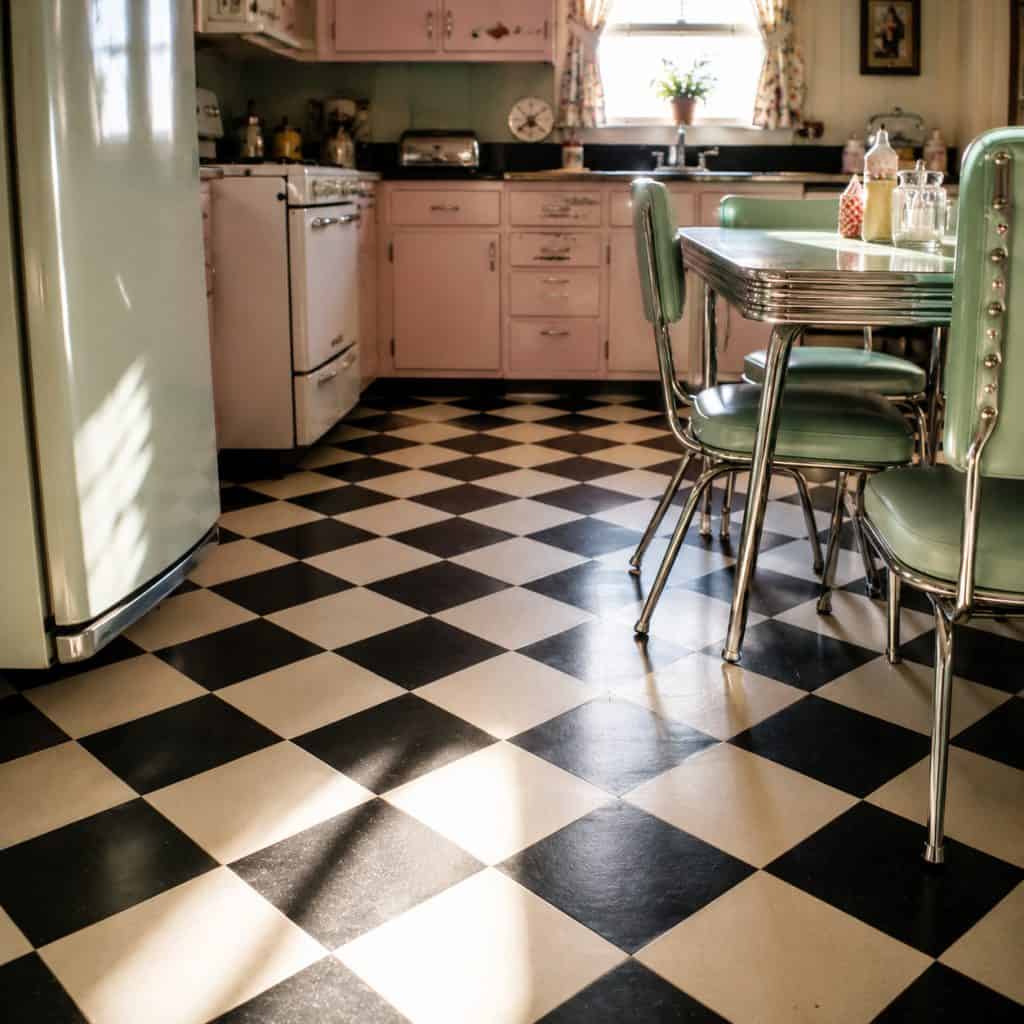
A checkerboard floor gives a kitchen instant energy. It can lean polished and traditional in black and cream, or feel sunny and retro in soft green, pale blue, or warm terracotta. Because the pattern establishes a strong base, it works particularly well with simple cabinet fronts and a restrained selection of other finishes.
Key Details
- Use a larger tile scale in a larger kitchen to keep the pattern from looking busy.
- Echo one floor tone in the backsplash or a painted cabinet detail for cohesion.
Pro Tip: For a softer interpretation, choose two adjacent neutral shades rather than high-contrast black and white.
6. A Countertop Opening for Scraps
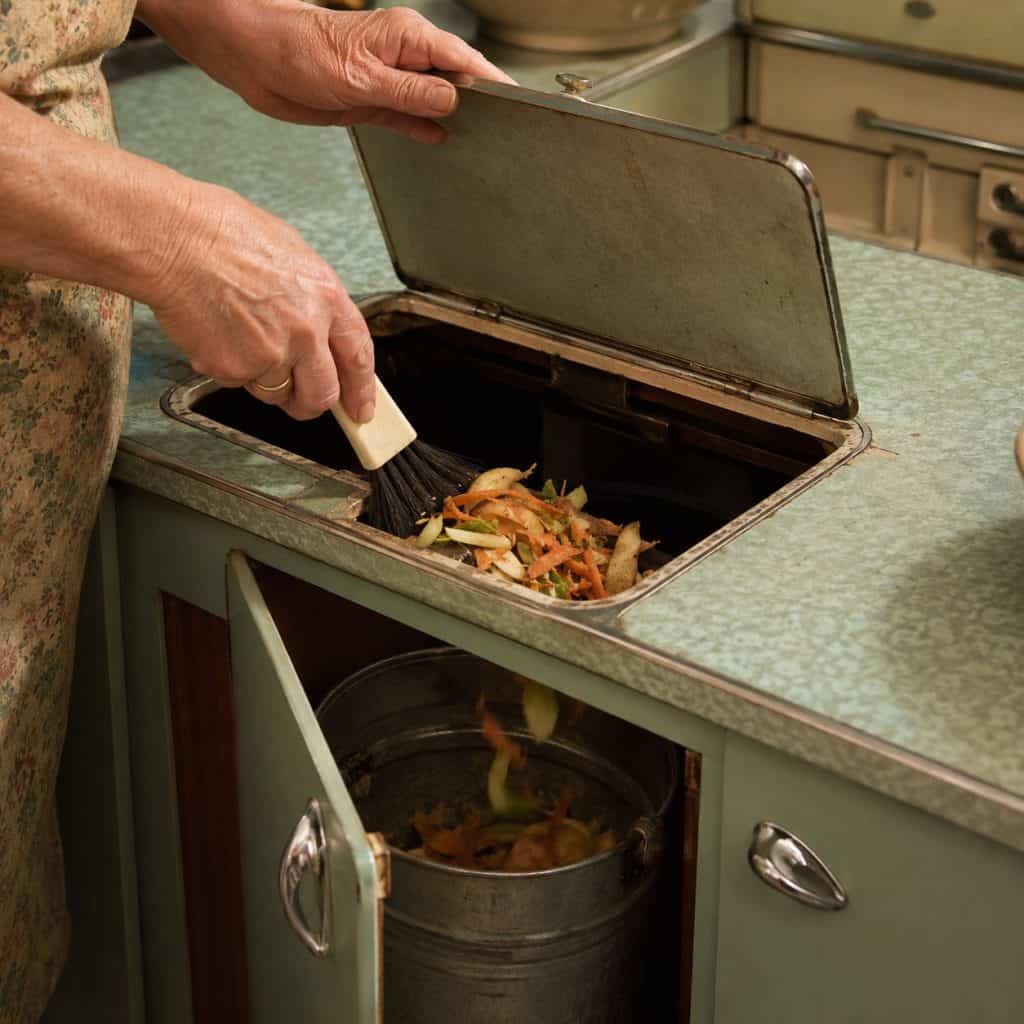
A built-in opening over a waste container is a small piece of kitchen choreography that makes food prep feel more fluid. Vegetable trimmings and packaging can disappear without crossing the room, which keeps the counter clear as cooking progresses. The idea is especially appealing for a dedicated prep island, where every saved step adds up during a busy meal.
Key Details
- Fit the opening with a cover so the counter remains usable when not cooking.
- Choose a removable, washable bin and leave enough clearance for easy access.
Pro Tip: Position the opening on the non-seating side of an island so it serves the cook without interrupting guests.
7. Serveware That Goes Straight to the Table
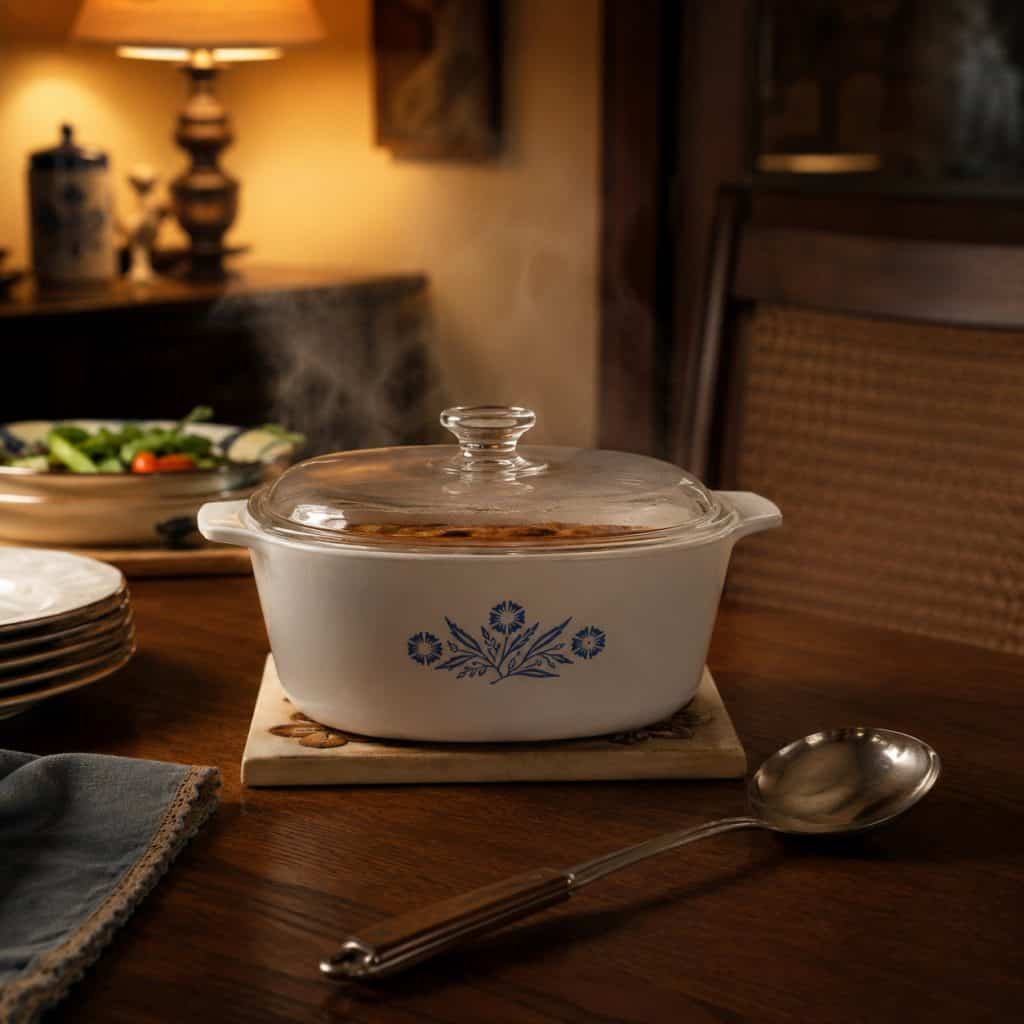
Decorated oven-safe dishes make dinner feel less like a transfer operation and more like an occasion. The charm lies in their double duty: the same casserole can bake, rest, and arrive at the table looking deliberately chosen. Floral patterns and soft colors are not merely decorative; they give everyday meals a sense of welcome.
Key Details
- Build a modest set in one pattern so pieces layer easily on open shelving.
- Use trivets and inspect older cookware carefully before placing it under high heat.
Pro Tip: A single lidded casserole dish is a useful entry point for anyone who wants the look without committing to a complete collection.
8. A Real Place to Sit and Work
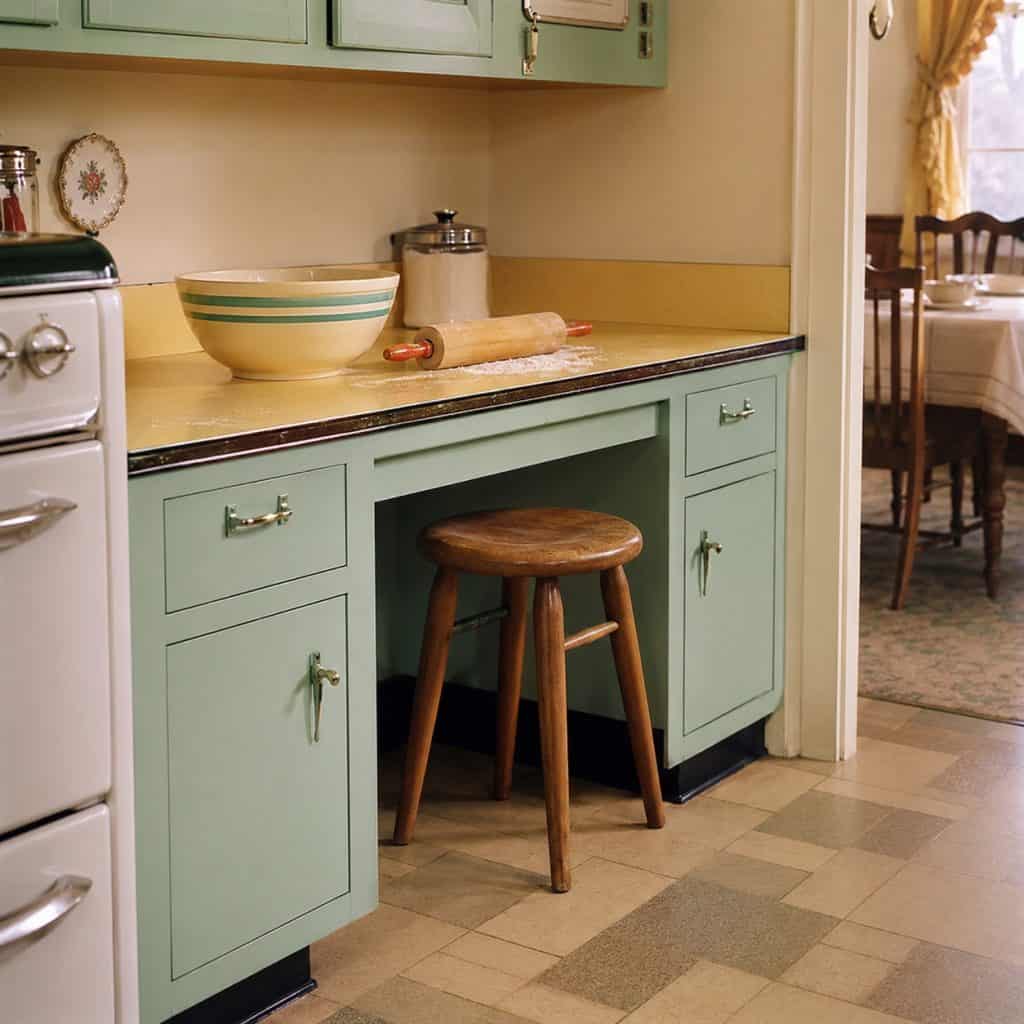
Not every kitchen task needs to happen at standard counter height. A lowered surface offers a comfortable perch for rolling dough, shelling peas, reading recipes, or helping a child with an afternoon project. It makes the kitchen more inclusive, too, by recognizing that a single work height does not suit every person or every task.
Key Details
- Use a sturdy stool with a footrest to support longer sessions.
- Reserve the lower worktop for tasks that do not require splashing or heavy lifting.
Pro Tip: A short run of countertop near a window is an excellent place for this feature because daylight makes close work more pleasant.
9. A Dedicated Home for the Daily Loaf
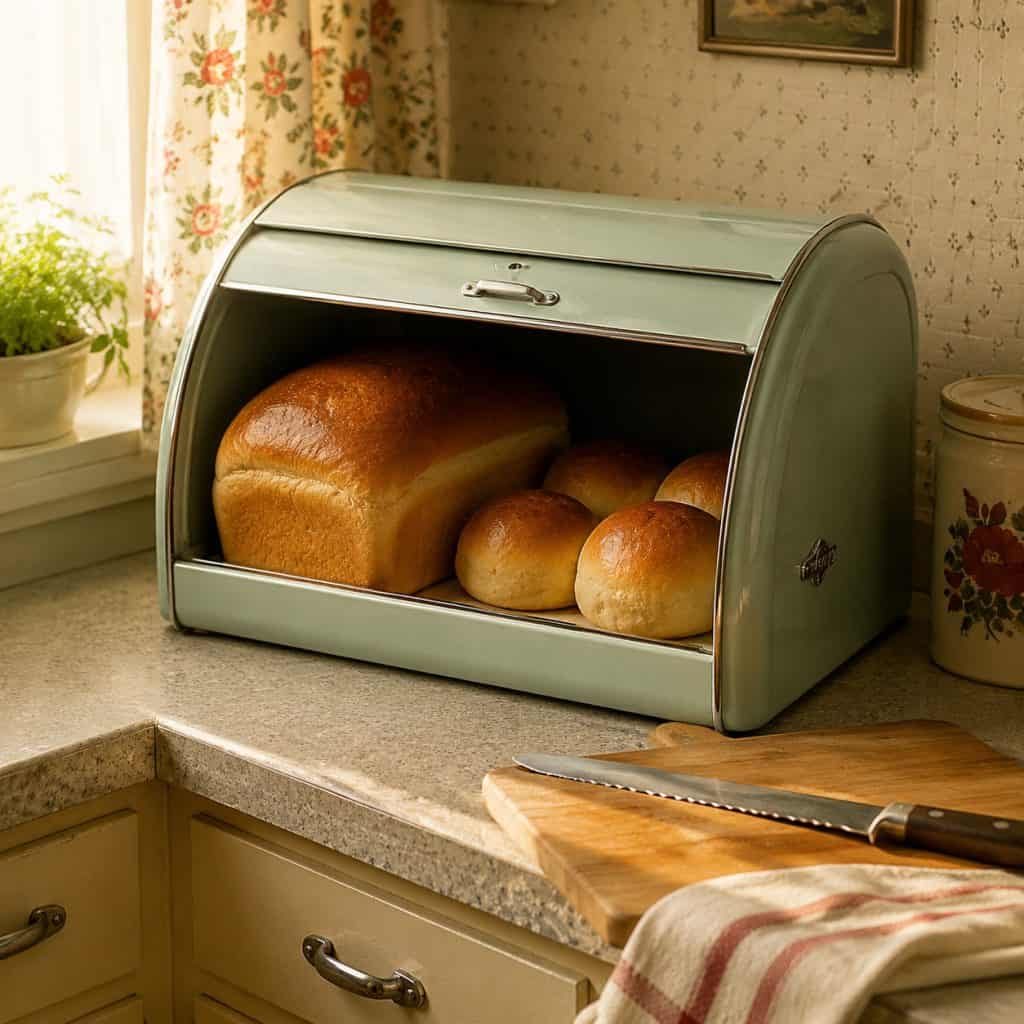
A bread box is a small, charming reminder that pantry storage can be intentional. It corrals bakery bags and homemade loaves while clearing the counter of crinkly packaging. In a kitchen with open shelves or vintage hardware, a metal or wood bread bin also adds a pleasingly domestic layer of texture.
Key Details
- Select a size that fits the kinds of loaves your household actually buys.
- Clean the interior regularly and avoid storing bread while it is still warm.
Pro Tip: Choose a box with a flat top if you want it to double as a petite tray for a butter dish or coffee supplies.
10. Corner Cabinets That Actually Cooperate
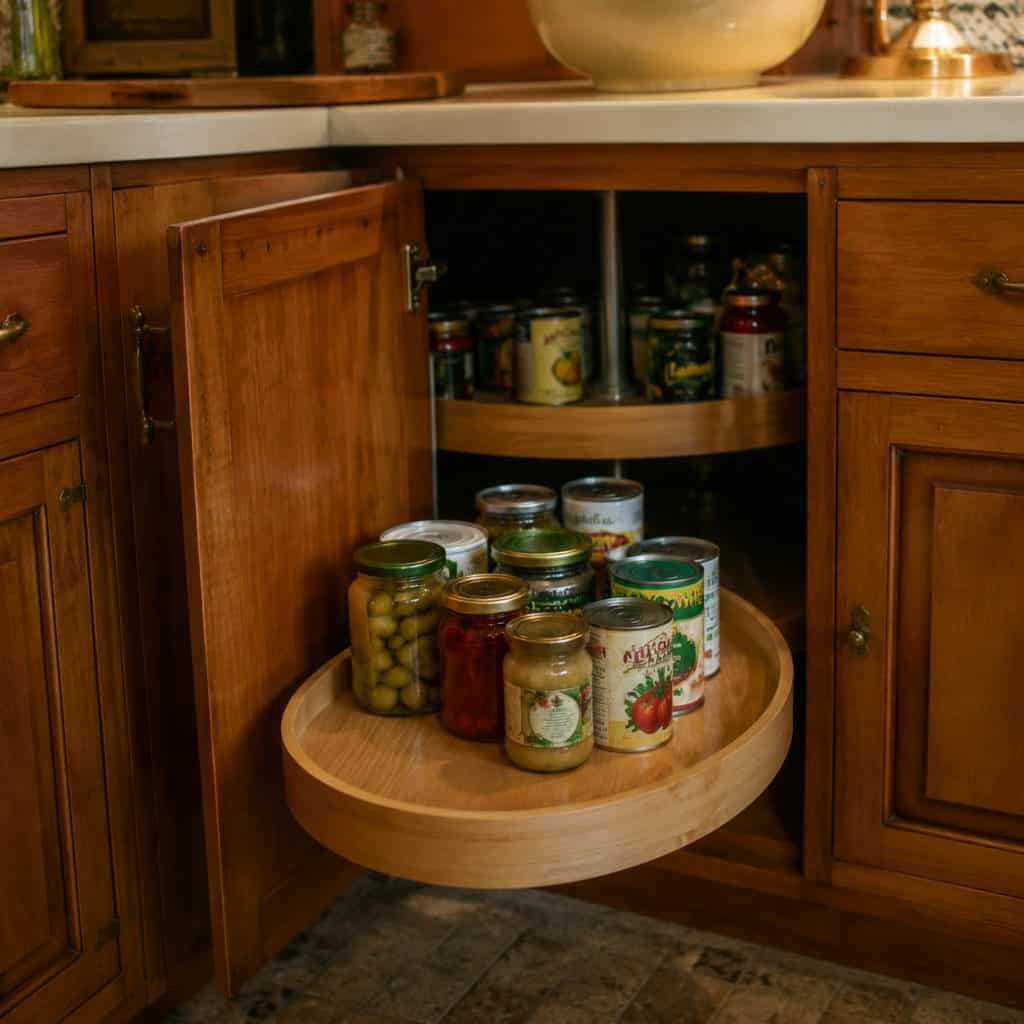
The turntable shelf remains one of the smartest answers to a difficult cabinet corner. Instead of losing small appliances and pantry goods in a dark recess, a revolving shelf brings them forward with a simple spin. Modern versions can be elegantly engineered, but the fundamental appeal is the same: put every inch of a kitchen to work.
Key Details
- Store sturdy bottles, mixing bowls, and small appliances on the rotating shelves.
- Avoid overloading the outer edge, which can make the mechanism harder to turn.
Pro Tip: Use low-sided bins on a turntable shelf to keep packets and small items from migrating during rotation.
11. Countertops That Let Pattern Have Fun
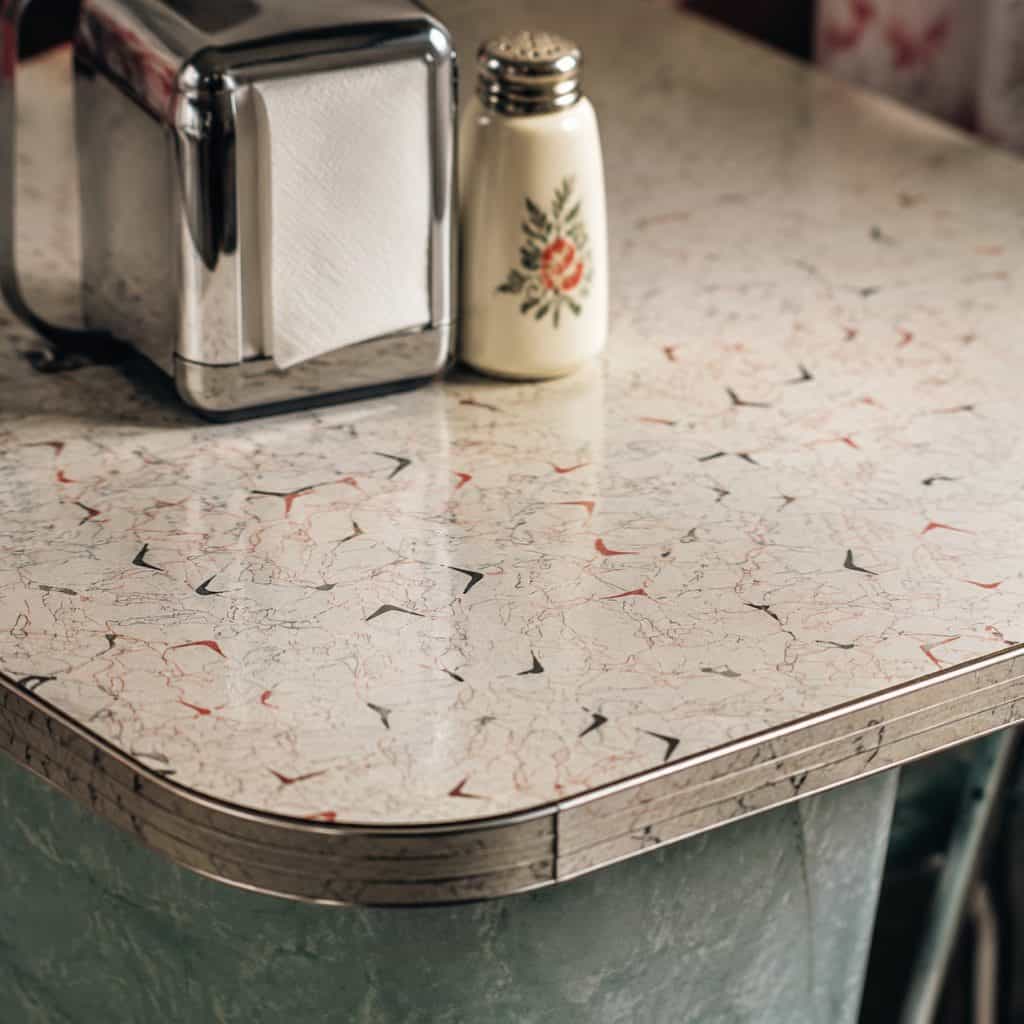
Patterned laminate once brought affordable color and easy-care surfaces to the kitchen. Its modern appeal lies in the range of moods it can create, from diner-inspired sparkle to a quiet faux-stone finish. When used thoughtfully, a laminate counter can make a design feel personal rather than generic, especially in a laundry room, pantry, or secondary prep zone.
Key Details
- Choose a durable edge treatment that suits the period of the room.
- Use samples under your kitchen lighting before committing to a lively pattern.
Pro Tip: Consider a patterned laminate on the island and a quieter solid surface around the perimeter for a balanced mix.
12. The Can Opener That Stayed Put
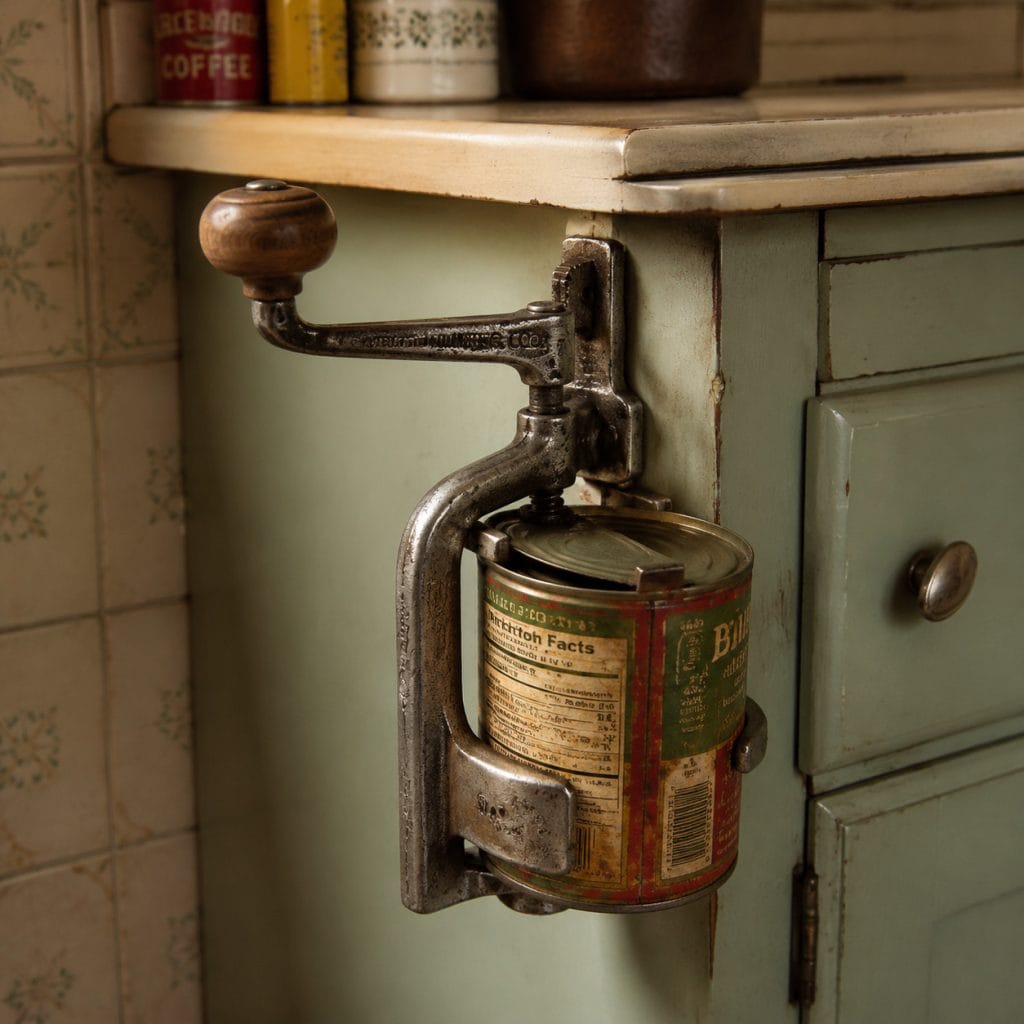
Wall- or cabinet-mounted tools make an old kitchen feel purposefully equipped. A fixed hand-crank can opener frees a drawer and signals that the kitchen is arranged around actual use, not just a clean photograph. It may be a niche choice today, but it is a delightful detail in a pantry, utility room, or retro-inspired cooking space.
Key Details
- Mount it where the handle has full clearance to turn.
- Keep a small container beneath it when opening messy ingredients.
Pro Tip: A mounting plate installed inside a tall pantry cabinet offers the same convenience while keeping the tool out of sight.
13. Storage Shaped for the Tool It Holds
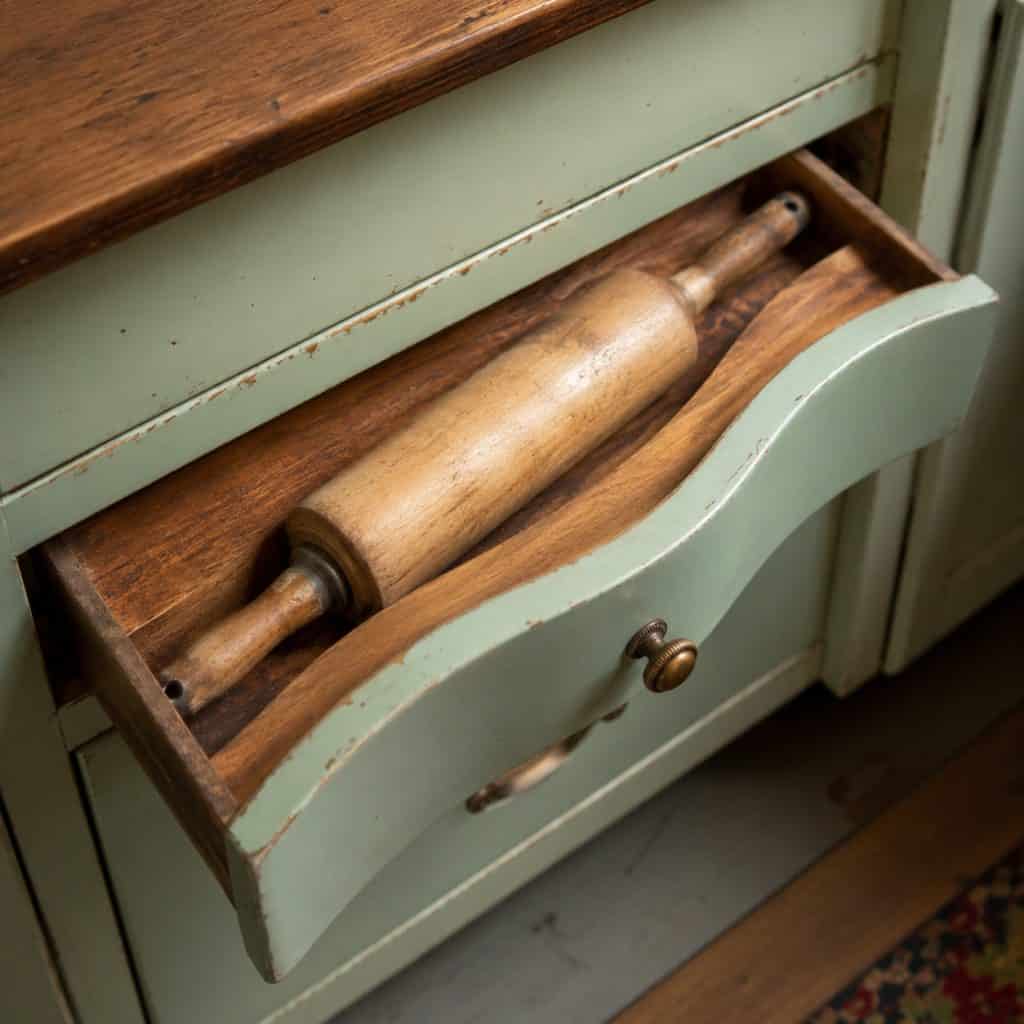
There is something satisfying about cabinetry that anticipates a particular task. A narrow drawer sized for rolling pins, baking sheets, or wooden spoons reduces rummaging and protects frequently used tools. This idea is less about recreating a period kitchen exactly and more about borrowing its careful attention to routines.
Key Details
- Start by listing the awkward tools that never fit comfortably in your current drawers.
- Use dividers or custom inserts to prevent long tools from rolling and clattering.
Pro Tip: A shallow drawer directly below a baking counter is the most convenient place to store pins, pastry cloths, and cookie cutters.
14. The Optimism of Push-Button Controls
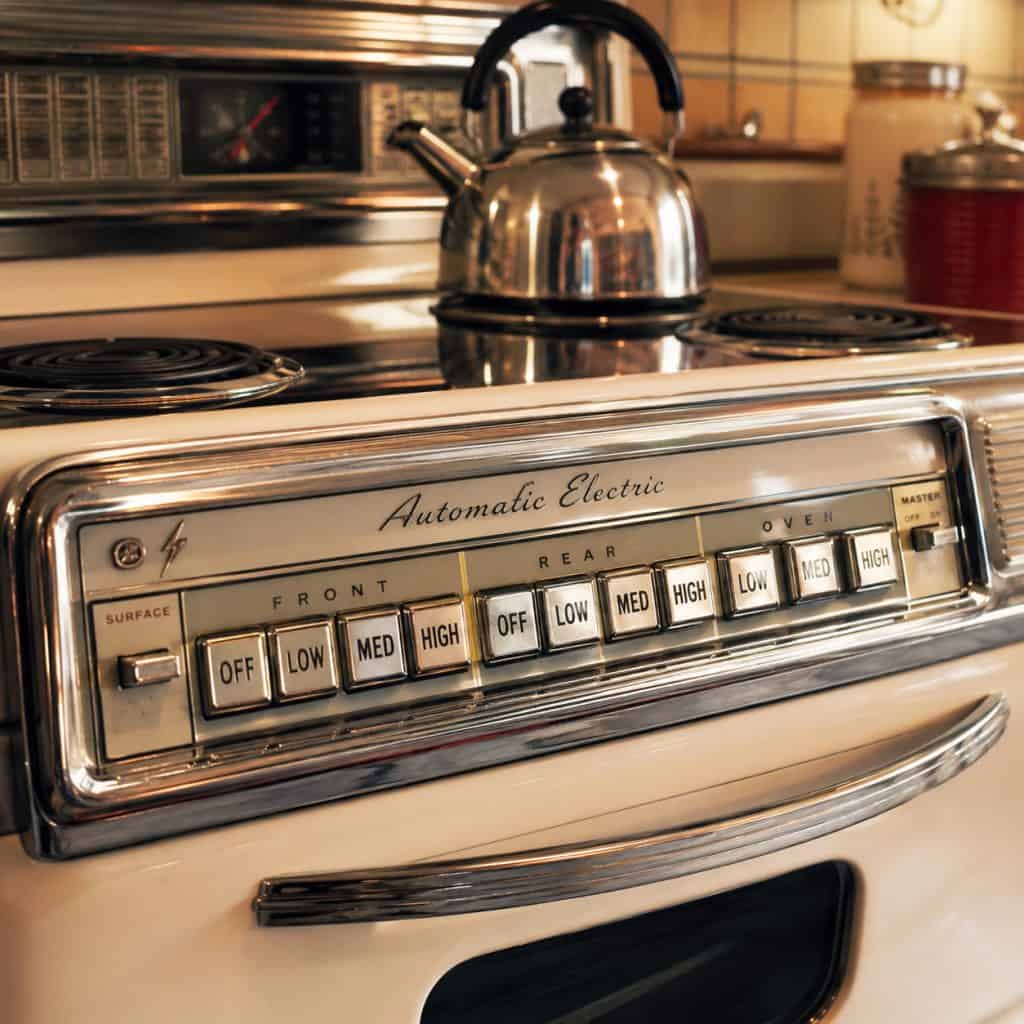
Rows of buttons on a vintage range capture the era’s belief that household appliances could look as futuristic as a new car. The appeal now is largely visual: crisp geometry, clear labels, and a little bit of space-age theater. Even without a true button-controlled stove, that spirit can inspire a kitchen with retro hardware, graphic tile, and playful lighting.
Key Details
- Prioritize modern safety standards when selecting any vintage appliance.
- Use repeated linear details, such as fluting or slim pulls, to echo the control-panel look.
Pro Tip: If you purchase an older range, have it inspected by a qualified professional before connecting or using it.
15. Storage With a Social Life
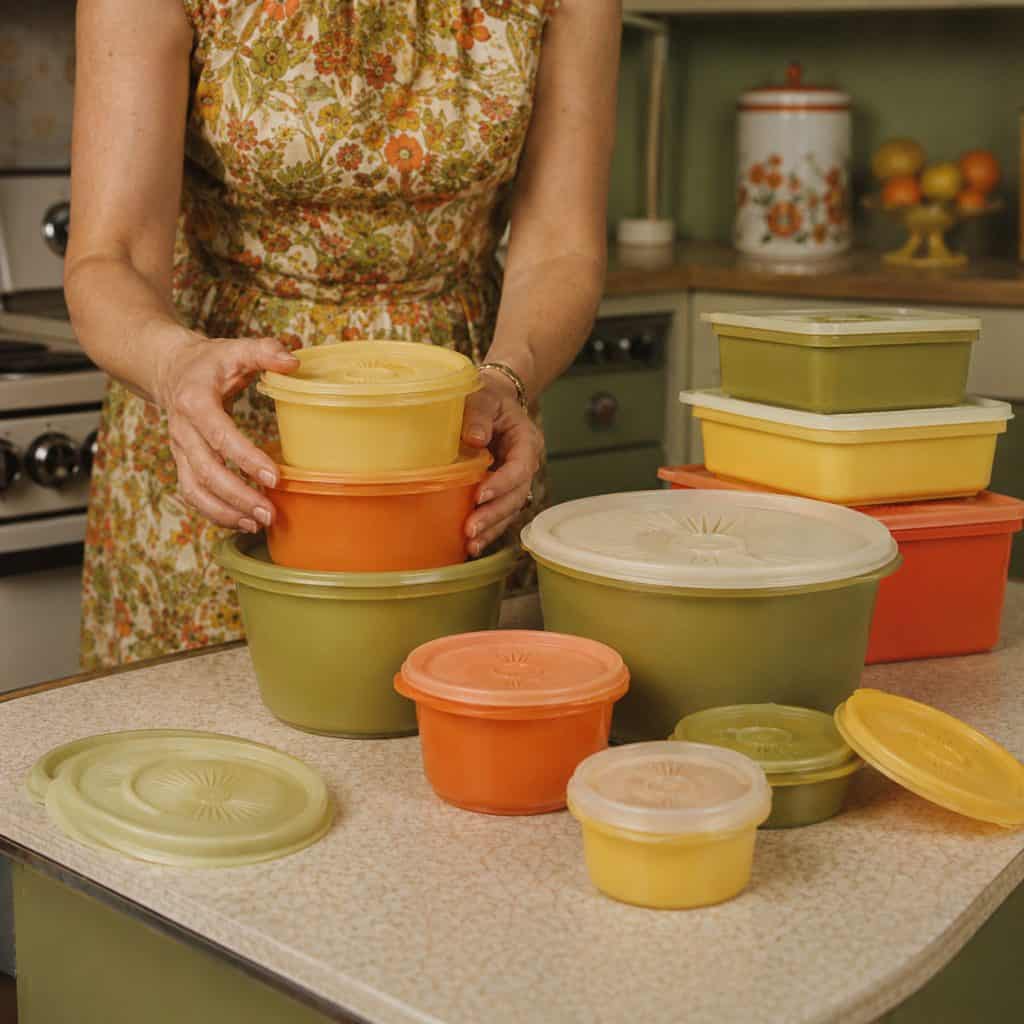
Colorful food containers once belonged as much to neighborhood gatherings as they did to the pantry. Their enduring lesson is that practical kitchen gear does not need to disappear behind closed doors. A collection of well-made containers can organize leftovers, stack neatly in a cupboard, and add a lively accent when displayed on an open shelf.
Key Details
- Choose a limited color family so stored containers look orderly rather than chaotic.
- Match container shapes to the foods your household regularly stores.
Pro Tip: Dedicate one drawer or shelf to lids and use a simple vertical divider so pairs stay easy to find.