

Small houses have a way of exposing every storage mistake. In a larger home, a crowded entryway or overstuffed cabinet may disappear into the background. In a compact house, the same problem can make an entire room feel chaotic. The solution is not always a bigger closet, a costly addition, or a storage unit across town. Often, the best opportunities are already inside your home above eye level, beneath furniture, behind doors, and within spaces that are currently doing only one job.
The key is to think in terms of unused volume, not just empty floor area. A small house can hold far more when storage is designed to follow the architecture and the way you actually live. The most effective solutions make everyday items easy to reach, give occasional-use belongings a proper home, and keep visual clutter under control.
Here are 15 clever ways to add meaningful storage without expanding your home’s footprint.
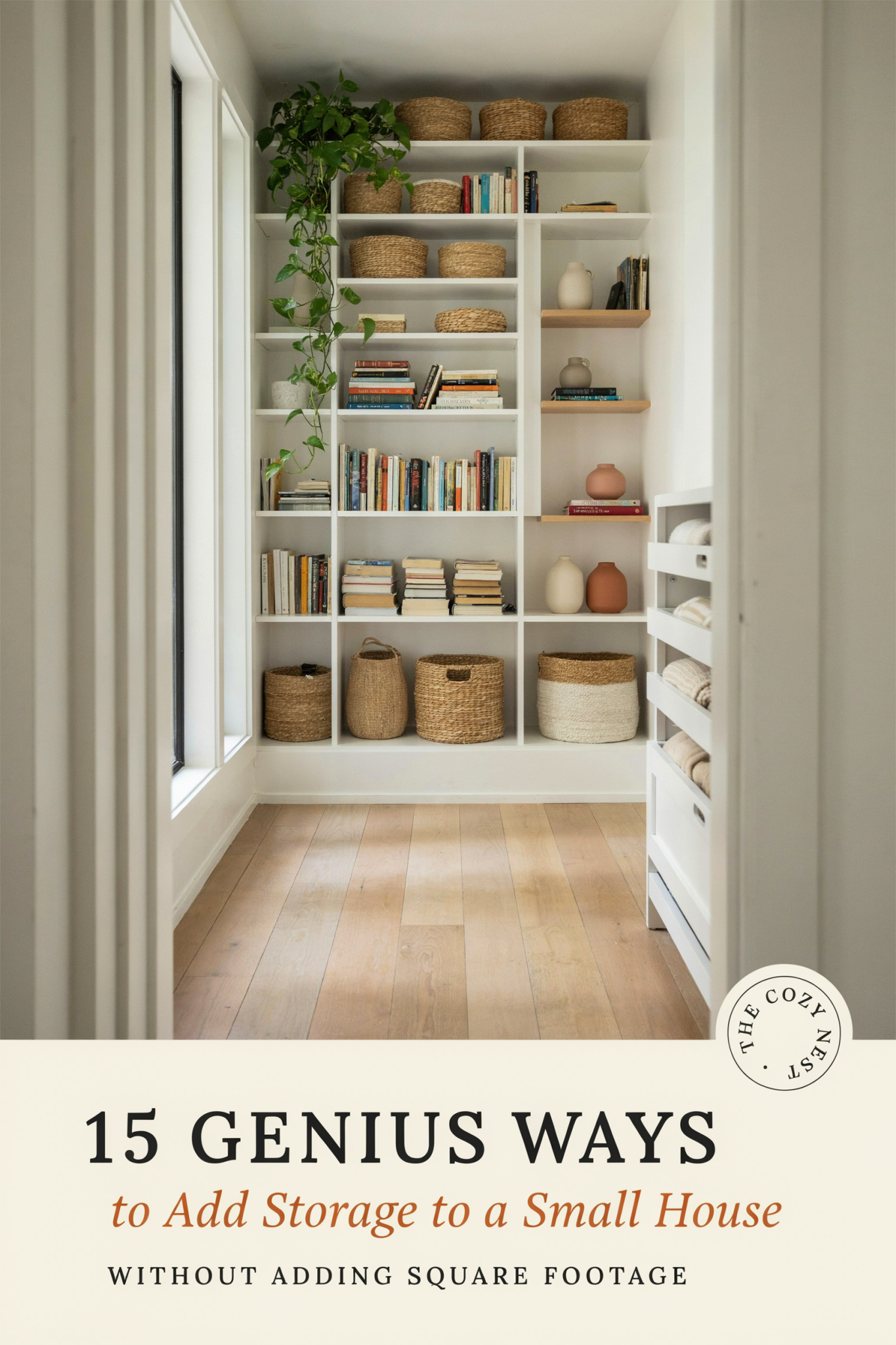
1. Build Storage All the Way to the Ceiling
The gap between the top of a standard cabinet and the ceiling is one of the most commonly wasted spaces in a small house. Even if the area is difficult to reach, it is valuable for items you use only a few times a year: holiday decorations, luggage, serving pieces, extra linens, or camping equipment.
In a kitchen, extend upper cabinets to the ceiling or add a second row of shallower cabinets above the existing ones. In a bedroom, install a tall wardrobe rather than a short dresser. In a hallway, a full-height cabinet can hold coats, cleaning supplies, and household extras in one narrow footprint.
Use attractive bins or labeled boxes on the highest shelves so the area looks intentional and remains easy to manage. A small folding step stool can make the space practical without taking up much room. If you are renovating, plan the upper cabinets before selecting standard-size units; a few extra inches of height can create a surprisingly large amount of storage.
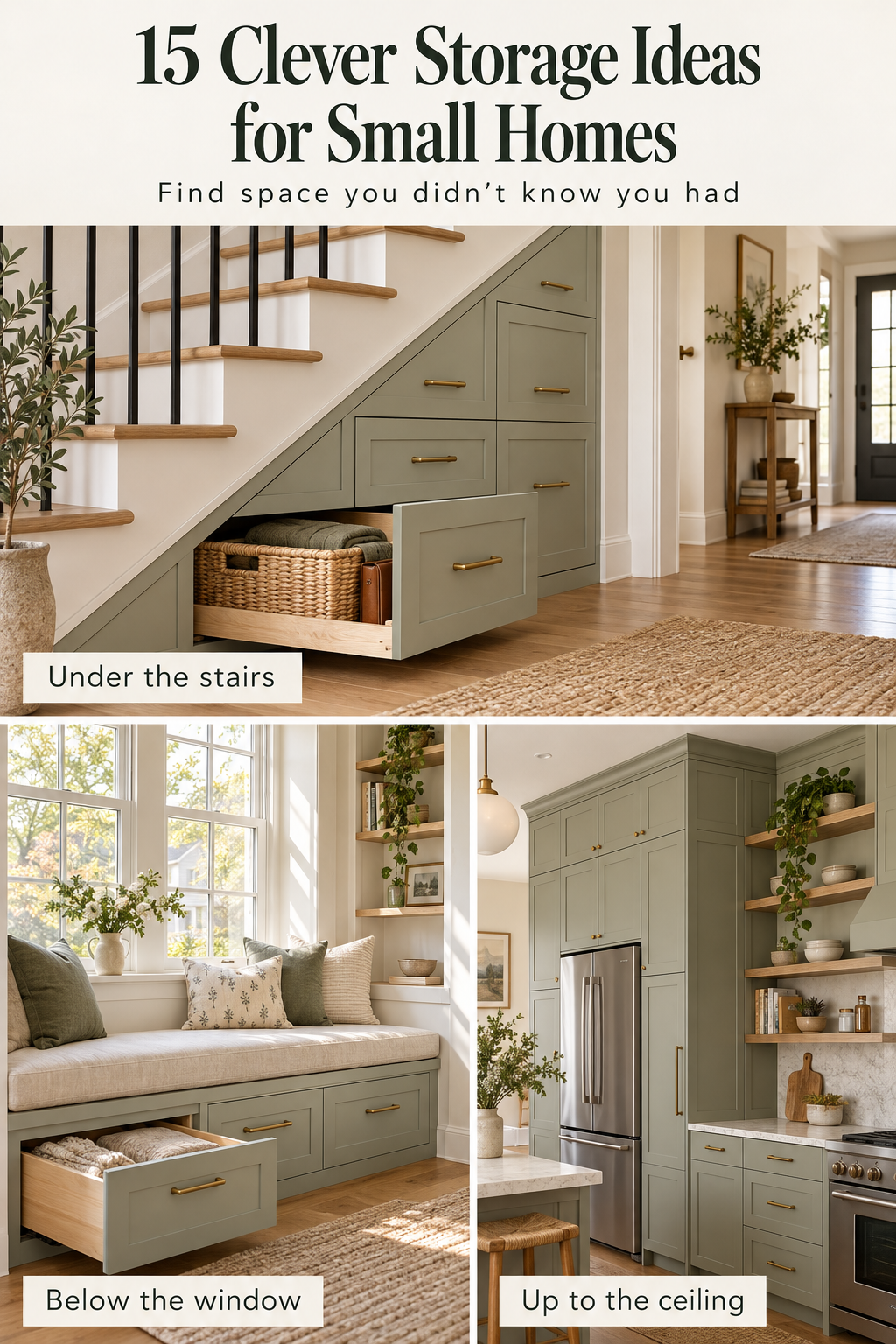
2. Turn the Space Under the Stairs Into a Working Closet
The area beneath stairs is rarely a consistent shape, which is exactly why it often becomes a dumping ground. With a little planning, however, it can become one of the most useful storage zones in the house.
Depending on the layout, you can add pull-out drawers, a compact pantry, a coat closet, shoe shelves, a pet station, or a combination of open and closed storage. Deep sections are ideal for bulky items such as a vacuum or folding chairs, while shallow areas can hold books, baskets, or cleaning products.
Pull-out drawers are especially useful because they prevent the classic under-stair problem: losing items at the back of a dark, awkward compartment. If the space is visible from a living area, use matching doors or painted cabinetry to make it blend with the room. If it is near an entry, consider a bench with drawers below and hooks above.
3. Use the Back of Every Door
Doors are vertical surfaces that swing through space but otherwise do very little. Add the right organizer and they can hold a significant collection of small items without reducing usable floor area.
An over-the-door rack can store pantry goods, toiletries, shoes, accessories, craft supplies, or cleaning products. In a bathroom, a shallow door-mounted cabinet can provide a home for medicines, hair tools, and spare toilet paper. In a bedroom, a series of hooks can hold robes, bags, and tomorrow’s outfit.
Choose organizers that match the door’s clearance. Deep baskets may prevent the door from closing or bump into nearby furniture. For a cleaner appearance, use a narrow, wall-mounted system attached directly to the door rather than a rack that hangs over it. In a rental, removable hooks and tension-based systems can offer similar benefits with fewer permanent changes.
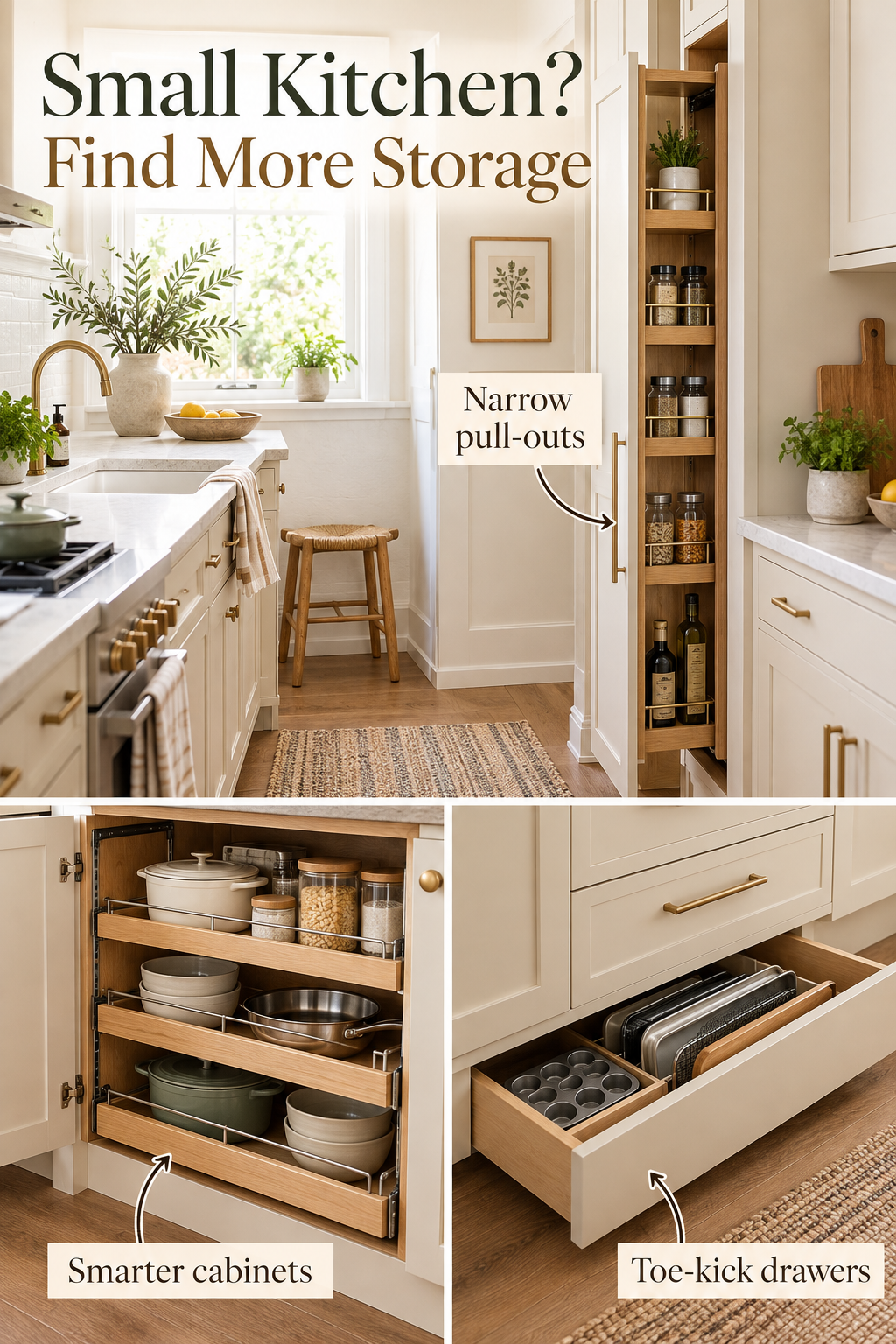
4. Install Drawers in Toe-Kick Spaces
The recessed strip beneath kitchen cabinets, bathroom vanities, and built-ins is usually treated as decorative trim. It can also become a row of discreet, low-profile drawers.
Toe-kick drawers are perfect for flat or seldom-used items: baking sheets, cutting boards, placemats, pet bowls, cleaning cloths, seasonal linens, and children’s toys. Because the drawers sit low, they are not ideal for items you reach for constantly, but they make excellent use of otherwise inaccessible space.
This upgrade works best when the drawer fronts match the cabinetry so they disappear into the base. Use full-extension hardware and consider a push-to-open mechanism if handles would be awkward. Before installation, check for plumbing, heating ducts, and structural supports. In a kitchen, reserve the space near appliances for items that can tolerate a little warmth, and keep heat-sensitive materials away from ovens and dishwashers.
5. Choose Furniture With Hidden Storage
Every major piece of furniture in a small home should be evaluated for what it can store. A storage bed, lift-top coffee table, ottoman with a removable lid, or bench with a hinged seat can replace separate containers while serving its primary purpose.
A platform bed with drawers can hold clothing, shoes, blankets, or luggage. A lift-top coffee table can conceal board games, remote controls, and work supplies while providing a practical surface. An entry bench with cubbies can combine seating, shoe storage, and a place to drop bags.
Hidden storage is especially useful in rooms that need to look calm. Open shelves are convenient but can quickly become visually busy. Use closed compartments for items you need nearby but do not want on display. When purchasing multifunctional furniture, measure both the outside dimensions and the interior opening. A large-looking piece may have less usable capacity than expected if the frame or hardware takes up substantial room.
6. Convert the Side of a Cabinet Into a Storage Zone
The exposed side of a cabinet or pantry is often a narrow, unused plane. It can support a slim pull-out, a magnetic organizer, hooks, or a shallow shelf system.
In a kitchen, the side of a cabinet can hold spices, cutting boards, pot lids, measuring cups, or a paper towel holder. Beside a refrigerator, a narrow rolling cart can provide storage for canned goods and cooking supplies. In a bathroom, the side of a vanity can hold towels or styling tools. Near a desk, it can support charging accessories and office supplies.
The main design rule is to keep the storage shallow enough that it does not interfere with walking paths, doors, or drawers. A six-inch-deep organizer can be more useful than a deeper unit that creates an obstacle. Paint a permanent built-in to match the cabinet, or use a freestanding piece in a complementary finish so it looks like a deliberate extension of the room.
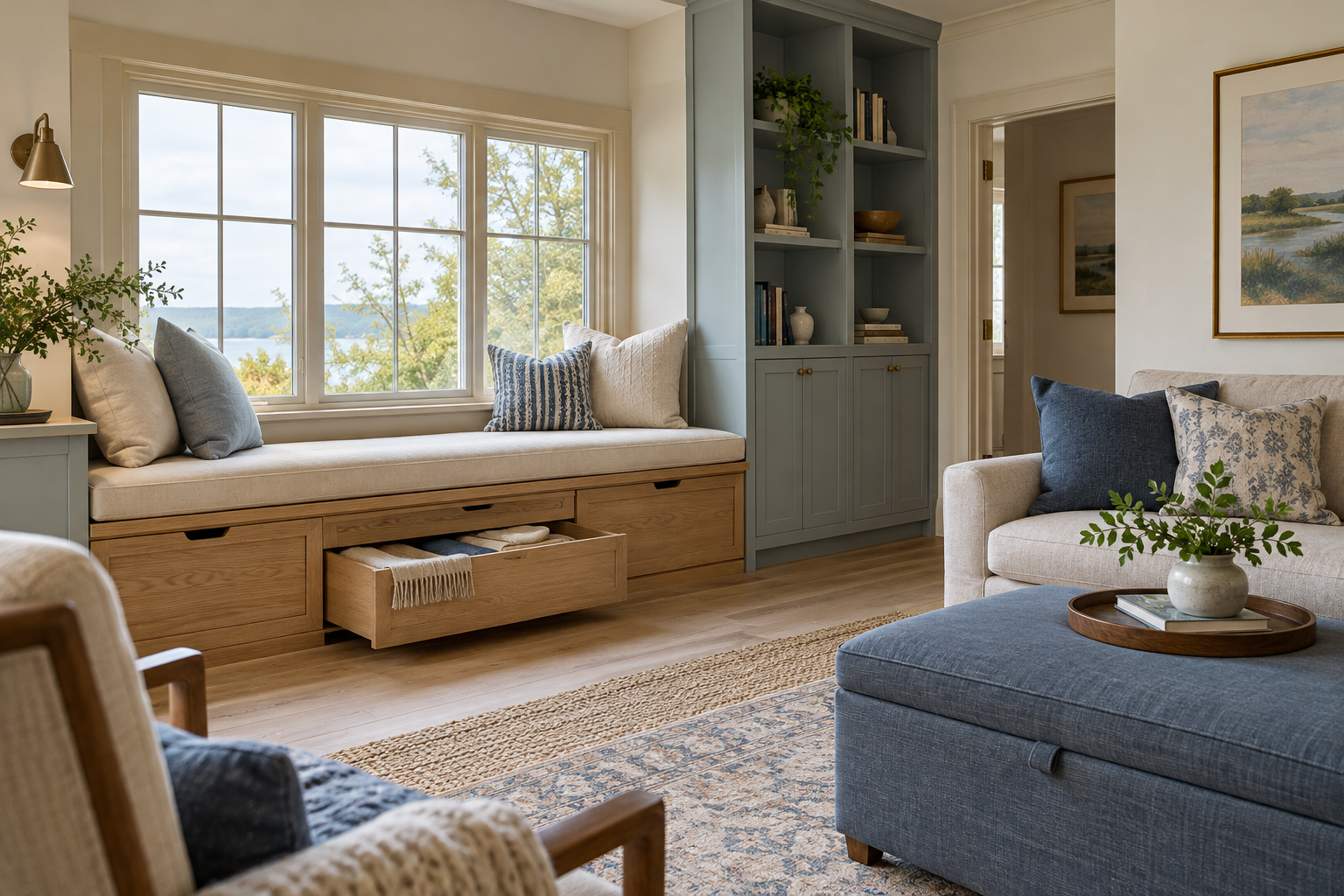
7. Add a Built-In Window Seat
A window seat can transform a narrow or awkward area into a comfortable destination while creating a generous amount of concealed storage below. It is particularly effective in bedrooms, living rooms, landings, and playrooms.
The base can contain hinged compartments, drawers, or lift-up lids. Drawers are easier to access frequently, while hinged compartments can hold bulky items such as blankets and seasonal decorations. Add a durable cushion and the storage becomes seating rather than merely another cabinet.
Keep the depth appropriate to the room. A seat that is too deep can make a narrow passage feel cramped. If there is a radiator beneath the window, do not enclose it without providing proper ventilation and following local building requirements. A well-designed window seat should allow heat to circulate and should remain serviceable for maintenance.
8. Make the Entryway Work Harder
The entry is where clutter arrives first, so even a tiny improvement can make the whole house feel more organized. Instead of relying on a freestanding coat rack, combine several functions on one wall.
A narrow entry system might include hooks at adult and child heights, a shelf for hats, a mirror, a small drop zone for keys, and a bench or cabinet for shoes. Add a shallow upper cabinet for seasonal accessories and a tray or drawer for mail. If floor space is extremely limited, use a wall-mounted bench that leaves the area beneath open for shoes or baskets.
The most important step is to design for the number of people using the entrance. One hook per household member is usually not enough when coats, bags, hats, and daily accessories are involved. Assign a specific zone to each person or category. This prevents the entry from becoming a shared pile and makes it easier to return items to their proper place.
9. Use Wall-Mounted Folding Furniture
When a room must support multiple activities, furniture that disappears when not in use can create the feeling of having more space. A wall-mounted drop-leaf table can serve as a dining surface, desk, craft station, or laundry-folding area. Fold-down workbenches can provide occasional workspace in a kitchen, mudroom, or garage.
Add shelves or shallow compartments inside the folded panel so supplies remain stored with the station. For example, a wall-mounted desk might include slots for notebooks, a charging shelf, and a small bulletin board. A folding craft table could hold paper, scissors, and tools.
Use sturdy hardware rated for the intended load, and anchor the system to wall studs or suitable masonry. Include a way to secure the table when folded if it could swing open accidentally. This approach is most successful when the furniture has one clear purpose and the items needed for that purpose are stored immediately nearby.
10. Create a Pantry From a Narrow Gap
A pantry does not need to be a full room. A narrow pull-out cabinet can fit between existing cabinets, beside a refrigerator, or in an unused section of a hallway. Even a space only several inches wide can store spices, cans, oils, baking supplies, and cleaning products.
The secret is adjustable shelving and full-extension slides. Without them, deep narrow storage becomes difficult to use because items disappear behind one another. Group similar products together and label the shelves. Reserve the lowest section for heavier goods and the upper shelves for lightweight items.
If you are building a pantry in a kitchen, place frequently used ingredients near the food-preparation zone. A pantry in a hallway may be better for bulk supplies and infrequently used items. Make sure the cabinet does not block ventilation, appliance doors, or a required walkway. A narrow pantry should increase capacity without creating a new source of congestion.
11. Reclaim the Area Above the Toilet
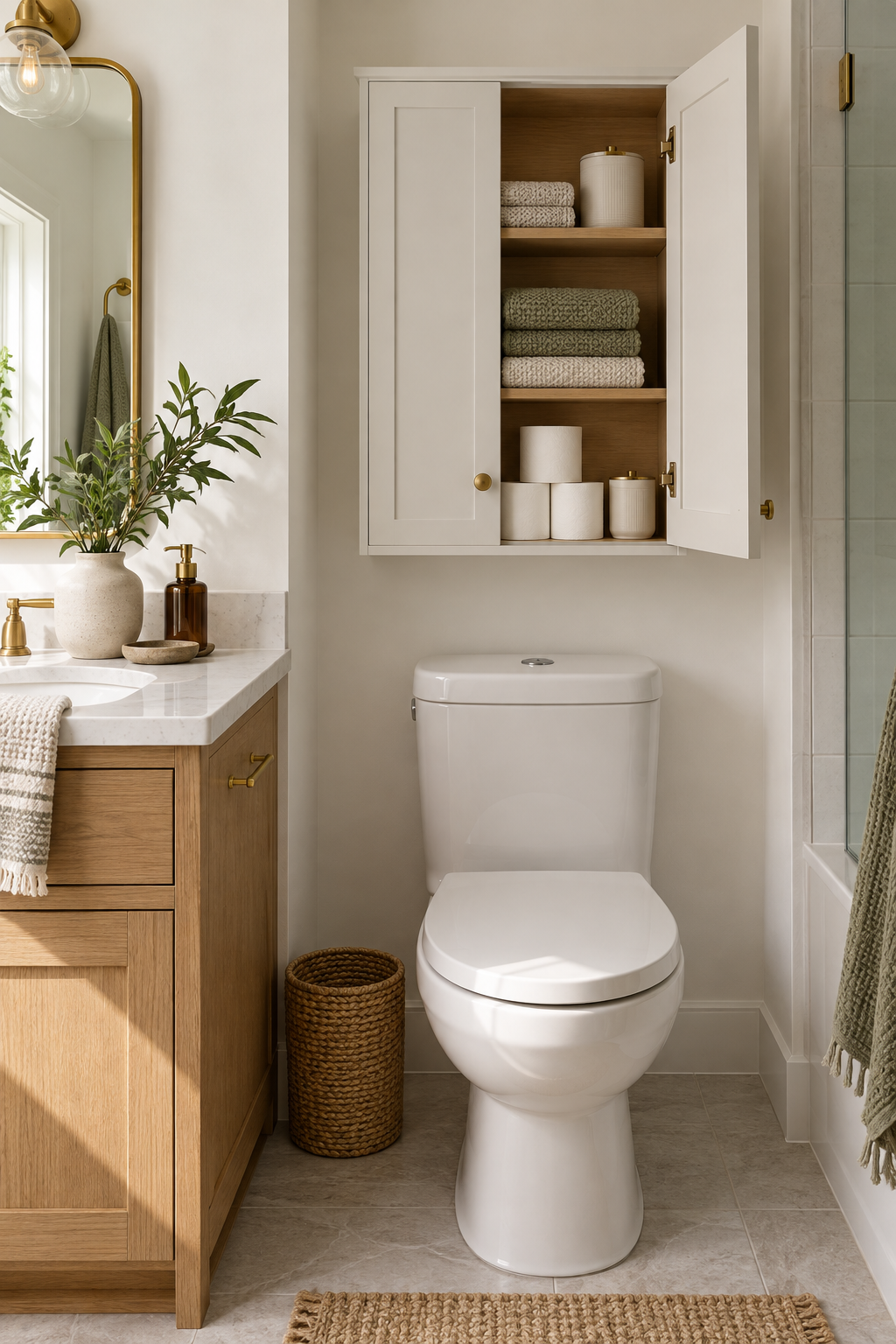
The wall above a toilet is often empty, even though it is within easy reach. A shallow cabinet or a few carefully placed shelves can store toilet paper, towels, toiletries, and cleaning supplies.
Closed cabinets keep the area looking tidy, while open shelves make everyday items easy to grab. If you use shelves, place attractive baskets on them and avoid overfilling the space. A tall, shallow cabinet can provide more capacity with less visual clutter than several small ledges.
Always account for the toilet tank, lid movement, plumbing access, and head clearance. Shelves should be securely fastened, especially if they will hold glass bottles or heavier containers. In a small bathroom, choose moisture-resistant materials and finishes. A mirrored cabinet can add storage while making the room feel brighter and larger.
12. Organize the Inside of Cabinets, Not Just the Shelves
Many cabinets have plenty of volume but poor usability. Items slide to the back, lids become tangled, and vertical space goes unused. Interior organizers can significantly increase capacity without changing the cabinet’s exterior.
Install pull-out shelves in lower cabinets, vertical dividers for trays and cutting boards, tiered risers for cans, and door-mounted racks for small containers. In a bathroom, stackable bins can separate personal-care categories. In a kitchen, peg systems can keep plates or pans upright and accessible.
Measure carefully before purchasing organizers. Account for hinges, plumbing, shelf thickness, and the path required to remove an item. Avoid filling every inch immediately; a cabinet needs a little breathing room to remain functional. Storage is successful when it reduces friction, not when it simply allows you to own more things.
13. Put Shelves Above Doorways and Hallways
The wall space above an interior doorway is often overlooked because it is not at eye level. A shallow shelf there can hold books, baskets, framed objects, or seldom-used supplies without taking up floor space.
This idea works particularly well in hallways, laundry rooms, bedrooms, and home offices. In a kitchen or utility area, a shelf above the door can hold backup paper goods or seasonal equipment. Use consistent baskets or boxes to make the arrangement look intentional and keep small items from becoming visual clutter.
Be mindful of ceiling height, door trim, sprinkler heads, lighting, and ventilation. Do not install a shelf where it creates a hazard for anyone walking through the doorway. Keep heavier items low and stable, and use a proper ladder rather than standing on a chair to retrieve them.
14. Turn a Hallway Into a Library or Utility Wall
A hallway can be more than a route from one room to another. If it is wide enough, one wall can support shallow built-ins for books, artwork, household supplies, or family storage.
Use shelves no deeper than necessary. Books may need more depth than folded linens or small baskets, but an overly deep unit can narrow the passage and make the home feel smaller. In a long hallway, repeat a simple cabinet or shelf module rather than creating one massive piece. This makes the system easier to build and visually lighter.
A hallway utility wall might include a charging drawer, a calendar, a mail sorter, a linen cabinet, or a locked compartment for important documents. Keep the most frequently used items between waist and shoulder height. Reserve the top and bottom for things accessed less often.