

A staircase is more than a route from one floor to another. It is a moving sightline: a place you pass in the morning, see from the entry, and often glimpse from several rooms at once. That makes it a surprisingly powerful design opportunity. A bare stairway can feel like leftover square footage, while a well-considered one gives a home rhythm, personality, and a stronger sense of connection from floor to floor.
The best stairway decorating does not rely on filling every inch with objects. It begins by noticing what the staircase already gives you: light, height, architecture, texture, and a natural pause at the landing. Then choose one or two elements that make those features feel intentional. It may be a painterly wall color, a gallery that unfolds as you climb, or simply a beautiful runner with a quiet piece of art at the top.
This guide is for real homes and real proportions, including awkward stairwells, dramatic double-height walls, compact layouts, and upstairs landings that have never quite known what they are for. Use these ideas as a menu, not a checklist. The goal is not to make every stairway look the same; it is to give yours a point of view.
Start With the Feeling You Want the Stairway to Create
Before buying frames or choosing paint, decide how you want the stairway to feel. This one choice makes the rest of the decisions easier. A calm, collected stair may call for soft plaster tones, one large artwork, and warm sconces. A cheerful family staircase might carry a playful runner, children’s drawings in matching frames, and a saturated trim color. A historic home can lean into original balusters and rich textiles, while a newer home might look best with fewer, larger gestures.
Treat the staircase as its own small room. It deserves a palette, a lighting plan, and one focal point.
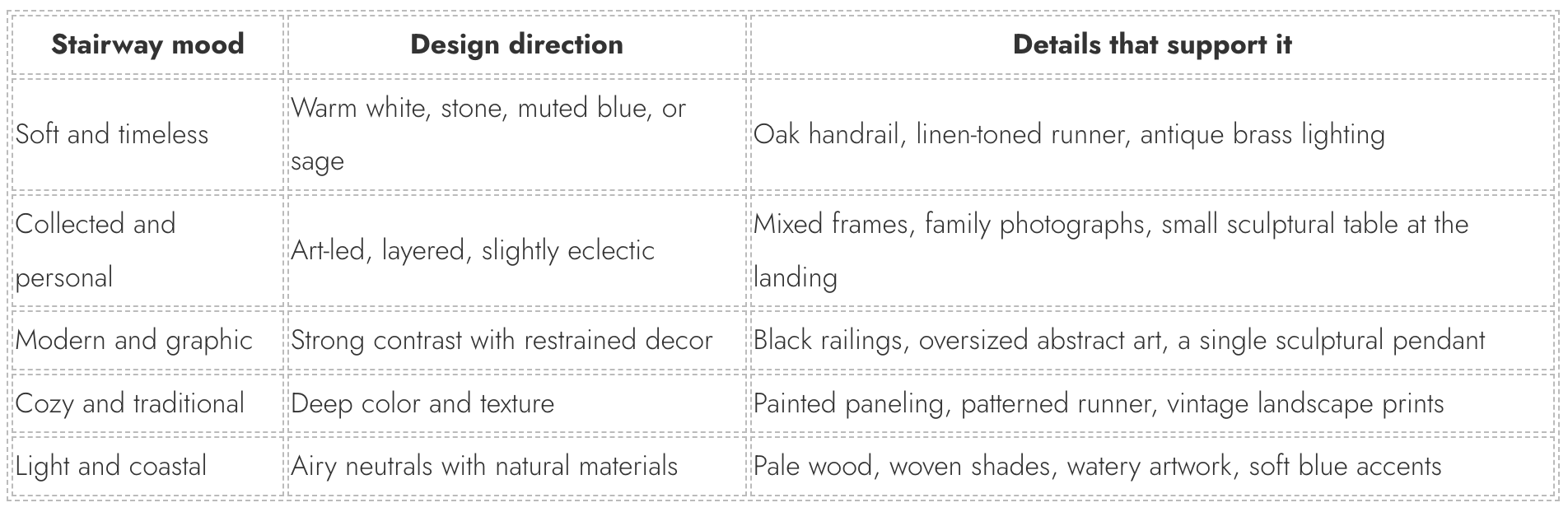
Stairs Between Two Walls: Turn the Tunnel Effect Into a Feature
Stairs between two walls can feel challenging because there is no open railing to soften the passage. Yet that same enclosure offers uninterrupted surface area and a naturally immersive mood. Instead of fighting the tunnel effect with a dozen competing accessories, lean into the sense of transition.
Paint is often the most transformative place to begin. A single all-over color—walls, trim, and even the stairwell ceiling—can make a narrow stair feel deliberate and atmospheric. Mid-toned greens, dusty blues, mushroom taupes, and softened terracottas are especially forgiving where direct sun is limited. If you prefer pale walls, use a warmer white rather than a stark one; it will keep the stairwell from reading cold.
A runner is another hardworking layer. In an enclosed stair, it introduces softness underfoot and pulls the eye upward. A small-scale stripe, subtle check, or low-contrast pattern gives the space movement without making it feel busy. Choose a durable material and a colorway that relates to at least one other finish in the home, such as the wood tone, an adjacent rug, or the kitchen cabinetry.
Art works beautifully here, but scale matters. One vertical grouping of three to five aligned pieces can look more polished than scattered small frames. Alternatively, reserve one large work for the wall visible from the bottom step. For an architectural look, add shallow picture molding or vertical paneling below the handrail line, then paint it the same color as the walls.
Stair Riser Ideas That Add Personality One Step at a Time
If you want a project with high visual payoff, look down. Stair riser ideas are popular for good reason: they bring character to a stair without taking up a single inch of floor space. Choose a treatment that suits the pace of the house rather than treating every riser as a separate statement.
The classic approach is patterned tile. Cement-look, hand-painted, or small geometric tile can give a plain wood staircase an instant Mediterranean, cottage, or vintage-inspired feel. Use real tile only when the structure and finished height can accommodate it; on an existing stair, added thickness must not create uneven steps. Tile-look riser decals or carefully applied wallpaper are often more forgiving weekend projects, particularly on a low-traffic guest stair.
Painted risers are simpler and remarkably effective. Try cream treads with putty-colored risers, or use a deep color below natural treads. A striped effect can be lovely, but keep it horizontal and restrained. Stenciled numbers, botanicals, or tiny stars work best in children’s spaces when repeated in a limited palette.
Reclaimed wood cladding, beadboard, and fluted panels are other options, provided the edges are secure and the finished surface does not interfere with the tread nosing. Safety comes first: risers should remain firmly attached, easy to clean, and free of raised corners. The most stylish choice is often repetition. Pick one material or motif and let it run up the whole flight.
Enclosed Stairwell Decor: Make It Feel Like a Jewel Box
There is a special appeal to enclosed stairwell decor. With walls on both sides, the space can feel almost cinematic: a framed view at the beginning, a changing sequence of art or color on the way up, then a reveal at the landing. You can create that mood with layers, but the layers should be coordinated.
Start with lighting, especially if the stairwell is dim. Decorative sconces along one wall feel intentional and help soften harsh shadows. In a tall stairwell, a pendant or lantern can fill the vertical volume beautifully. Put stair lights on a dimmer where possible so the route feels gentle at night. If electrical work is not in the plan, rechargeable picture lights or plug-in sconces still add a surprisingly finished touch.
Wallpaper is another strong option for enclosed staircase ideas. A tiny block print, woodland botanical, tonal stripe, or hand-drawn geometric makes the climb feel special while remaining easy to live with. In a house with limited wall space for pattern, the stairwell is the perfect place to indulge one you love.
Avoid turning every wall into a gallery when the enclosure is tight. Let wallpaper be the art, or use art against a painted backdrop—not both at full volume. If the walls are plain, repeat a frame color, use similar mat proportions, or follow the slope of the handrail. Finish with a comfortable handrail, a runner installed with clean edges, and trim in a tone that deliberately contrasts or disappears.
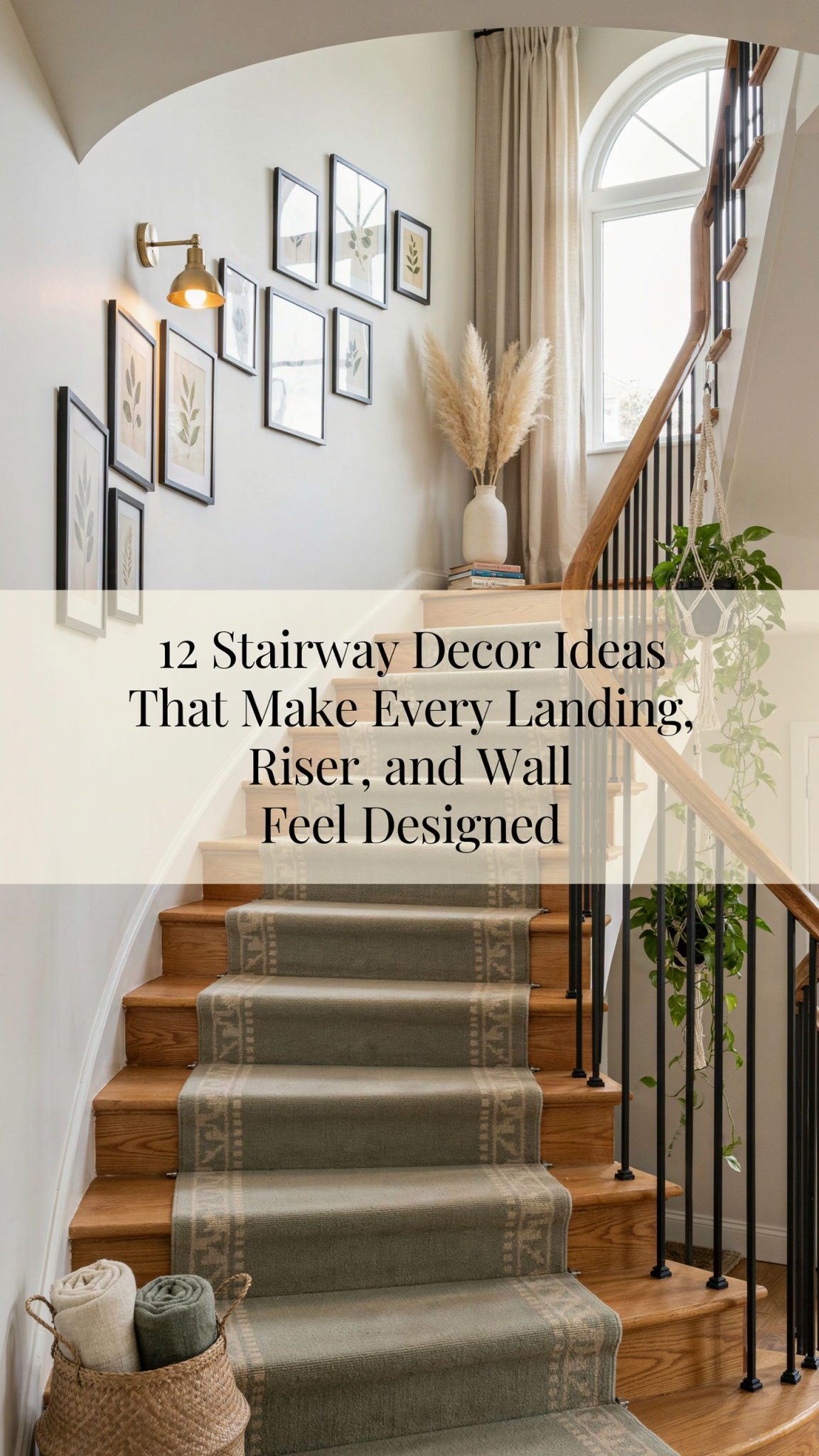
Above Stairs Decor: Use the Pause in the Architecture
The blank area above stairs decor often gets left for last because it is difficult to reach and even harder to judge from a ladder. Yet it is usually the wall you see from the bottom of the flight, which makes it one of the highest-impact places in the house.
The easiest answer is one substantial piece of art. An oversized landscape, abstract canvas, textile, or framed photograph gives the eye somewhere to land. Choose something with enough visual weight to hold its own from a distance; a delicate print will disappear on a high wall. Artwork does not need to be centered in relation to the wall alone. Stand at the bottom of the stairs and adjust the height until the composition feels balanced from that viewpoint.
Mirrors are useful when the staircase is dark, but choose them for atmosphere, not just brightness. An arched mirror adds softness to a straight-run stair; a weathered rectangle brings age and texture. In a busy household, consider what the mirror will reflect. It should bounce light, a window, or another pleasing view rather than a pile of shoes.
If art feels predictable, a large basket, an architectural wall hanging, a shallow sculptural relief, or a single vintage sign can create an equally strong focal point. Just make sure it is securely fastened. A high wall is not the place for fragile pieces that require frequent adjustment.
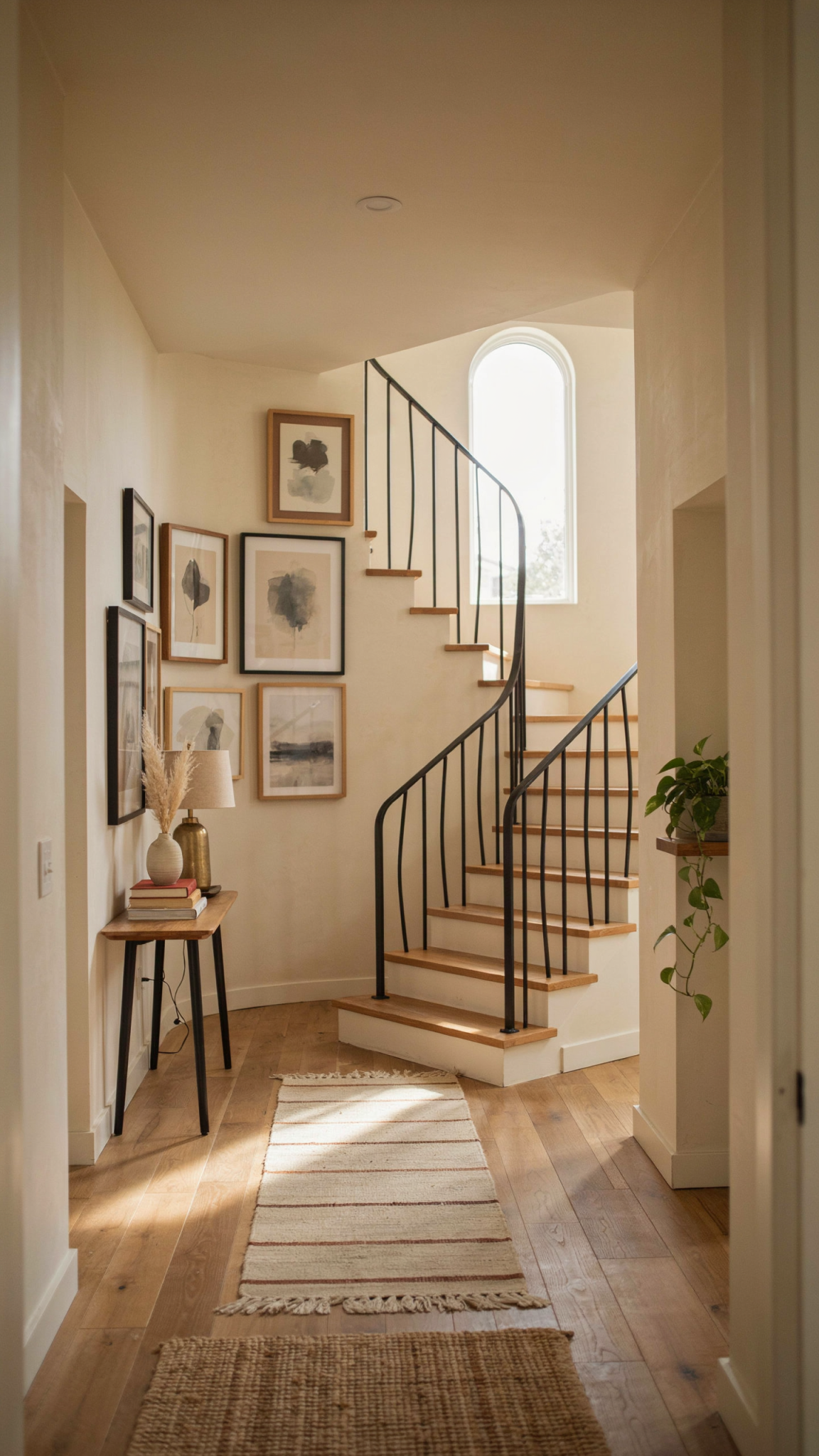
Tall Staircase Wall Ideas: Work With the Height, Not Against It
Double-height stairwells tempt people to fill every available inch, but the most successful tall staircase wall ideas have a clear rhythm. The vertical scale is already dramatic. Your decor should underline that drama rather than compete with it.
A gallery wall can be spectacular when it behaves like one composition. Before hanging anything, arrange kraft-paper templates on the floor, then tape them to the wall following the stair’s diagonal. Mix sizes, but repeat two or three frame finishes so the collection has cohesion. A loose grid at the lower section that gradually rises with the steps feels modern; a more irregular salon hang feels collected and traditional. Leave breathing room around the outer edge so the wall does not look crowded.
For something quieter, hang three vertically stacked pieces at the landing wall. This is particularly effective when the wall is seen straight on. A single extra-tall canvas, a pair of narrow tapestries, or a fabric panel in a substantial frame also makes great use of height without requiring a complicated arrangement.
Color can do some of the work, too. Paint the lower third in a deeper shade and carry a lighter color above it, separated by a slim rail or painted line. This grounds the space while keeping the upper walls airy. Use the correct anchors and avoid placing heavy glass where it could be knocked during furniture moves.
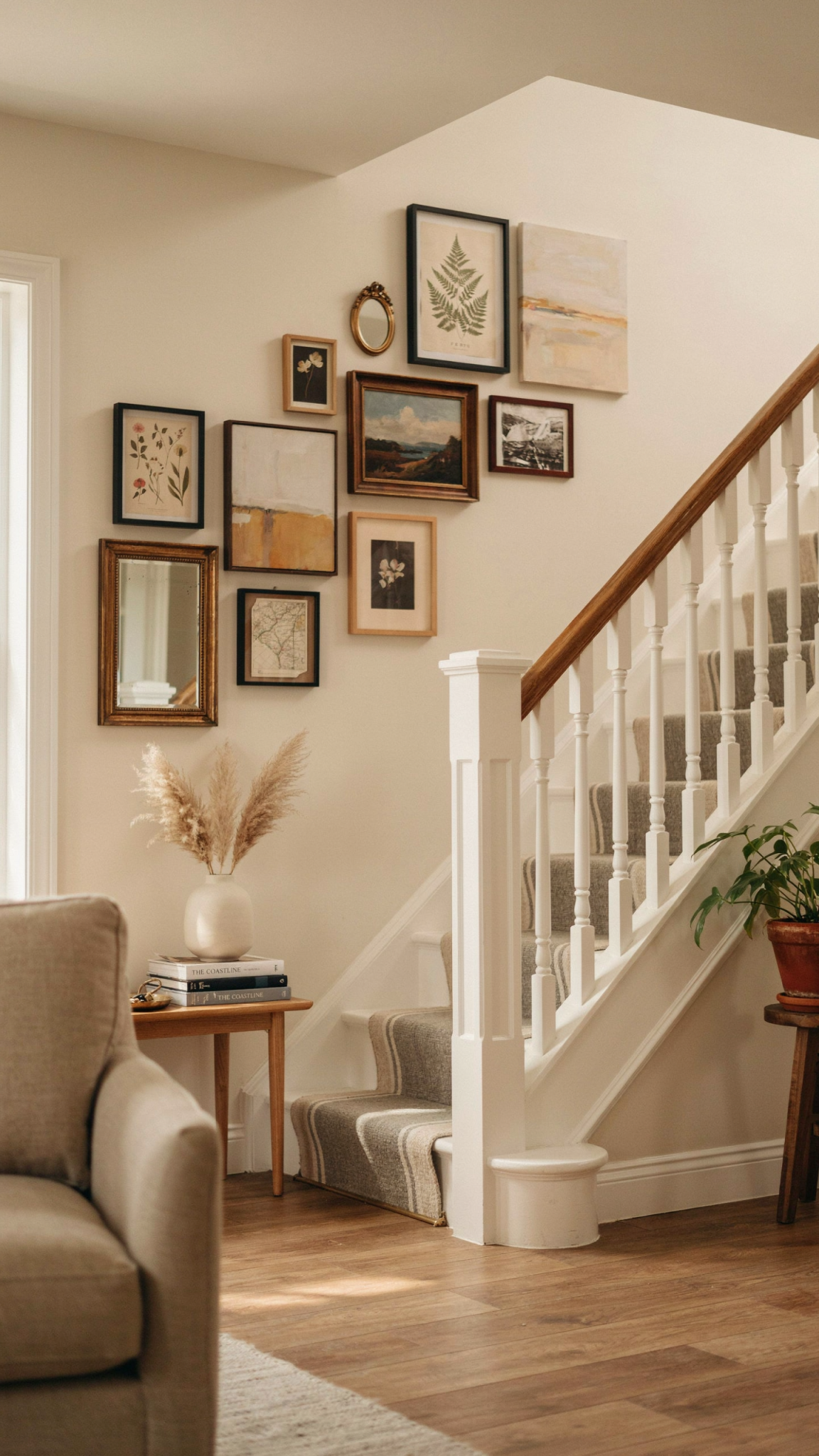
Open Staircase Ideas: Let the Railing Be Part of the Decor
With an open stair, there may be less wall space, but there is much more architecture on display. The best open staircase ideas treat the railing, treads, and light as the main decorative elements.
First, consider the balustrade. A dated railing can often be transformed with paint and a new handrail rather than a full rebuild. Black-painted spindles with a warm wood rail feel classic and current. A railing painted the same color as the walls feels quieter, while a contrasting handrail creates a crisp graphic line. If you are renovating, slender metal pickets, wire rail, glass panels, or a sculptural wood screen can each shift the whole character of the space. Any structural change should meet local safety requirements.
The view through an open staircase matters as much as the stair itself. Style what is visible beyond it: a console, a large plant, a bench, or a well-chosen artwork on the far wall. That layered view makes the staircase feel integrated into the home rather than floating in the middle of it.
A statement pendant is especially effective over an open stairwell. Choose a fixture substantial enough to register from both floors, but not so low that it interrupts circulation. Clustered globes soften sharp architecture; a long linear fixture suits modern flights; a paper lantern adds warmth and volume without visual heaviness.
Top of Stairs Decor: Give the Landing a Purpose
The top of stairs decor question is really a question about function. A landing often becomes a drop zone by default, but it works better when it has a simple, intentional role. That role might be a quiet gallery, a reading perch, a practical linen station, or simply a beautiful transition to the bedrooms.
For a generous landing, start with a narrow console or small chest of drawers. Choose something shallow enough to preserve an easy walking